What Is the Difference Between a Smart Thermostat and a Smart AC Controller?
On this page (6 sections)
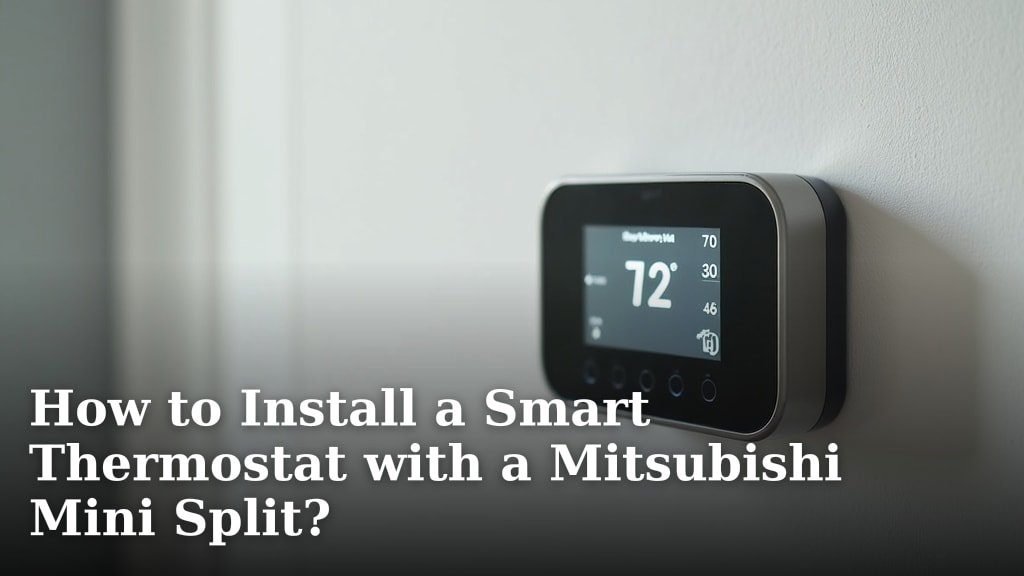
The main difference between a smart thermostat and a smart AC controller is how they connect to your HVAC system. A smart thermostat directly replaces your existing thermostat, controlling your central air and heating. A smart AC controller, on the other hand, works with your mini-split, window, or portable AC unit via infrared signals.
Choosing the right device depends entirely on your home’s cooling setup. You’ll want to pick the one that fits your specific type of air conditioner. Both aim to give you more control and save energy, but their compatibility differs significantly.
- Smart thermostats replace wall units.
- Smart AC controllers work with remote-controlled ACs.
- Both offer smart features like scheduling and remote control.
- Installation varies greatly between the two.
Let’s break down these differences so you can confidently pick the best smart solution for your home’s comfort needs.
Understanding the Core Differences Between These Smart Comfort Solutions
Let’s dive into the specifics of what truly sets a smart thermostat apart from a smart AC controller. You’ll quickly see that their fundamental design and the way they interact with your cooling system are the primary distinctions.
Smart Thermostats: Your Central HVAC Commander
Think of a smart thermostat as the central brain for your home’s entire heating and cooling system. It’s designed to manage everything from your furnace to your air conditioning unit. These devices typically replace an existing thermostat on your wall, making them a direct upgrade to your traditional setup.
How Smart Thermostats Connect and Control
Smart thermostats use a system of low-voltage wires, often referred to as “R,” “Y,” “G,” “W,” and “C” wires, to connect directly to your HVAC unit. This wired connection is crucial because it allows the thermostat to send specific commands, like “turn on the AC” or “start the heat,” directly to your central system. It also often provides constant power to the thermostat itself.
Because of this direct connection, a smart thermostat can control various aspects of your central system. It can manage multi-stage heating or cooling, fan speeds, and even humidity levels if your HVAC system supports it. This direct communication path gives it a lot of power over your home’s climate.
Typical Installation for Smart Thermostats
Installing a smart thermostat usually means removing your old one and wiring the new device in its place. This can be a straightforward DIY project if you’re comfortable with basic wiring, or you might prefer to hire an HVAC professional. We’ve found that some homes, especially older ones, might lack a “C” wire, which provides continuous power. This can complicate installation, sometimes requiring an adapter or a new wire run. Many manufacturers now offer workarounds for homes without a C wire (Energy Star).
Best Use Cases for Smart Thermostats
If you have a central air conditioning system, a furnace, or a heat pump that uses ducts to distribute air throughout your home, a smart thermostat is almost certainly what you need. It’s the ideal choice for managing whole-home comfort efficiently. It’s designed for houses or apartments with a single, unified HVAC system.
Smart AC Controllers: Enhancing Your Remote-Controlled Units
Now, let’s shift our focus to smart AC controllers. These devices operate on a completely different principle. Instead of connecting directly to your AC, they act as a “smart” intermediary for units that already have their own remote control.
How Smart AC Controllers Connect and Control
Smart AC controllers typically don’t have any physical wires connecting them to your AC unit. Instead, they work by emitting infrared (IR) signals, just like your TV remote or your AC’s original remote control. You simply point the smart controller at your AC unit, and it “learns” the commands from your existing remote. Once learned, it can then replicate those commands.
This means the smart AC controller needs a clear line of sight to your AC unit to function properly. It also means it can only send commands that your original remote could send. So, if your original remote only turns the unit on/off and adjusts temperature, the smart controller won’t magically add fan speed control if the unit doesn’t already have it. We found this IR-based control makes them incredibly versatile for many types of ACs.
Typical Installation for Smart AC Controllers
Installation for a smart AC controller is usually very simple. You just plug it into a power outlet near your AC unit, connect it to your home Wi-Fi, and then use its app to pair it with your AC. This pairing process often involves “teaching” the smart controller the signals from your AC’s remote. It’s typically a quick and straightforward setup that most people can do in minutes.
Best Use Cases for Smart AC Controllers
Do you have a ductless mini-split system? Perhaps a window AC unit, a portable AC, or even a standing fan with a remote? If so, a smart AC controller is likely the perfect fit for you. It’s designed for situations where you have Our guide to smart controls for ductless mini-splits provides more information on optimizing these systems.individual, remote-controlled cooling units rather than a central system. This is a common setup in older homes, apartments, or rooms that need supplemental cooling.
Key Features and Functionality: What Do They Both Offer?
While their connection methods differ, both smart thermostats and smart AC controllers share a common goal: to give you more control over your comfort and help you save energy. Let’s explore the smart features you can expect from both categories.
Shared Smart Capabilities
You’ll be happy to know that many of the most popular “smart” functions are available regardless of which device you choose. These features are what truly elevate your comfort experience.
Remote Control and Scheduling
Both types of devices allow you to control your AC from anywhere using a smartphone app. Imagine turning on your AC on your way home so your house is cool when you arrive. You can also set up detailed schedules to automatically adjust temperatures throughout the day. This means your AC can run less when you’re at work and kick on just before you get home. Many users report significant energy savings just from smart scheduling (Energy.gov).
Geofencing and Away Modes
Geofencing uses your phone’s location to detect when you leave or return home. Your smart device can then automatically adjust the temperature to save energy when you’re away and start cooling before you arrive. This feature is incredibly convenient and helps avoid cooling an empty house. Similarly, “Away Modes” allow you to set a specific energy-saving temperature when you’re out, overriding your regular schedule.
Voice Control Integration
Both smart thermostats and smart AC controllers usually integrate with popular voice assistants like Amazon Alexa or Google Assistant. This means you can simply say, “Alexa, set the living room temperature to 72 degrees,” and your AC will respond. It’s a hands-free convenience that many people appreciate.
Unique or Enhanced Features
While many features overlap, some capabilities are more pronounced or exclusive to one type of device due to its direct connection or specific design.
Energy Monitoring and Reporting
Smart thermostats, with their direct control over your HVAC system, often provide more detailed energy usage reports. They can show you how much your heating and cooling system runs and even offer personalized tips to save energy. Some can even estimate your monthly energy bill. Smart AC controllers typically provide basic usage data, but it might be less comprehensive. You can learn more about how to monitor HVAC energy usage to maximize your savings.
Advanced Automation (Thermostats)
Because smart thermostats are often integrated into broader smart home ecosystems, they can participate in more complex automation routines. For example, your thermostat might communicate with smart vents or smart ceiling fans. This allows for more nuanced whole-home climate control and zoning capabilities. This level of integration is less common for smart AC controllers, which are usually focused on individual units.
Installation and Compatibility: What to Consider for Your Home
Your existing AC setup is the biggest factor in deciding which device is right for you. It’s not about which one is “better,” but which one fits your specific needs.
Assess Your Current AC System
Before you buy anything, take a good look at your air conditioning unit. Do you have a large unit outside your home with vents in every room? Or do you have smaller units in individual rooms that came with a remote control?
- If you have central air conditioning (and a thermostat on your wall), you need a smart thermostat.
- If you have a mini-split, window AC, or portable AC that uses a handheld remote, you need a smart AC controller.
It’s really that simple! Don’t try to force a smart thermostat onto a mini-split, or vice versa; it won’t work correctly, if at all.
Checklist: Choosing the Right Smart Device
Here’s a quick checklist to help you decide. Which statements describe your home’s cooling?
- My home has a single thermostat on the wall that controls all heating and cooling.
- I have air vents in multiple rooms connected to a central unit.
- My AC system uses “R,” “Y,” “G,” “W” (and possibly “C”) wires.
- I have individual units in rooms, each with its own remote control.
- My cooling comes from a mini-split, window AC, or portable AC unit.
- I want to control separate AC units in different rooms independently.
If you answered “yes” to the first three, a smart thermostat is your match. If you answered “yes” to the last three, you’ll want a smart AC controller.

The Financial Angle: Cost and Energy Savings
Both devices represent an investment in your home comfort and efficiency. Let’s talk about what you can expect to pay and the potential for savings.
Initial Investment
Smart thermostats can range widely in price, from around $100 for basic models to $250 or more for premium, feature-rich options. Installation costs might be additional if you hire a professional. Smart AC controllers are generally less expensive, often falling in the $50-$150 range. Since they are usually DIY-friendly, you typically won’t have installation fees.
Energy Efficiency and Savings
The primary benefit of either device, beyond convenience, is the potential for energy savings. By intelligently managing your heating and cooling, you can avoid wasting energy. Research has shown that smart thermostats can save homeowners an average of 10-12% on heating and 15% on cooling costs (Energy Star). Smart AC controllers offer similar savings potential for individual units by preventing them from running when not needed.
The actual savings depend heavily on your habits, climate, and how diligently you use the smart features like scheduling and geofencing. But by avoiding cooling an empty house or overheating a room, you’re definitely putting money back in your pocket.
| Feature/Characteristic | Smart Thermostat | Smart AC Controller |
|---|---|---|
| Compatible AC Type | Central Air, Furnace, Heat Pump (ducted systems) | Mini-split, Window AC, Portable AC (remote-controlled units) |
| Connection Method | Wired (low-voltage wires) | Infrared (IR) signals, Wi-Fi |
| Installation Complexity | Moderate (DIY or professional) | Easy (plug-and-play, DIY) |
| Control Scope | Whole-home climate management | Individual unit control (or multiple units with multiple controllers) |
| Typical Price Range | $100 – $250+ | $50 – $150 |
| Power Source | Hardwired (often C-wire) or battery | Wall outlet (USB adapter) |
Conclusion
You’ve now got a clear understanding of the fundamental differences between smart thermostats and smart AC controllers. Your choice truly depends on your home’s existing cooling system. If you have central AC with wall controls, a smart thermostat is your solution. For individual units like mini-splits or window ACs, a smart AC controller is the perfect fit. Both offer fantastic smart features to boost comfort and save energy. Evaluate your setup, pick the right device, and start enjoying a smarter, more efficient home climate today.
Frequently Asked Questions
Can a smart AC controller work if my AC unit doesn’t have a remote control?
No, a smart AC controller needs to “learn” infrared signals from an existing remote control. If your AC unit is controlled manually or by a hardwired wall unit, a smart AC controller won’t be compatible with it.
Do I need a C-wire for all smart thermostats?
Not always. While a C-wire provides continuous power and is ideal, many modern smart thermostats offer workarounds. Some use battery power with a power-stealing circuit, or include an adapter for homes without a C-wire.
Can I use both a smart thermostat and a smart AC controller in the same home?
Absolutely! Many homes have central air for main areas and individual mini-splits or window units for additions or specific rooms. You can use a smart thermostat for your central system and smart AC controllers for the individual units.
What is the typical range for an infrared smart AC controller?
Infrared signals require a clear line of sight. Most smart AC controllers work effectively up to about 15-25 feet from the AC unit. Walls or large obstructions will block the signal, so placement is important.
Are smart thermostats and AC controllers compatible with all smart home platforms?
Most popular smart thermostats and AC controllers offer compatibility with major platforms like Amazon Alexa and Google Assistant. Always check the product specifications for specific integrations with Apple HomeKit or other smart home ecosystems before purchasing.