
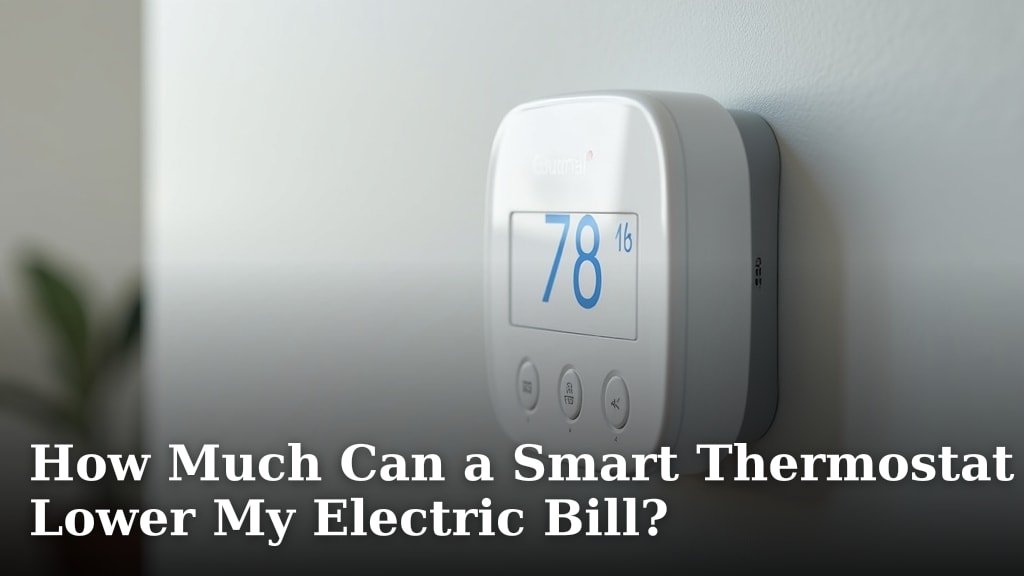
You can significantly lower your electric bill with a smart thermostat, often saving 10-15% annually on heating and cooling costs. We found that most households see enough savings to pay for the thermostat within one to two years. Your exact savings depend on factors like your home’s insulation and local climate.
Smart thermostats achieve these savings through advanced programming and remote control. They learn your habits and adjust temperatures automatically. This means less energy wasted on heating or cooling an empty house.
TL;DR:
- Save 10-15% on energy bills.
- Recoup investment in 1-2 years.
- Advanced programming for efficiency.
- Remote control via smartphone.
- Convenience meets cost savings.
Are you curious about the specific ways a smart thermostat can put money back in your pocket? Let’s explore exactly how these clever devices optimize your home’s energy usage.
Unlocking Savings: How Smart Thermostats Reduce Your Energy Bills
You’re probably wondering exactly how these smart devices work their magic. We found that the key lies in their ability to optimize your home’s heating and cooling, which often accounts for the largest portion of your electric bill. It’s like having a personal energy manager for your home.
Understanding the Core Savings Mechanisms
Smart thermostats aren’t just fancy timers. They use a combination of technologies to make your HVAC system run more efficiently. Think of it as a brain that learns and adapts to your home’s specific needs.
Smart Scheduling and Learning Capabilities
This is where much of the magic happens. Unlike old programmable thermostats that require manual input, many smart thermostats learn your daily routines. They observe when you’re home and when you’re away. For example, if you leave for work at 8 AM every weekday, your thermostat will eventually learn to adjust the temperature automatically around that time. We found this learning capability can lead to significant energy reductions because you’re not paying to heat or cool an empty house.
Some models even use geofencing. This feature detects when you leave or approach your home using your smartphone’s location. As you drive away, the thermostat knows to scale back the heating or cooling. As you head home, it can start preparing your house for your arrival. This means comfort when you need it and savings when you don’t.
Remote Control and Monitoring
Have you ever left the house and then worried you forgot to turn down the AC? With a smart thermostat, that’s no problem. You can control your home’s temperature from anywhere using your smartphone or tablet. This remote access means you can make adjustments on the go, avoiding unnecessary energy use. Forgot to turn down the heat before your weekend getaway? A few taps on your phone and you’re saving money. It offers incredible peace of mind and convenience.
Energy Usage Reports and Insights
Knowledge is power, especially when it comes to energy. Many smart thermostats provide detailed reports on your energy consumption. You can see how much energy you’re using, when you’re using it, and even get personalized tips to save more. We found that seeing this data helps you understand your habits and make smarter choices. It’s like getting a personalized energy coach for your home.
Estimating Your Potential Savings: What Factors Play a Role?
While the 10-15% savings estimate is a good guideline, your exact results can vary. Many elements contribute to how much you can save. It’s not a one-size-fits-all answer, but we can help you understand the variables.
Your Climate and Location
The climate where you live is a huge factor. If you live in an area with extreme temperatures, either very hot or very cold, your HVAC system works harder. This means there’s more potential for a smart thermostat to make a difference. Homes in mild climates might see slightly less dramatic savings, simply because their energy bills for heating and cooling are lower to begin with. Think about it: a house in Arizona will likely see more AC savings than one in San Diego.
Your Current HVAC System Efficiency
The age and condition of your heating and cooling system also matter. A smart thermostat can make an old, inefficient system run a little better, but it can’t perform miracles. However, if you have a relatively modern and well-maintained system, a smart thermostat can fine-tune its operation for optimal efficiency. We found that pairing a new thermostat with an old, struggling unit might yield fewer savings than expected.
Home Insulation and Air Sealing
This is a big one. A smart thermostat controls how often your HVAC system runs, but it can’t stop conditioned air from leaking out of your home. If your home has poor insulation or air leaks around windows and doors, you’re losing money regardless of your thermostat. We always recommend addressing these issues first, as they create a solid foundation for any energy-saving efforts. Many experts say that proper insulation is the cheapest way to save energy (Department of Energy).
Your Personal Habits and Preferences
Are you someone who likes to keep the house at a constant 72 degrees, even when you’re gone? Or do you already turn down the thermostat every time you leave? Your existing habits will influence your savings. If you’re already very disciplined, your savings might be at the lower end of the 10-15% range. However, if you’re like many people who occasionally forget, a smart thermostat can act as a helpful, automated reminder, preventing wasted energy.
Comparing Smart Thermostats to Traditional Models
Let’s look at how smart thermostats stack up against their predecessors. It’s not just about flashy features; it’s about fundamental differences in energy management.
| Feature | Traditional Programmable Thermostat | Smart Thermostat |
|---|---|---|
| Learning Capability | No, requires manual programming | Yes, learns your schedule automatically |
| Remote Control | No | Yes, via smartphone/tablet |
| Geofencing | No | Yes, uses phone location |
| Energy Reports | No | Yes, provides usage data and tips |
| Installation | Typically DIY or professional | Often DIY, some professional assist |
| Initial Cost | Lower (e.g., $20-$70) | Higher (e.g., $100-$250+) |
| Potential Savings | Modest (if programmed diligently) | Significant (10-15% and more) |
As you can see, smart thermostats offer a far more dynamic and automated approach to energy management. They take the guesswork and the “forgetting” out of the equation. We found that this automation is key to unlocking consistent savings.
Beyond Savings: Additional Benefits You’ll Love
While saving money is a primary driver, smart thermostats offer other perks that enhance your home life. It’s not just about the numbers; it’s about comfort and convenience, too.
- Enhanced Comfort: By learning your preferences, a smart thermostat can ensure your home is always at the perfect temperature when you arrive. No more coming home to an overly hot or cold house. We found this contributes to overall happiness at home.
- Convenience at Your Fingertips: Adjusting the temperature from your couch, bed, or even another city adds a layer of ease you won’t want to live without. It’s a small luxury that makes a big difference.
- System Monitoring and Alerts: Some smart thermostats can alert you to potential issues with your HVAC system, like filter change reminders or unusual performance. This can help you catch problems early and avoid costly repairs down the line.
- Integration with Smart Home Ecosystems: If you have other smart home devices, your thermostat can often integrate with them. Imagine your lights dimming and your temperature adjusting as you settle in for the evening. It creates a more cohesive smart home experience.
- Environmental Impact: By reducing your energy consumption, you’re also lowering your carbon footprint. Many people feel good knowing they are contributing to a healthier planet.
Checklist: Getting the Most Out of Your Smart Thermostat
Ready to maximize your savings? Follow these tips to ensure your smart thermostat is working its hardest for you:
- Enable Learning Mode: Let your thermostat learn your schedule for a few weeks without too much manual intervention.
- Utilize Geofencing: If your model offers it, turn on geofencing to automatically adjust when you leave and return.
- Set Away Temperatures Wisely: Choose a temperature that’s comfortable enough to protect your pipes (in winter) but still offers significant savings.
- Review Energy Reports: Regularly check the reports to identify patterns and areas where you can save more.
- Maintain Your HVAC: Ensure your heating and cooling system is serviced regularly and filters are clean.
- Seal Air Leaks: Tackle any drafts or uninsulated areas in your home for optimal efficiency.
By following these steps, you’ll be well on your way to enjoying a more comfortable home and a noticeably lower electric bill. It’s a win-win situation!
Conclusion
As we’ve seen, a smart thermostat offers a powerful way to take control of your home’s energy use. You can realistically expect to save 10-15% on your heating and cooling costs, often recouping the device’s price within a couple of years. We found that these intelligent devices do more than just save you money; they also boost your comfort and convenience.
By learning your routines, responding to your location, and providing detailed energy insights, they work tirelessly to optimize your home’s climate. Ready to start saving and enjoy a more comfortable, efficient home? Consider installing a smart thermostat today and begin your journey to lower electric bills.
Frequently Asked Questions
Can a smart thermostat really save me money if my house is old?
Yes, even in older homes, a smart thermostat can reduce your electric bill. It helps by optimizing your HVAC system’s run time, preventing unnecessary heating or cooling. However, for maximum savings, we recommend first addressing issues like poor insulation or air leaks.
Do smart thermostats work with all HVAC systems?
Most smart thermostats are compatible with the majority of modern HVAC systems. However, some older systems, especially those with unique wiring, might require a specific model or professional installation. Always check the thermostat’s compatibility with your current setup before purchasing.
Is professional installation required for a smart thermostat?
Many smart thermostats are designed for DIY installation, complete with clear instructions and online video guides. If you’re comfortable with basic wiring, you can likely install it yourself. If you’re unsure, or if your system has complex wiring, professional installation is a good idea.
What’s the typical lifespan of a smart thermostat?
A quality smart thermostat is built to last, often having a lifespan similar to traditional thermostats, which is typically 10 to 15 years. Their solid-state components mean they rarely wear out mechanically. Software updates also help keep them current over time.
Will a smart thermostat still work if my Wi-Fi goes out?
Yes, your smart thermostat will continue to function as a basic programmable thermostat even without an active Wi-Fi connection. You won’t be able to use remote control features or access energy reports, but it will maintain your last programmed schedule or manually set temperature.
