
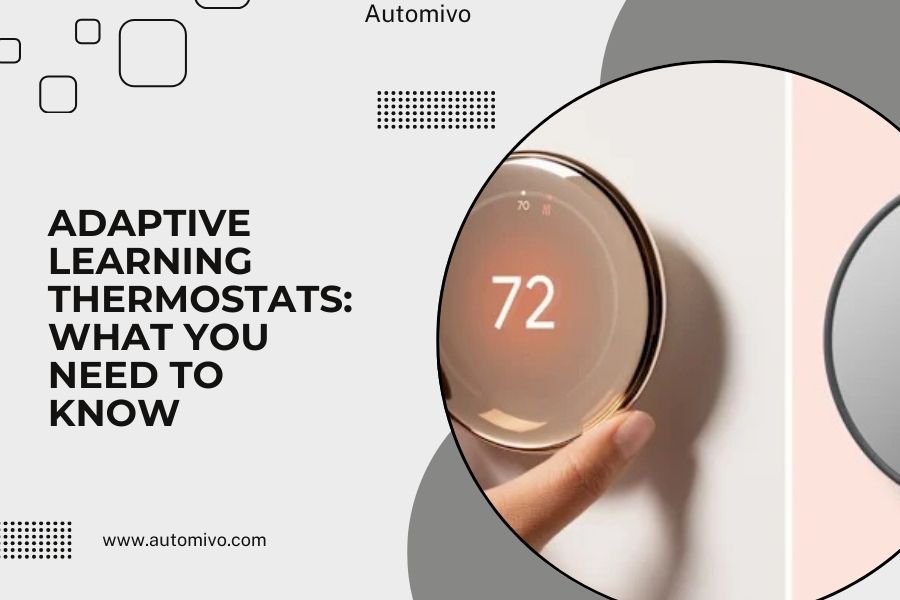
Adaptive learning thermostats use artificial intelligence to automatically learn your schedule and adjust temperatures for optimal comfort and energy savings.
These smart devices can reduce your heating and cooling costs by 10-15% while keeping your home perfectly comfortable without any manual programming.
How Adaptive Learning Thermostats Actually Work
Think of your adaptive learning thermostat as a personal assistant that pays attention to everything you do. It watches when you wake up, leave for work, come home, and go to bed.
The thermostat uses sensors and algorithms to track your patterns. After about a week, it starts making small adjustments. Your home feels warm when you wake up and cool when you sleep.
The Learning Process Behind Smart Temperature Control
Your thermostat collects data points every few minutes. It notices if you manually change the temperature and remembers why.
Did you turn it down because it was too warm at 3 PM? The system files that information away. Next Tuesday at 3 PM, it will automatically make that adjustment.
Sensors That Make Learning Possible
Most adaptive thermostats use multiple sensors to understand your home better:
- Motion sensors detect when you’re home or away
- Temperature sensors measure actual room conditions
- Humidity sensors track moisture levels
- Light sensors can tell day from night
AI Algorithms Processing Your Habits
The real magic happens in the software. Machine learning algorithms process thousands of data points to find patterns you might not even notice.
Maybe you like it cooler on Wednesdays because that’s when you cook dinner. The thermostat figures this out and adjusts automatically.
Key Benefits That Matter to Your Daily Life
You’ll save money without thinking about it. Research from the Environmental Protection Agency shows that smart thermostats can cut energy bills by 8-15% annually.
But the real win? You never walk into a cold house again. Your thermostat learns to warm things up before you arrive.
Energy Savings That Add Up Fast
I found that most homeowners save $100-200 per year on energy costs. The savings come from avoiding unnecessary heating and cooling when you’re away.
Your old programmable thermostat required you to remember to set schedules. This one does it automatically based on your actual behavior.
Comfort Without the Guesswork
Your home feels just right when you need it to. No more coming home to a freezing house in winter or a sauna in summer.
The system even adjusts for weather changes. If it’s unusually hot outside, your thermostat might start cooling earlier to reach your preferred temperature on time.
Popular Adaptive Learning Thermostat Models
Several companies make quality adaptive learning thermostats. Each has different strengths depending on your needs.
| Brand | Learning Time | Key Features | Price Range |
|---|---|---|---|
| Nest Learning | 1-2 weeks | Auto-schedule, remote sensors | $200-250 |
| Ecobee SmartThermostat | 2-3 weeks | Room sensors, voice control | $220-280 |
| Honeywell T9 | 1-2 weeks | Smart room sensors, geofencing | $180-220 |
Nest Learning Thermostat Features
The Nest was one of the first popular learning thermostats. It focuses on simplicity and elegant design.
You interact with it by turning a ring, just like old thermostats. But behind that simple interface, it’s tracking your every move and preference.
What Makes Nest Different
Nest learns faster than most competitors. Within a week, it usually has your basic schedule figured out.
The Farsight feature lights up when you walk by, showing you the temperature or time from across the room.
Ecobee’s Approach to Learning
Ecobee takes a different approach. Instead of just learning from the main unit, it uses room sensors to understand how different areas of your home feel.
This matters because your bedroom might be 5 degrees warmer than your living room. Ecobee accounts for these differences.
Room Sensors Make the Difference
You can place sensors in bedrooms, offices, or anywhere you spend time. The system then focuses on keeping occupied rooms comfortable.
If you’re working from home in your office, Ecobee will prioritize that room’s temperature over empty bedrooms.
Installation and Setup Process
Most people can install these thermostats themselves in about 30 minutes. You’ll need basic tools and the ability to match colored wires.
If you’re not comfortable working with electrical wires, hiring an HVAC technician costs around $100-150.
Before You Start Installation
Check your current wiring first. Take a photo of how wires connect to your old thermostat.
Most homes have compatible wiring, but older systems might need a common wire (C-wire) for power.
Tools You’ll Need
- Screwdriver set
- Wire strippers
- Level
- Drill with bits
Step-by-Step Installation Guide
Turn off power to your HVAC system at the breaker box. This keeps you safe while working with wires.
Remove your old thermostat and label each wire with the included stickers. Connect wires to your new thermostat following the installation guide.
Initial Setup and Calibration
Once installed, you’ll connect the thermostat to your Wi-Fi network. The mobile app walks you through this process step by step.
Tell the system about your home size, HVAC type, and basic preferences. Then let it start learning your habits.
Common Challenges and Solutions
Some people worry that learning thermostats are too complicated. In reality, they’re usually simpler than old programmable models.
You don’t program schedules or remember to adjust settings. You just live normally, and the thermostat figures everything out.
When Learning Takes Too Long
If your thermostat seems slow to learn, check that it can actually detect when you’re home. Motion sensors need to see movement in common areas.
You can also speed up learning by manually adjusting temperatures when needed. Each adjustment teaches the system about your preferences.
Dealing with Irregular Schedules
Shift workers and people with changing schedules sometimes struggle with learning thermostats. The good news? Most modern models handle irregular patterns well.
They look for patterns over weeks and months, not just daily routines. Your thermostat will eventually learn that Tuesdays are different from Wednesdays.
Wi-Fi Connectivity Issues
Smart thermostats need reliable internet to learn effectively. If your Wi-Fi is spotty near the thermostat location, consider a Wi-Fi extender.
Most thermostats store learned schedules locally, so temporary internet outages won’t ruin your comfort.
Maximizing Your Thermostat’s Learning Potential
Help your thermostat learn faster by being consistent for the first few weeks. Try not to constantly override its decisions during the learning period.
When you do make manual adjustments, think about why. The thermostat learns from these interactions.
Teaching Through Your Actions
Every time you change the temperature, you’re teaching the system. If you turn it down every evening at 9 PM, that becomes part of your learned schedule.
The key is being natural. Don’t overthink it or try to “train” the system. Just live comfortably.
Using Smartphone Apps Effectively
Most learning thermostats have excellent mobile apps. Use these to check energy reports and understand how the system is learning.
You can also use geofencing features that detect when you’re driving home and start adjusting temperature accordingly.
Conclusion
Adaptive learning thermostats represent a real step forward in home comfort and energy efficiency. They remove the hassle of programming while saving you money and keeping your home comfortable.
The learning process takes a few weeks, but once your thermostat understands your routine, you’ll wonder how you ever lived without it. Your home will feel perfect when you need it to, and your energy bills will thank you.
Choose a model that fits your home’s wiring and your family’s needs. Whether you pick Nest, Ecobee, or another brand, you’ll enjoy the convenience of a home that thinks ahead.
How long does it take for a learning thermostat to fully understand my schedule?
Most adaptive learning thermostats need 1-3 weeks to learn your basic patterns, though they continue refining their understanding for months. Consistent routines help speed up the learning process.
Will a learning thermostat work if my schedule changes frequently?
Yes, modern learning thermostats handle irregular schedules well. They look for patterns over longer periods and can adapt to different routines on different days of the week.
Do I need professional installation for an adaptive learning thermostat?
Most homeowners can install these thermostats themselves using basic tools. Professional installation is only necessary if you need new wiring or aren’t comfortable working with electrical connections.
Can learning thermostats work without internet connectivity?
Learning thermostats store your learned schedule locally and will continue operating if internet goes out temporarily. But they need Wi-Fi connectivity to learn new patterns and receive updates.
What happens if I manually override the thermostat frequently?
Manual overrides actually help teach the system about your preferences. The thermostat learns from these adjustments and incorporates them into your personalized schedule over time.
