
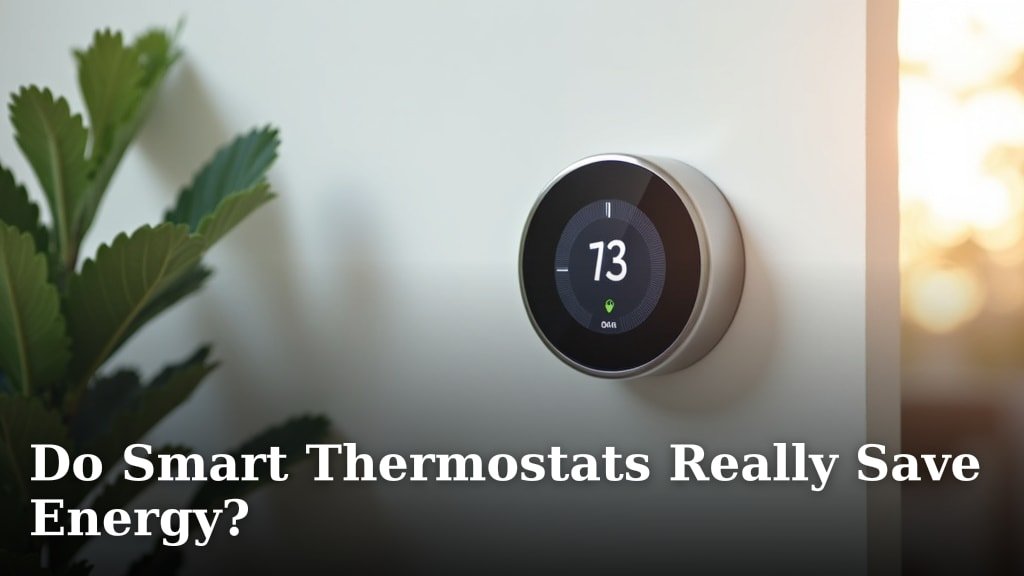
Yes, smart thermostats really can save energy, though your actual savings depend on how you use them. Many studies show you can expect to reduce your energy bill by 10-15% on average.
These clever devices learn your preferences and adjust your home’s temperature automatically. They help you avoid heating or cooling an empty house, which is where a lot of wasted energy happens. Think of it as having a super-smart assistant for your HVAC system.
- Smart thermostats can save energy (10-15% on average).
- Savings vary based on your usage habits.
- They learn your routine to optimize heating/cooling.
- Help avoid wasting energy in empty homes.
Let’s dive into how smart thermostats work and the main factors that influence how much energy you’ll save.
How Smart Thermostats Drive Energy Savings
So, how exactly do these gadgets help you save energy and money? Smart thermostats aren’t just fancy digital versions of old thermostats. They use a combination of technology and smart features to optimize your heating and cooling. This means less wasted energy. You get comfort when you need it and savings when you don’t. It’s like having a personal energy manager for your home.
Understanding the Technology Behind the Savings
At their core, smart thermostats connect to your home’s Wi-Fi network. This allows them to communicate with you and with various sensors. They gather data to make intelligent decisions about your home’s climate. This connectivity is the foundation of their “smart” capabilities.
Learning Algorithms and Predictive Capabilities
One of the most impressive features is their ability to learn. Over time, your smart thermostat tracks your routines. When do you typically wake up? When do you leave for work? When do you come home? It uses this information to build a personalized schedule for your HVAC system. We found this learning process is key to maximizing savings. It avoids heating or cooling an empty house (Department of Energy).
Sensors and Data Collection
Smart thermostats often include multiple sensors. Some detect motion to see if a room is occupied. Others monitor humidity levels or even outdoor weather conditions. This constant stream of data helps them make more accurate decisions. For instance, if no one is home, why keep the house at your ideal temperature? It’s a simple idea that makes a big difference.
Key Features That Contribute to Lower Bills
Beyond learning, several specific features directly translate into energy savings. These aren’t just convenient; they are designed with efficiency in mind. Let’s look at what makes them so effective.
Scheduling and Remote Control
This is probably the most straightforward way to save. You can create detailed schedules that match your family’s routine. Need to change the schedule on the fly? You can do it from your smartphone, even when you’re away from home. Forgot to turn down the heat before leaving for vacation? No problem. A quick tap on your app saves the day, and your wallet.
Geofencing Technology
Imagine your thermostat knows when you’re almost home. That’s geofencing. It uses your phone’s location to detect when you leave and when you’re returning. As you head out, it can automatically adjust the thermostat to an energy-saving temperature. As you approach home, it can start warming or cooling so your house is comfortable when you walk through the door. This prevents wasted energy while you’re gone.
Energy Reports and Insights
Most smart thermostats provide detailed reports on your energy usage. These reports show you how much energy you’re consuming and suggest ways to save more. Seeing your usage patterns can be very empowering. It helps you understand the impact of your settings. Many people find this feedback motivates them to be more energy-conscious (Consumer Reports).
How Your Habits Impact Smart Thermostat Savings
While the technology is impressive, your personal habits play a huge role. A smart thermostat is a tool, and like any tool, its effectiveness depends on how you use it. You can unlock its full potential, or you can limit its benefits.
Here’s a quick overview of how your actions influence your savings:
| Your Habit | Impact on Savings | Explanation |
|---|---|---|
| Consistent Away Schedule | High Savings Potential | Allows thermostat to learn and optimize for empty periods. |
| Frequent Manual Adjustments | Lower Savings Potential | Confuses learning algorithms; negates scheduled efficiencies. |
| Using Geofencing | High Savings Potential | Ensures home is only conditioned when occupied or approaching. |
| Ignoring Energy Reports | Missed Opportunities | Fails to identify and correct wasteful patterns. |
| Setting Drastic Temperature Swings | Moderate Impact | Takes more energy to recover from extreme temperature changes. |
| Utilizing Eco-Mode/Savings Features | High Savings Potential | Engages specific settings designed for peak efficiency. |
The Role of Your Home and HVAC System
It’s not just about the thermostat and your habits. The characteristics of your home and your existing heating and cooling equipment also influence savings. Think of it as a team effort where every player contributes.
Insulation and Weatherization
A well-insulated home holds its temperature better. This means your HVAC system doesn’t have to work as hard, and the smart thermostat has an easier job maintaining comfort. If your home has drafts or poor insulation, even the smartest thermostat might struggle to save significantly. Sealing leaks and improving insulation should be considered (EPA).
Efficiency of Your HVAC Unit
An old, inefficient furnace or air conditioner will naturally use more energy than a new, high-efficiency model. A smart thermostat can optimize its operation, but it can’t magically make an old unit perform like a new one. Still, even older systems can see some improvements from smarter control.
Climate Zone and Local Energy Costs
Where you live also matters. If you’re in a region with extreme hot or cold temperatures, your HVAC system works harder, and thus, your potential for savings might be higher. Similarly, if your local energy costs are high, every percentage point of savings translates into more money in your pocket.
Making the Most of Your Smart Thermostat: A Checklist
Ready to maximize your energy savings? Here’s a simple checklist to ensure you’re getting the most out of your smart thermostat:
- Install it correctly: Follow instructions for proper setup.
- Let it learn: Give it a few weeks to understand your routine.
- Enable geofencing: If available, turn this feature on.
- Review energy reports: Use the insights to adjust your habits.
- Use “away” or “eco” modes: Don’t overlook these built-in saving features.
- Adjust settings while away: Use the remote control to manage your home when nobody’s there.
By following these steps, you’ll be well on your way to a more comfortable home and a lower energy bill. It’s about being smart with your settings, just like your thermostat is smart with its decisions.
Conclusion
You’ve seen that smart thermostats offer real potential for energy savings. By understanding how they work and taking advantage of their features, you can significantly reduce your utility bills. Your efforts in installing it correctly, letting it learn, and using features like geofencing make a big difference.
Remember, it’s a partnership between the technology and your habits. The more you engage with its capabilities, the more comfortable and efficient your home becomes. Take the next step: explore smart thermostat options and start saving energy today.
Frequently Asked Questions
What is the average lifespan of a smart thermostat?
Most smart thermostats are built to last between 10 to 15 years. Their longevity often depends on brand quality and consistent Wi-Fi connectivity. They are durable devices designed for long-term use.
Do smart thermostats work with all HVAC systems?
While many smart thermostats are broadly compatible, some older or more complex HVAC systems might require specific models or adapters. Always check the compatibility list provided by the manufacturer before purchasing your unit to ensure it will work with your current setup.
Can a smart thermostat improve indoor air quality?
Some advanced smart thermostats integrate with or control your HVAC system’s ventilation and air filtration components. While they don’t directly purify air, they can manage systems that do. This can contribute to better indoor air quality by optimizing filter usage or outside air intake.
Is professional installation necessary for a smart thermostat?
Many smart thermostats are designed for DIY installation, especially if you have standard wiring. However, if your wiring is complex, you’re uncomfortable with electrical work, or you have a multi-zone system, professional installation is recommended. This ensures correct setup and optimal performance.
Will a smart thermostat still work if my Wi-Fi goes out?
Yes, your smart thermostat will typically still operate as a basic programmable thermostat if your Wi-Fi connection is lost. You won’t be able to use remote features like geofencing or make adjustments via an app. However, your pre-set schedules will continue to run as programmed.
