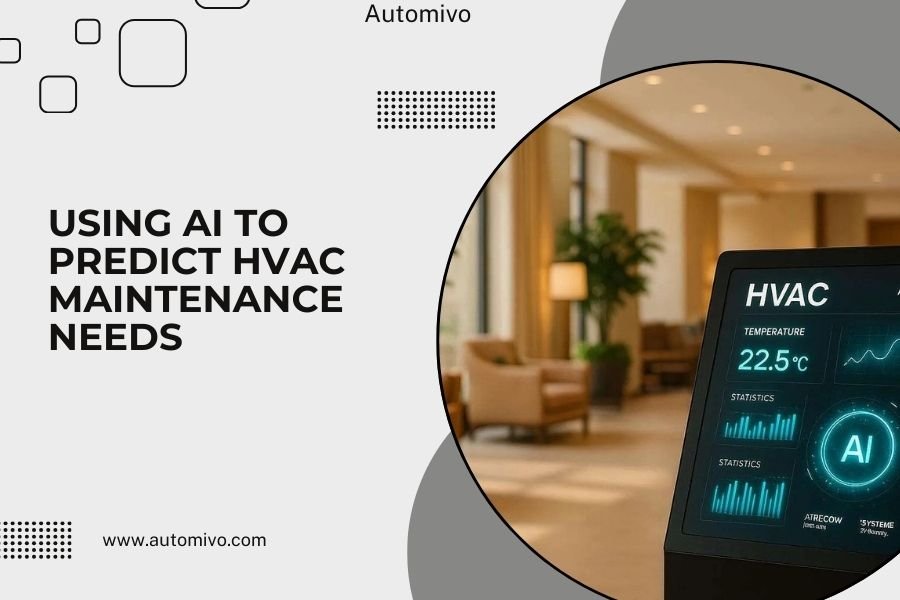
AI can predict HVAC maintenance needs by analyzing patterns in temperature data, energy usage, and equipment performance to forecast when parts will fail or need service.
This predictive technology helps you avoid unexpected breakdowns and reduces maintenance costs by up to 30% while extending your system’s lifespan.
What Is AI-Powered HVAC Predictive Maintenance?
Think of AI predictive maintenance like having a crystal ball for your HVAC system. Instead of waiting for something to break, smart sensors collect data about how your equipment runs every day.
The AI looks at this information and spots patterns that show trouble coming. Maybe your compressor is working harder than usual. Or your airflow has dropped slightly over the past month.
You wouldn’t notice these tiny changes. But AI catches them early, before they become expensive problems.
How Traditional Maintenance Falls Short
Most people use two types of HVAC maintenance. Reactive maintenance means you wait until something breaks, then call for help. This approach costs the most money and leaves you without heating or cooling when you need it most.
Preventive maintenance follows a schedule. You service your system every six months, whether it needs it or not. This works better but still wastes money on unnecessary repairs.
The Smart Alternative
Predictive maintenance only fixes what actually needs attention. Your system tells you exactly when each part needs service. No more, no less.
Research from the Department of Energy shows this approach cuts maintenance costs by 25-30% and reduces unexpected failures by up to 70%.
How AI Monitors Your HVAC System
AI uses several types of sensors to watch your equipment. Each sensor focuses on different warning signs that show when problems start developing.
Temperature Sensors
These track hot and cold spots throughout your system. When a heat exchanger starts failing, temperatures change in specific ways. AI learns these patterns and alerts you weeks before the part actually breaks.
Vibration Monitoring
Motors and fans create unique vibration patterns when they run smoothly. As bearings wear out or belts stretch, these patterns shift slightly.
AI can detect changes as small as 0.1% in vibration frequency. That’s like hearing a single wrong note in a symphony before anyone else notices.
Energy Usage Tracking
Healthy HVAC equipment uses consistent amounts of electricity. When components start failing, energy consumption often increases.
AI compares your current usage to historical data and weather conditions. If your system suddenly uses 15% more power on similar days, something needs attention.
Airflow Measurement
Blocked filters, failing fans, and duct problems all reduce airflow. Smart sensors measure air movement at key points in your system.
The AI tracks these measurements over time and predicts when filters need changing or when fans might fail.
Key Benefits You’ll Experience
AI predictive maintenance transforms how your HVAC system operates. You’ll see improvements in costs, comfort, and reliability.
Lower Operating Costs
Equipment that gets attention before it breaks lasts longer and runs more efficiently. I found research from the International Energy Agency showing that well-maintained HVAC systems use 15-40% less energy.
You’ll also avoid emergency repair calls, which typically cost 2-3 times more than scheduled maintenance.
Better Indoor Comfort
Small problems with your HVAC system affect temperature control and air quality. By catching issues early, AI keeps your home comfortable year-round.
No more hot and cold spots. No more wondering why your allergies got worse suddenly.
Extended Equipment Life
HVAC systems typically last 15-20 years with good care. Predictive maintenance can extend this to 20-25 years by preventing small problems from damaging expensive components.
Types of Problems AI Can Predict
Different HVAC components fail in predictable ways. AI learns to recognize the early warning signs for each type of problem.
Compressor Issues
Your air conditioner’s compressor is its most expensive part. AI monitors electrical current, operating temperatures, and pressure readings to predict compressor problems months in advance.
Common warning signs include slight increases in power consumption and small changes in refrigerant pressure.
Fan Motor Problems
Fan motors show their age through vibration patterns and electrical usage. AI can predict bearing failure, belt wear, and electrical issues before they cause complete motor failure.
Filter and Ductwork Issues
Dirty filters and blocked ducts reduce system efficiency and strain other components. AI tracks airflow and pressure differences to predict when cleaning or replacement is needed.
Refrigerant Leaks
Small refrigerant leaks are hard to detect manually but cause major efficiency losses. AI monitors system pressures and temperatures to spot leaks early, before they damage your compressor.
Smart Sensors and Data Collection
The quality of AI predictions depends on good data collection. Modern HVAC systems use various sensors to gather the information AI needs.
Wireless Sensor Networks
Most new predictive maintenance systems use wireless sensors that connect to your home’s WiFi. These sensors are small, battery-powered, and easy to install on existing equipment.
You can add sensors to older HVAC systems without major modifications.
Smart Thermostats as Data Hubs
Many smart thermostats now include predictive maintenance features. They collect basic data about system performance and connect to additional sensors throughout your home.
Cloud-Based Analysis
The actual AI processing happens in the cloud, not in your home. This means the system can use powerful computers and constantly updated algorithms to analyze your data.
Your sensors send data securely to cloud servers, which send back predictions and recommendations.
Implementation Options for Homeowners
You have several ways to add AI predictive maintenance to your home. The right choice depends on your budget and technical comfort level.
All-in-One Smart HVAC Systems
If you’re replacing your HVAC system, consider units with built-in predictive maintenance. These systems include all necessary sensors and connect directly to manufacturer monitoring services.
Retrofit Sensor Kits
For existing systems, retrofit kits add predictive maintenance without replacing your equipment. These kits typically include 5-8 sensors that monitor key components.
Professional Monitoring Services
Many HVAC contractors now offer predictive maintenance monitoring. They install the sensors and monitor your system remotely, calling you when maintenance is needed.
Cost Considerations
Basic retrofit kits start around $300-500. Professional monitoring services typically cost $10-20 per month. Full smart HVAC systems with predictive maintenance add $1,000-3,000 to equipment costs.
Understanding the Technology Behind AI Predictions
AI predictive maintenance uses machine learning to find patterns in your HVAC data. Understanding how this works helps you make better decisions about implementation.
Machine Learning Algorithms
The AI system learns what normal operation looks like for your specific equipment. It then watches for deviations from normal patterns.
Different algorithms work better for different types of predictions. Temperature-based predictions might use one algorithm, while vibration analysis uses another.
Data Pattern Recognition
AI excels at finding subtle patterns humans miss. It might notice that your system always uses 3% more power two weeks before the capacitor fails.
These patterns become more accurate as the system collects more data about your equipment.
Continuous Learning
The best AI systems keep learning from new data. As they monitor more HVAC systems, their predictions become more accurate for everyone.
Making Sense of Maintenance Alerts
AI systems send different types of alerts based on urgency and problem severity. Learning to interpret these alerts helps you respond appropriately.
Immediate Action Alerts
These alerts indicate problems that could cause system failure within days. Examples include refrigerant leaks, failing capacitors, or overheating motors.
Don’t ignore immediate alerts. Schedule service within 24-48 hours to avoid emergency repairs.
Scheduled Maintenance Alerts
These suggest maintenance within the next 2-4 weeks. Common examples include filter changes, belt adjustments, or cleaning tasks.
Long-term Planning Alerts
These alerts help you budget for future repairs or replacements. They might predict that your heat exchanger will need replacement in 6-12 months.
False Positive Management
No prediction system is perfect. Good AI systems learn from false alarms and become more accurate over time. Track which alerts lead to actual problems to gauge your system’s accuracy.
Integration with Existing Smart Home Systems
AI predictive maintenance works best when integrated with your other smart home devices. This creates a complete picture of your home’s comfort and efficiency.
Smart Thermostat Coordination
Your smart thermostat can adjust settings based on predictive maintenance alerts. If a component is struggling, the thermostat might reduce system load to prevent further damage.
Home Automation Integration
Connect maintenance alerts to your home automation system. You might get text messages for urgent alerts or see maintenance status on your smart home dashboard.
Future Developments in HVAC AI
AI predictive maintenance continues evolving rapidly. New developments will make these systems even more accurate and useful.
Weather Integration
Future systems will factor weather forecasts into maintenance predictions. They’ll know that a heat wave is coming and prepare your air conditioning system accordingly.
Utility Company Partnerships
Some utility companies are starting to offer predictive maintenance services. They can see patterns across thousands of homes and provide better predictions.
Conclusion
AI predictive maintenance represents a major step forward for HVAC system care. By catching problems early, you save money on repairs and keep your home comfortable year-round. The technology is becoming more affordable and easier to implement, making it accessible for most homeowners.
Whether you choose a simple retrofit kit or a full smart HVAC system, predictive maintenance will change how you think about home comfort. Instead of waiting for problems, you’ll stay ahead of them with smart technology that truly understands your equipment.
Can AI predictive maintenance work with old HVAC systems?
Yes, retrofit sensor kits can add predictive maintenance to systems that are 10-15 years old. The sensors attach externally to existing equipment without requiring system modifications.
How accurate are AI maintenance predictions?
Well-trained AI systems achieve 85-95% accuracy for major component failures. Accuracy improves over time as the system learns your specific equipment’s patterns.
Do I still need regular HVAC service calls with AI monitoring?
Yes, but service calls become more targeted and efficient. Instead of general checkups, technicians focus on specific issues the AI has identified, reducing service time and costs.
What happens if my internet goes down?
Most systems store data locally and upload it when connectivity returns. Basic monitoring continues, but you might miss real-time alerts until internet service resumes.
Is my HVAC data secure with cloud-based AI systems?
Reputable systems use encryption and secure data centers to protect your information. HVAC data is typically less sensitive than personal information, containing mainly equipment performance metrics.
