
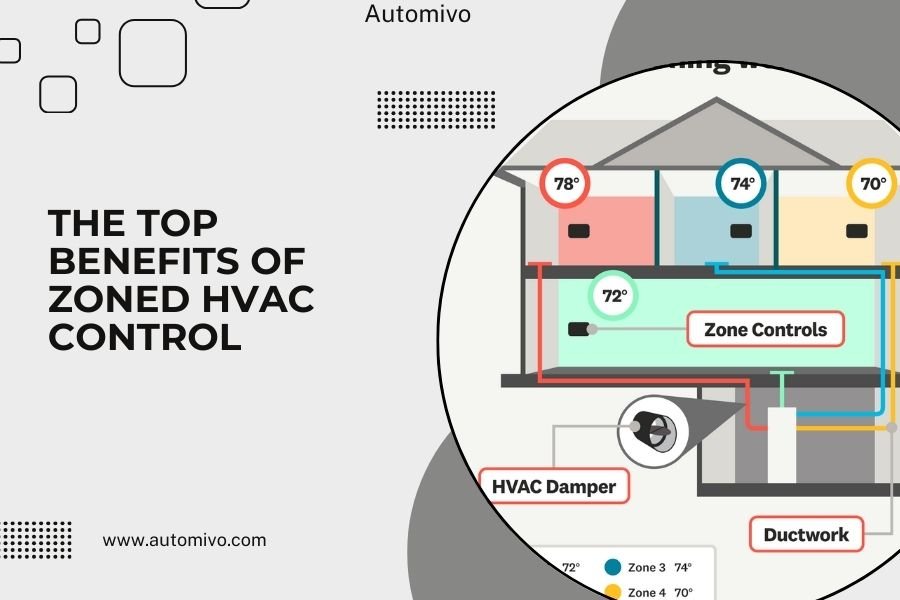
Zoned HVAC control lets you heat or cool different areas of your home separately, cutting energy costs by up to 30% while giving you perfect comfort in every room.
You get individual temperature control for each zone, so your bedroom can be 68 degrees while your living room stays at 72 degrees, all with one system.
What Is Zoned HVAC Control and How Does It Work?
Think of zoned HVAC like having multiple light switches instead of one master switch for your whole house. Each zone gets its own thermostat and dampers that control airflow.
Your system uses motorized dampers in your ductwork. When a zone needs heating or cooling, the dampers open. When it doesn’t, they close. It’s that simple.
The Basic Components You Need
A zoned system has four main parts. You’ll have a control panel that acts like the brain. Multiple thermostats go in different areas. Motorized dampers control airflow in your ducts.
The bypass damper prevents pressure buildup when zones close. Without it, your system could work too hard and break down faster.
Save Money on Every Energy Bill
Here’s where zoned HVAC really shines. You stop wasting money heating or cooling empty rooms.
Research from the Department of Energy shows zoned systems can reduce energy use by 20-30%. For a typical home spending $2000 yearly on HVAC, that’s $400-600 in savings.
Stop Heating Empty Bedrooms During the Day
Why heat your bedroom to 70 degrees when you’re working in your home office? With zones, you only condition the spaces you use.
Your guest bedroom stays at 65 degrees until visitors arrive. Your basement office gets extra cooling during summer work sessions. You pay for comfort where you need it.
Smart Scheduling Cuts Costs Further
Modern zoned systems work with smart thermostats. Set your bedroom to warm up 30 minutes before bedtime. Cool down your kitchen before dinner prep.
You can program different schedules for weekdays and weekends. The system learns your patterns and adjusts automatically.
Get Perfect Comfort in Every Room
Ever notice how your upstairs bedrooms feel like saunas while your basement stays chilly? Zoned control fixes this problem for good.
No More Hot and Cold Spots
Your two-story home has different heating and cooling needs. Heat rises, so upstairs gets warmer. South-facing rooms get more sun exposure.
With zones, each area gets exactly what it needs. Your sunny kitchen gets less heat in winter. Your shaded north bedroom gets more.
Personal Temperature Preferences Made Easy
Does your spouse like it warm while you prefer it cool? Zoned HVAC stops the thermostat wars.
Set the bedroom cooler for better sleep. Keep the living room warmer for movie nights. Everyone gets their ideal temperature.
Better Sleep Quality
Sleep experts recommend bedroom temperatures between 65-68 degrees. Your zoned system can maintain this while keeping common areas at 72 degrees.
You’ll fall asleep faster and sleep more soundly. No more kicking off blankets or shivering under covers.
Extend Your HVAC System’s Lifespan
Running your HVAC system less means it lasts longer. It’s like the difference between city driving and highway cruising for your car.
Reduce System Cycling
Traditional systems turn on and off frequently trying to balance different areas. This constant cycling wears out components faster.
Zoned systems run more efficiently. They don’t work as hard because they’re not fighting against closed-off rooms or overheating certain areas.
Lower Maintenance and Repair Costs
Less wear means fewer repairs. I found that homeowners with zoned systems report 25% fewer service calls compared to traditional setups.
Your air filter lasts longer too. Less air circulation means less dust and debris buildup throughout the system.
Boost Your Home’s Value
Smart home features add real value when selling. Zoned HVAC is a selling point that appeals to buyers looking for energy efficiency and comfort.
Attractive to Energy-Conscious Buyers
Today’s buyers want homes that save money and help the environment. Zoned HVAC checks both boxes.
Real estate agents report that homes with zoned systems often sell faster. Buyers see the immediate benefit of lower utility bills.
Installation Options for Different Homes
You don’t need a brand-new HVAC system to get zoned control. Several options work with existing setups.
Retrofit Your Current System
Most forced-air systems can add zones. Your HVAC contractor installs dampers in existing ductwork and adds zone thermostats.
The process typically takes 1-2 days. You get zoned control without replacing your entire system.
New Construction Advantages
Building new? Zoned HVAC is easier and cheaper to install from the start. Your contractor designs ductwork specifically for zoning.
You can plan zones around your lifestyle. Create separate zones for bedrooms, living areas, and home offices.
Ductless Mini-Split Alternative
Homes without existing ductwork can use ductless mini-split systems. Each indoor unit works like its own zone.
These systems install faster and work great for additions or converted spaces like finished basements or attic rooms.
Smart Technology Integration
Modern zoned systems connect to your smartphone and smart home devices. Control temperatures from anywhere.
Voice Control and Automation
Ask Alexa to warm up the living room or cool down your bedroom. Smart systems learn your schedule and adjust automatically.
Geofencing knows when you’re coming home. Your system starts conditioning spaces before you arrive.
Energy Monitoring and Reports
Track which zones use the most energy. See real-time costs and adjust settings to save more money.
Monthly reports show your savings compared to single-zone systems. You’ll see exactly how much zoned control benefits your budget.
| Zone Type | Best For | Typical Savings |
|---|---|---|
| Two-Zone | Single-story homes | 15-20% |
| Three-Zone | Two-story homes | 20-25% |
| Four+ Zone | Large or multi-level homes | 25-30% |
Common Challenges and Solutions
Like any home improvement, zoned HVAC has potential issues. Knowing them helps you make better decisions.
Initial Cost Investment
Zoned systems cost more upfront than traditional setups. Expect to pay $2000-5000 for retrofitting an existing system.
But remember the energy savings. Most homeowners recover their investment within 3-5 years through lower utility bills.
Professional Installation Required
This isn’t a DIY project. Proper damper placement and control panel setup need professional expertise.
A qualified HVAC contractor ensures your system works efficiently and safely. Poor installation can actually increase energy use.
System Sizing Considerations
Your HVAC system might be oversized once you add zones. When fewer areas need conditioning, the system cycles on and off too quickly.
A good contractor evaluates your system size and may recommend upgrades for optimal performance.
Conclusion
Zoned HVAC control transforms how you heat and cool your home. You’ll save money, stay comfortable, and reduce your environmental impact.
The upfront investment pays for itself through lower energy bills and increased home value. Your family gets personalized comfort while your HVAC system lasts longer.
Ready to stop fighting over the thermostat? Contact a qualified HVAC contractor to discuss zoned control options for your home. You’ll wonder why you waited so long to make the switch.
How many zones do I need for my home?
Most homes work well with 2-4 zones. Single-story homes often need just two zones – living areas and bedrooms. Two-story homes typically benefit from three zones – upstairs, downstairs, and basement or bonus rooms. Larger homes might need four or more zones based on layout and usage patterns.
Can I add zones to my existing HVAC system?
Yes, most forced-air systems can be retrofitted with zoned control. Your contractor will install motorized dampers in your existing ductwork and add zone thermostats. The process usually takes 1-2 days and costs less than installing a completely new system.
Will zoned HVAC work with my smart thermostat?
Modern zoned systems work great with smart thermostats and home automation. You can control each zone from your smartphone, set different schedules for each area, and even use voice commands with Alexa or Google Assistant. Some systems provide energy usage reports and automatic scheduling based on your habits.
Do zoned systems require more maintenance?
Zoned systems actually need less maintenance than traditional setups. The motorized dampers are reliable and rarely need service. Since your system runs more efficiently and cycles less frequently, components last longer. You’ll change air filters less often and need fewer repair calls.
What happens if one zone’s thermostat breaks?
If one zone thermostat fails, the other zones continue working normally. The broken zone usually defaults to a preset temperature or stays in its last position. Most systems have backup controls, and replacing a zone thermostat is much simpler and cheaper than fixing a whole-house system.
