Smart thermostats automatically adjust temperature based on schedules and sensors, while home thermal mass stores and releases heat naturally through materials like concrete and stone.
The main difference is that smart thermostats actively control your HVAC system, but thermal mass works passively to keep temperatures stable without using extra energy.
What Are Smart Thermostats?
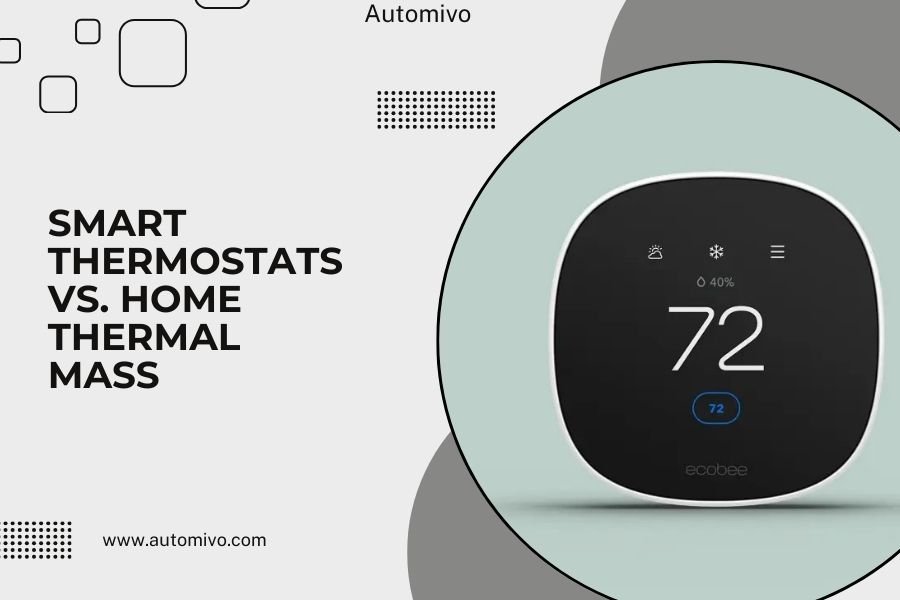
Smart thermostats are digital devices that control your heating and cooling system. They connect to your home’s Wi-Fi network. You can control them from your phone, even when you’re not home.
These devices learn your daily patterns. They know when you wake up, leave for work, and go to sleep. Then they adjust the temperature automatically to save energy and keep you comfortable.
Key Features of Smart Thermostats
Most smart thermostats come with these helpful features:
- Remote control through smartphone apps
- Learning capabilities that adapt to your schedule
- Energy usage reports and savings tracking
- Voice control compatibility with Alexa or Google
- Geofencing that detects when you’re away
- Multi-zone control for different room temperatures
Understanding Home Thermal Mass
Home thermal mass refers to materials that absorb, store, and slowly release heat. Think of it like a giant battery for temperature. Heavy materials like concrete walls, stone floors, and brick absorb heat during warm periods and release it when temperatures drop.
This natural process helps keep your home’s temperature more stable. You won’t see those quick temperature swings that happen in lightweight homes.
Materials That Provide Thermal Mass
Different materials store different amounts of heat. Here are the most effective ones:
- Concrete floors and walls
- Natural stone and tile
- Brick walls and fireplaces
- Adobe and earth construction
- Water walls or tanks
- Phase-change materials in modern buildings
How Thermal Mass Works
During the day, thermal mass absorbs excess heat from sunlight, your heating system, or warm air. At night or during cooler periods, it slowly releases that stored heat back into your living space.
This process happens without any electricity or mechanical systems. It’s completely passive and works 24/7.
Smart Thermostats vs. Thermal Mass: The Key Differences
Let me break down how these two approaches to temperature control actually work in practice.
| Aspect | Smart Thermostats | Thermal Mass |
|---|---|---|
| Energy Use | Reduces HVAC runtime | Stores free solar energy |
| Response Time | Immediate temperature changes | Gradual temperature shifts |
| Installation | Easy retrofit in any home | Built into home structure |
| Cost | $150-$400 device cost | Higher construction costs |
| Maintenance | Software updates needed | No maintenance required |
Active vs. Passive Temperature Control
Smart thermostats give you active control. You can change settings instantly and see immediate results. Want it warmer? Adjust the app and your system kicks on.
Thermal mass works passively in the background. You don’t control it directly, but it smooths out temperature swings naturally. It’s like having a steady, calming influence on your home’s climate.
Energy Efficiency Comparison
Both approaches save energy, but in different ways. Smart thermostats can reduce energy use by 10-15% according to EPA studies. They do this by running your HVAC system only when needed.
Thermal mass can reduce heating and cooling loads by 20-30% in the right climate. But this benefit depends heavily on your local weather patterns and home design.
When Smart Thermostats Work Best
Smart thermostats shine in certain situations. They’re perfect if you have unpredictable schedules or want precise control over your home’s temperature.
Ideal Conditions for Smart Thermostats
You’ll get the most benefit from a smart thermostat if:
- Your family has varying daily schedules
- You travel frequently or work irregular hours
- You want detailed energy usage data
- Your current thermostat is basic or outdated
- You live in a climate with significant seasonal changes
Climate Considerations
Smart thermostats work well in any climate. They’re especially helpful in areas with extreme temperatures where precise timing can save lots of energy.
In moderate climates, you might not see as dramatic savings. But you’ll still enjoy the convenience and control features.
When Thermal Mass Provides the Most Benefit
Thermal mass works best in specific climate conditions and building situations. It’s not a one-size-fits-all solution.
Perfect Conditions for Thermal Mass
Thermal mass provides maximum benefit when:
- You have large daily temperature swings
- Your home gets good solar exposure
- You live in a dry climate with cool nights
- You’re building a new home or doing major renovations
- You want long-term, passive energy savings
Climate Zones That Benefit Most
Desert and semi-arid regions see the biggest benefits from thermal mass. Places like Arizona, New Mexico, and parts of California are ideal.
Humid climates don’t benefit as much because thermal mass can actually work against you by storing unwanted moisture along with heat.
Combining Smart Thermostats and Thermal Mass
Here’s the thing: you don’t have to choose just one approach. Smart thermostats and thermal mass can work together beautifully.
How They Complement Each Other
When you combine both strategies, thermal mass provides a stable temperature foundation. Your smart thermostat then makes fine adjustments as needed.
This combination can give you the best of both worlds: passive energy storage plus active, intelligent control.
Programming Considerations
If your home has significant thermal mass, you’ll need to program your smart thermostat differently. Temperature changes happen more slowly, so you’ll want longer lead times for heating and cooling.
Many smart thermostats can learn these patterns automatically. They’ll figure out how long your home takes to reach target temperatures.
Cost Analysis: Smart Thermostats vs. Thermal Mass
Let’s talk money. The cost picture for these two options is completely different.
Smart Thermostat Costs
Smart thermostats have low upfront costs but ongoing considerations:
- Device cost: $150-$400
- Installation: $100-$200 (if you hire a pro)
- Potential utility rebates: $50-$100
- Annual energy savings: $50-$200
Thermal Mass Investment
Thermal mass requires higher initial investment but lasts decades:
- Additional construction costs: $2-$8 per square foot
- Design modifications needed
- Long-term energy savings: varies widely by climate
- Increased home value in energy-conscious markets
Installation and Retrofitting Options
Your home’s current state affects which option makes more sense for you.
Smart Thermostat Installation
Most homeowners can install a smart thermostat in under an hour. You’ll need basic tools and the ability to connect a few wires safely.
If your current thermostat uses a C-wire (common wire), installation is straightforward. Older systems might need minor electrical updates.
Adding Thermal Mass to Existing Homes
Adding thermal mass to an existing home is challenging but possible. You might consider:
- Installing tile or stone floors
- Adding a brick or stone accent wall
- Using thermal mass materials in additions or remodels
- Installing water walls or phase-change material systems
Maintenance and Longevity
These systems have very different maintenance needs over time.
Smart Thermostat Maintenance
Smart thermostats need regular attention:
- Software updates every few months
- Wi-Fi connectivity troubleshooting
- Battery replacement (if battery-powered)
- Potential replacement every 10-15 years
Thermal Mass Longevity
Thermal mass materials last for decades with virtually no maintenance. Concrete, stone, and brick can function effectively for 50+ years.
This makes thermal mass a true set-it-and-forget-it solution once properly installed.
Environmental Impact Considerations
Both options can reduce your home’s environmental footprint, but in different ways.
Smart Thermostat Environmental Benefits
Smart thermostats reduce energy consumption by optimizing HVAC operation. Research from the EPA shows average energy reductions of 10-15% are common.
This translates to lower carbon emissions from power plants and reduced strain on the electrical grid during peak demand periods.
Thermal Mass Sustainability
Thermal mass uses natural materials and processes. Once installed, it provides benefits without consuming any electricity or requiring replacement parts.
The environmental impact depends on the materials used. Local stone and earth-based materials have lower transportation impacts than shipped materials.
Making the Right Choice for Your Home
So which option should you choose? The answer depends on your specific situation.
Choose Smart Thermostats If You:
- Want immediate energy savings and convenience
- Live in any climate zone
- Rent or don’t want major home modifications
- Have an unpredictable schedule
- Want precise temperature control
Consider Thermal Mass If You:
- Are building new or doing major renovations
- Live in a dry climate with temperature swings
- Want long-term, passive energy benefits
- Prefer low-maintenance solutions
- Are interested in sustainable building practices
Conclusion
Smart thermostats and thermal mass represent two different philosophies for home temperature control. Smart thermostats give you active, intelligent control that adapts to your lifestyle. Thermal mass provides passive, steady temperature regulation that works with natural processes.
For most homeowners, a smart thermostat offers the best combination of benefits, convenience, and affordability. You can install one today and start seeing energy savings immediately. Thermal mass makes sense if you’re building new or live in the right climate conditions.
The best approach might be combining both strategies. A smart thermostat can optimize the performance of a home with good thermal mass, giving you maximum efficiency and comfort year-round.
Can I use a smart thermostat in a home with high thermal mass?
Yes, smart thermostats work great with thermal mass. You may need to adjust programming for slower temperature changes, but many smart thermostats learn these patterns automatically and optimize accordingly.
How much thermal mass do I need to see real benefits?
You typically need thermal mass equivalent to about 4-6 inches of concrete or 150-300 pounds per square foot of floor area. Even smaller amounts like tile floors or stone countertops provide some benefit.
Will a smart thermostat work with my old heating system?
Most smart thermostats work with systems that are at least 10-15 years old. Very old systems might need minor wiring updates, but compatibility is usually good with gas, oil, electric, and heat pump systems.
Does thermal mass help with cooling in summer?
Yes, but mainly in dry climates with cool nights. The thermal mass absorbs heat during hot days and releases it at night when outdoor air is cooler. This works best when nighttime temperatures drop significantly.
What’s the payback period for smart thermostats versus thermal mass?
Smart thermostats typically pay for themselves in 1-3 years through energy savings. Thermal mass payback varies widely from 5-20 years depending on climate, energy costs, and construction expenses.