
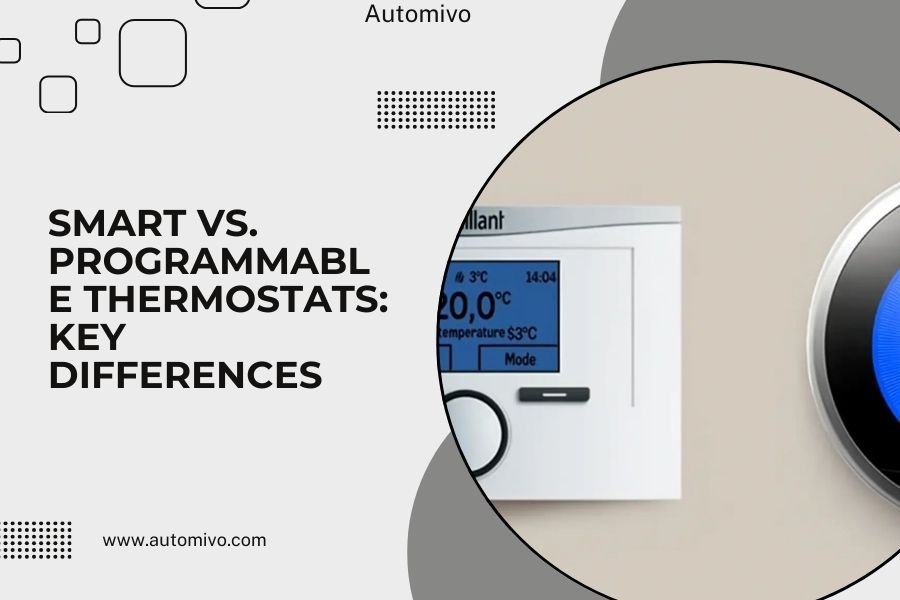
Smart thermostats connect to Wi-Fi and learn your habits, while programmable thermostats follow fixed schedules you set manually.
The main difference between smart vs. programmable thermostats is that smart models adapt automatically and offer remote control through apps.
Choosing the right thermostat can cut your energy bills by 10-20% and make your home way more comfortable. But with so many options out there, how do you pick?
I’ve researched both types and found that each serves different needs. Let me walk you through everything so you can make the best choice for your home.
What Is a Programmable Thermostat?
A programmable thermostat lets you set heating and cooling schedules in advance. Think of it like a timer for your HVAC system.
You program it once to automatically adjust temperatures at certain times. For example, you might set it to lower the heat at 8 AM when you leave for work, then warm up again at 5 PM.
How Programmable Thermostats Work
These devices store your schedule in memory. They don’t need internet or phone apps. You use buttons or a touchscreen right on the unit to make changes.
Most models offer 7-day programming. You can set different schedules for weekdays and weekends.
Types of Programmable Thermostats
You’ll find three main types:
- 5+2 day models (weekdays + weekends)
- 5+1+1 models (weekdays + Saturday + Sunday)
- 7-day models (different schedule each day)
What Is a Smart Thermostat?
Smart thermostats connect to your home’s Wi-Fi network. They learn from your behavior and can be controlled remotely through smartphone apps.
These devices use sensors and algorithms to optimize your home’s temperature automatically. Some even detect when you’re home or away using your phone’s location.
How Smart Thermostats Work
Smart models collect data about your habits, weather, and home’s thermal properties. They use this info to make automatic adjustments.
Most connect to your Wi-Fi and sync with apps on your phone. You can adjust settings from anywhere in the world.
Key Smart Features
Here’s what makes them “smart”:
- Learning algorithms that adapt to your schedule
- Remote control through smartphone apps
- Voice control with Alexa or Google Assistant
- Weather-based adjustments
- Energy usage reports
- Geofencing that knows when you’re home
Smart vs. Programmable Thermostats: Side-by-Side Comparison
| Feature | Programmable | Smart |
|---|---|---|
| Price Range | $25-$150 | $100-$300 |
| Wi-Fi Required | No | Yes |
| Remote Control | No | Yes |
| Learning Ability | No | Yes |
| Voice Control | No | Yes |
| Energy Reports | No | Yes |
Installation Requirements
Programmable Thermostat Installation
Most programmable models are pretty straightforward to install. You’ll need to match colored wires from your old thermostat to the new one.
The main requirement is a C-wire (common wire) for power. Many older homes don’t have this, but basic programmable units often work without it.
Tools You’ll Need
- Screwdriver
- Wire strippers
- Drill (maybe)
- Level
Smart Thermostat Installation
Smart thermostats almost always need a C-wire for constant power. Without it, they can’t maintain Wi-Fi connections or run learning algorithms.
If your home lacks a C-wire, you might need to run new wiring or use a power adapter. This often means calling an electrician.
Additional Setup Steps
- Download the manufacturer’s app
- Connect to your Wi-Fi network
- Create an account
- Configure smart home integrations
Energy Savings Potential
Programmable Thermostat Savings
Research from the EPA suggests programmable thermostats can save 10-15% on heating and cooling costs when used properly.
The key phrase is “when used properly.” Many people set them once and forget to adjust for schedule changes.
Smart Thermostat Savings
Smart models often deliver better real-world savings because they adapt automatically. Studies show average savings of 10-23% on heating and cooling bills.
The learning features mean they keep optimizing even when your routine changes. No manual updates needed.
Why Smart Models Save More
- They learn your actual habits (not just your programmed schedule)
- Weather-based adjustments prevent overcooling or overheating
- Geofencing ensures you’re not heating an empty house
- Energy reports help you spot waste
Ease of Use
Programmable Models
These can be tricky to program initially. Ever tried to set a digital watch? It’s similar.
Once programmed, they’re set-and-forget. But changing schedules means navigating button combinations and tiny displays.
Smart Models
Smart thermostats win big on convenience. Apps are usually intuitive and user-friendly.
Voice control makes quick adjustments effortless: “Hey Google, set the temperature to 72 degrees.”
Learning Curve Differences
Programmable units require you to think through your schedule and program accordingly. Smart models flip this – they watch and learn from you.
Connectivity and Control Options
Programmable Thermostat Controls
Control happens at the device only. You walk to the wall unit to make changes.
Some newer models offer basic smartphone apps, but functionality is limited compared to true smart thermostats.
Smart Thermostat Connectivity
Full remote control through smartphone apps is the biggest advantage. Forgot to turn down the heat before vacation? No problem.
Smart Home Integration
Smart thermostats work with:
- Amazon Alexa and Google Assistant
- Apple HomeKit
- SmartThings and other hubs
- Security systems for occupancy detection
Cost Analysis
Upfront Costs
Programmable thermostats cost $25-150. Basic models with essential features start around $50.
Smart thermostats range from $100-300. Popular models like the Nest or Ecobee typically cost $150-250.
Installation Costs
DIY installation is common for programmable units. Professional installation runs $100-200 if needed.
Smart models often need professional installation due to C-wire requirements. Budget $150-300 for this.
Long-term Value
Both types typically pay for themselves through energy savings within 1-2 years. Smart models may deliver faster payback due to better optimization.
Reliability and Maintenance
Programmable Thermostat Reliability
Simple electronics mean fewer things can go wrong. Most units last 10+ years with minimal maintenance.
The main issue is dead batteries in battery-powered models. Otherwise, they’re quite dependable.
Smart Thermostat Reliability
More complexity means more potential failure points. Wi-Fi outages can affect some features, though basic heating and cooling still work.
Software updates keep features current but occasionally introduce bugs. Most major brands have good track records though.
Maintenance Requirements
- Smart models: Software updates, occasional app troubleshooting
- Programmable models: Battery changes, dust cleaning
Which Should You Choose?
Choose a Programmable Thermostat If:
- You have a very consistent schedule
- Budget is a primary concern
- You prefer simple, reliable technology
- Your home lacks a C-wire and you don’t want rewiring
- You’re not interested in smart home features
Choose a Smart Thermostat If:
- Your schedule changes frequently
- You want remote control capability
- You’re building a smart home ecosystem
- You like detailed energy usage data
- Maximum energy savings are important
The Sweet Spot
For most people, a mid-range smart thermostat offers the best balance of features, savings, and convenience. The extra upfront cost usually pays off within a year.
Conclusion
Both smart and programmable thermostats can save you money and improve comfort. Programmable models work great for consistent schedules and tight budgets. Smart thermostats shine when you want maximum convenience and optimization.
I found that most homeowners who upgrade to smart thermostats don’t regret the extra cost. The convenience and energy insights often justify the price difference.
Consider your schedule, budget, and tech comfort level. Either choice beats manually adjusting your thermostat – your wallet and comfort will thank you.
Can I install a smart thermostat myself, or do I need a professional?
Many smart thermostats can be DIY installed if your home already has a C-wire. Without one, you’ll likely need an electrician to run new wiring or install a power adapter kit.
Do smart thermostats work during internet outages?
Yes, smart thermostats continue basic heating and cooling functions during Wi-Fi outages. You lose remote control and smart features temporarily, but your home stays comfortable.
How long does it take a smart thermostat to learn my schedule?
Most smart thermostats start learning immediately but need 1-2 weeks to establish reliable patterns. Full optimization typically takes about a month of normal use.
Are programmable thermostats compatible with all HVAC systems?
Most programmable thermostats work with standard gas, oil, and electric heating systems plus central air conditioning. Heat pumps and complex multi-stage systems may need specific compatible models.
Which thermostat type saves more money in the long run?
Smart thermostats typically save more money due to automatic optimization and learning features. However, a properly programmed basic thermostat can achieve similar savings if you maintain consistent schedules.
