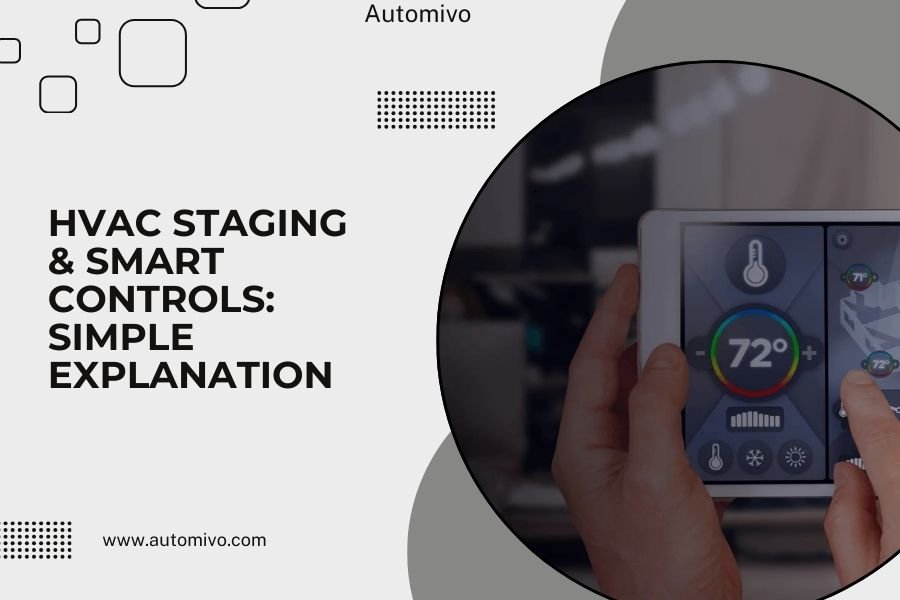
HVAC staging controls how many parts of your heating and cooling system run at once based on your home’s temperature needs.
Smart HVAC staging automatically switches between single-stage, two-stage, or variable-speed operation to save energy while keeping you comfortable.
What Is HVAC Staging?
Think of HVAC staging like the gears on a bicycle. You don’t always need full power to get where you’re going.
Your HVAC system has different “stages” or power levels. Single-stage systems run at 100% capacity or turn off completely. Multi-stage systems can run at lower speeds when you don’t need full heating or cooling.
Smart controls make this process automatic. They read your home’s temperature and decide which stage to use.
Single-Stage Systems
Single-stage systems are like old light switches. They’re either fully on or completely off.
When your thermostat calls for heat or cooling, the system kicks on at maximum power. Once the target temperature is reached, it shuts off completely.
Two-Stage Systems
Two-stage systems give you more control. They have a low setting (usually 60-70% capacity) and a high setting (100% capacity).
On mild days, stage one handles most of your comfort needs. On really hot or cold days, stage two kicks in for extra power.
Variable-Speed Systems
Variable-speed systems are like having a dimmer switch for your HVAC. They can run anywhere from 25% to 100% capacity.
These systems adjust their speed constantly based on your home’s needs. They’re the most energy-efficient option available.
How Smart Controls Work With Staging
Smart thermostats make staging decisions based on data. They look at indoor temperature, outdoor weather, and your comfort preferences.
The smart control learns your home’s heating and cooling patterns. It knows how long it takes to reach your target temperature in different weather conditions.
Temperature Differential Control
Smart controls use temperature differentials to decide when to stage up or down.
For example, if your home is 2 degrees below your target, stage one might start. If it’s 4 degrees below target, stage two kicks in immediately.
Time-Based Staging
Smart systems also consider time. If stage one has been running for 10 minutes without reaching your target temperature, the system might stage up automatically.
This prevents your home from staying uncomfortable for too long on extreme weather days.
Outdoor Temperature Lockouts
Many smart controls have outdoor temperature sensors. When it’s really cold outside, the system might skip stage one and go straight to stage two.
This feature saves time and keeps you comfortable when you need maximum heating power.
Energy Savings From Smart Staging
Smart staging can cut your energy bills by 15-30% compared to single-stage systems.
I found research showing that two-stage systems use about 20% less energy than single-stage units (Department of Energy). Variable-speed systems can save even more.
Why Staging Saves Energy
Running your system at lower speeds is more efficient than constantly turning it on and off at full power.
Think about driving in the city versus highway cruising. Stop-and-go traffic uses more gas than steady speeds.
Longer Run Times Equal Better Efficiency
HVAC systems work most efficiently when they run for longer periods at lower speeds.
Short cycling (turning on and off frequently) wastes energy during startup. Smart staging keeps your system running steadily at the right power level.
Humidity Control Benefits
Longer run times also remove more humidity from your home during summer. This makes you feel cooler at higher temperatures, saving even more energy.
Comfort Improvements With Smart Staging
Smart staging eliminates the temperature swings you get with single-stage systems.
Instead of big temperature drops and spikes, you get steady, consistent comfort throughout your home.
Quieter Operation
Lower-stage operation runs much quieter than full-speed operation.
Your system spends most of its time in stage one, which means less noise in your living spaces.
Better Air Circulation
Smart controls can run the fan independently to circulate air even when heating or cooling isn’t needed.
This eliminates hot and cold spots throughout your home. Every room stays at a more consistent temperature.
Improved Indoor Air Quality
Constant air circulation means your air filter works more effectively. More air passes through your filtration system throughout the day.
Types of Smart HVAC Controls
Smart thermostats are the most common type of smart HVAC control. But there are other options depending on your system type.
Smart Thermostats
Smart thermostats connect to your WiFi and learn your schedule. They can control multi-stage systems automatically.
Popular models include Nest, Ecobee, and Honeywell smart thermostats. Most work with two-stage and some variable-speed systems.
Zone Control Systems
Zone control systems divide your home into different temperature zones. Each zone has its own thermostat and dampers.
Smart zone systems can stage your equipment based on how many zones are calling for heating or cooling.
Communicating Controls
The most advanced systems use communicating controls. The thermostat “talks” directly to your HVAC equipment.
These systems provide the most precise control over staging and can optimize performance in real-time.
| Control Type | Staging Capability | Energy Savings | Installation Complexity |
|---|---|---|---|
| Basic Smart Thermostat | Two-Stage | 15-20% | DIY Friendly |
| Advanced Smart Thermostat | Variable Speed | 20-25% | Professional Install |
| Communicating System | Full Variable | 25-30% | Professional Required |
Common Staging Problems and Solutions
Smart staging systems can have issues if they’re not set up correctly.
Short Cycling Issues
If your system turns on and off too frequently, the staging delays might be set wrong.
Most systems need a 10-15 minute delay between stages. Your HVAC contractor can adjust these settings.
Stage Two Running Too Often
If stage two runs more than 20-30% of the time, your system might be undersized or have airflow problems.
Check your air filter first. A dirty filter can cause staging problems.
Thermostat Location Problems
Poor thermostat placement can cause incorrect staging decisions.
Thermostats near windows, doors, or vents don’t get accurate temperature readings. This leads to improper staging.
Choosing the Right Smart Control for Your System
Not all smart controls work with every HVAC system. You need to match your control to your equipment.
Check Your Current System
Look at your current thermostat wiring. Count the wires and note their colors.
Two-stage systems typically have extra wires labeled W2 (second-stage heat) or Y2 (second-stage cooling).
Heat Pump Considerations
Heat pumps have different staging requirements than regular furnaces and air conditioners.
Make sure your smart thermostat specifically supports heat pump staging. Not all models do this correctly.
Professional Installation Benefits
While basic smart thermostats can be DIY projects, staging setup often needs professional help.
HVAC contractors can configure staging delays, temperature differentials, and lockout settings for optimal performance.
Maintenance for Smart Staging Systems
Smart staging systems need regular maintenance to work properly.
Filter Changes Are Critical
Dirty filters affect airflow and can cause improper staging decisions.
Change filters every 1-3 months depending on your home’s dust levels and filter type.
Annual Professional Service
Have your HVAC contractor check staging operation during annual maintenance visits.
They can verify that stage delays and temperature differentials are set correctly for your home.
Future of Smart HVAC Staging
Smart HVAC controls are getting more advanced every year.
New systems use artificial intelligence to predict your heating and cooling needs based on weather forecasts and occupancy patterns.
Integration with Smart Home Systems
Smart HVAC controls are integrating with whole-home automation systems.
They can adjust staging based on whether anyone is home, outdoor air quality, and time-of-use electricity rates.
Conclusion
HVAC staging with smart controls is one of the best ways to improve your home’s comfort and energy efficiency. These systems automatically adjust your heating and cooling power based on your actual needs, not just turning everything on full blast.
Smart staging can cut your energy bills by 15-30% while keeping your home more comfortable year-round. The technology works by running your system at lower speeds for longer periods, which is more efficient than constant on-off cycling.
If you’re considering upgrading your HVAC controls, look for systems that match your current equipment and staging capabilities. Professional installation and setup will help you get the maximum benefits from your investment.
How do I know if my HVAC system supports staging?
Check your current thermostat wiring for extra wires labeled W2, Y2, or look for variable-speed equipment labels on your furnace or air handler. Single-stage systems typically have only basic heating and cooling wires.
Can I add smart staging controls to an old HVAC system?
You can add smart thermostats to most systems, but you’ll only get staging benefits if your equipment supports multiple stages. Single-stage equipment won’t provide staging benefits even with smart controls.
What’s the difference between two-stage and variable-speed systems?
Two-stage systems have two fixed speeds (usually 70% and 100%), while variable-speed systems can adjust continuously from about 25% to 100% capacity based on your home’s needs.
Why does my smart thermostat sometimes skip stage one?
Smart thermostats skip to stage two when your home is far from the target temperature or outdoor temperatures are extreme. This helps reach comfortable temperatures faster when needed.
How long should each stage run before switching to the next?
Most systems wait 10-15 minutes in stage one before moving to stage two. This prevents unnecessary energy use while giving the lower stage time to meet your comfort needs.
