
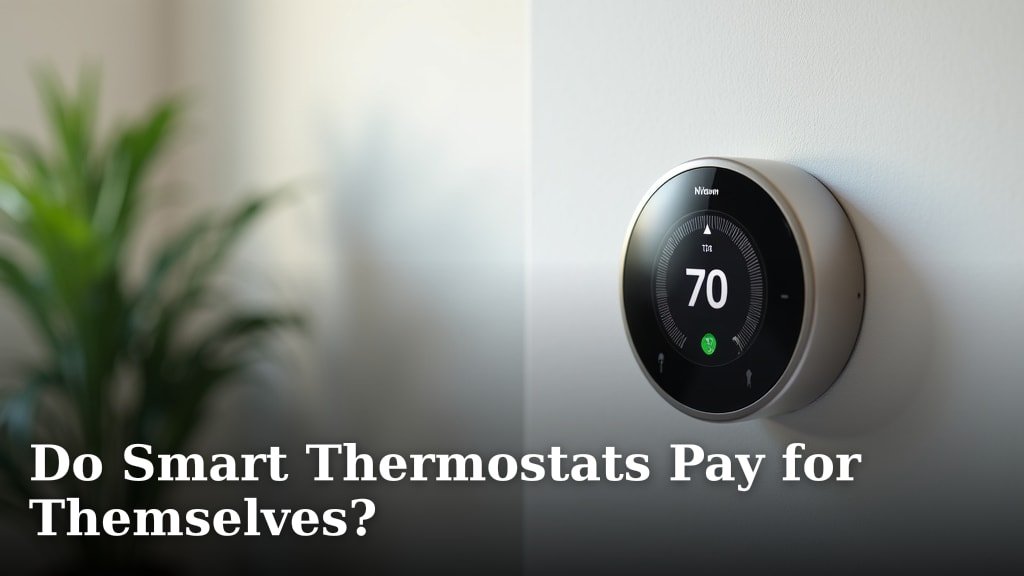
Yes, smart thermostats can pay for themselves over time, mainly through energy savings. We found that most homeowners see enough savings on their utility bills to cover the device’s cost within a few years. It’s a smart investment for your home.
You’re not just buying a fancy gadget; you’re investing in a smarter way to manage your home’s heating and cooling. These devices offer features like learning your schedule and adjusting temperatures automatically. This means less wasted energy and more money staying in your pocket.
- Smart thermostats often pay for themselves in 1-3 years.
- Savings come from smarter energy use.
- They learn your habits and adjust automatically.
- You can control them from anywhere.
- Look for utility rebates to save even more.
Let’s dive into the details of how smart thermostats save you money and whether one is right for your home.
The Financial Sense of Smart Thermostats
You’re probably wondering if these devices truly put money back in your wallet. We found that, for most homes, yes, they do make financial sense. It’s not magic; it’s about smarter energy use. Think of it as having a personal assistant for your home’s climate.
The main way they save you money is by reducing your heating and cooling costs. These are often the biggest parts of your utility bill. By using less energy, your monthly expenses go down. This adds up over time.
How Smart Thermostats Deliver Savings
How exactly do these devices work their financial magic? It comes down to several key features that older thermostats simply don’t offer. Each feature contributes to a smaller energy footprint for your home.
Learning Your Habits
One of the coolest features is their ability to learn your routine. When you leave for work, when you come home, even when you go to bed. After a week or two, many smart thermostats create an energy-saving schedule on their own. You don’t have to program anything.
This means your home isn’t heating or cooling an empty house. It also avoids those moments when you forget to turn down the AC before leaving. Those forgotten adjustments can cost you big bucks.
Remote Control and Geofencing
Imagine you’re driving home and suddenly remember you left the air conditioning blasting. With a smart thermostat, you can adjust the temperature from your phone. This remote access is incredibly convenient.
Even better, many models offer geofencing. This feature uses your phone’s location. As you leave a certain radius around your home, the thermostat knows to adjust temperatures. When you head back, it starts preparing your home for your arrival. This eliminates wasted energy effortlessly.
Energy Usage Reports
Do you know how much energy your HVAC system uses each day? Most traditional thermostats don’t tell you. Smart thermostats often provide detailed energy reports. These reports show you when you use the most energy and why.
This data is powerful. It helps you see patterns and make conscious choices to save even more. We found that seeing your energy use in black and white can be a great motivator to be more mindful.
The Timeline for Your Investment to Pay Off
You’re probably asking, “How long until it pays for itself?” Our research shows that for many homeowners, a smart thermostat can pay for itself within one to three years. This timeframe depends on several factors specific to your home and lifestyle.
It’s important to set realistic expectations. While savings start immediately, the full return on investment takes a bit of time. Think of it as a long-term savings plan for your home.
Factors Influencing Payback Period
Not every home is the same, and neither are the savings. Here are the main things that affect how quickly your smart thermostat pays you back:
Your Existing Thermostat
If you’re upgrading from a very old, basic manual thermostat, your savings will likely be higher and quicker. Manual thermostats require constant attention to save energy. A smart one automates everything.
If you already have a programmable thermostat, the jump to a smart one might offer slightly less dramatic savings, but the convenience and advanced features still add value. We found that For those with existing programmable thermostats, our guide explores the specific benefits of upgrading from a programmable thermostat to a smart one.older systems show the biggest improvements.
Your Climate and Energy Habits
Do you live in an area with extreme hot or cold seasons? Then your heating and cooling system works harder, and a smart thermostat has more opportunities to save energy. Similarly, if you currently have poor energy habits (like leaving the AC on when you’re out), your savings will be substantial.
Someone who is already very diligent about adjusting their thermostat might see smaller, but still meaningful, savings. It’s about optimizing what’s already there.
The Cost of Electricity and Fuel
The price you pay for electricity, natural gas, or other heating fuels directly impacts your savings. If your energy costs are high, then every bit of energy saved translates into more money. This is a big factor in the overall equation.
Real-World Savings: What to Expect
So, what kind of numbers are we talking about? While exact figures vary, studies consistently show impressive potential savings. Energy Star, a trusted government program, suggests significant reductions.
We found that many homeowners report saving between 10% and 20% on their annual heating and cooling bills. Imagine shaving a fifth off your biggest utility expense! That’s a noticeable difference every month.
An Example to Illustrate Savings
Let’s do some quick math. If your average monthly energy bill is $150, and half of that ($75) goes to heating and cooling, a 15% saving means about $11.25 per month. Over a year, that’s $135. Many smart thermostats cost between $100 and $250. You can see how the math quickly adds up.
Over three years, those savings could easily reach $405. This covers the cost of most devices and then some. Plus, your home is more comfortable and efficient during that time.
Beyond Money: Added Benefits of Smart Thermostats
While saving money is a huge draw, smart thermostats offer much more than just financial benefits. They bring convenience, comfort, and peace of mind to your home.
Enhanced Comfort and Convenience
No more fiddling with manual dials or trying to remember complex programming. Your home’s temperature is often just right, without you thinking about it. That’s a real luxury in modern living. The ability to control it from anywhere is also a huge plus.
We’ve all experienced that moment of arriving home to a stifling hot or freezing cold house. Smart thermostats largely eliminate these uncomfortable surprises.
Improved Home Efficiency and Reduced Carbon Footprint
By using less energy, you’re not just saving money; you’re also helping the environment. Reduced energy consumption means a smaller carbon footprint. Many homeowners find this an important benefit.
It’s a small change that contributes to a larger positive impact. You’re part of a movement toward more sustainable living, one smart adjustment at a time.
System Monitoring and Alerts
Some advanced smart thermostats can even monitor your HVAC system’s performance. They might send you alerts if something seems off, like a filter needing changing. This can help you catch small issues before they become expensive breakdowns. Think of it as a little extra guardian for your home’s most vital system.
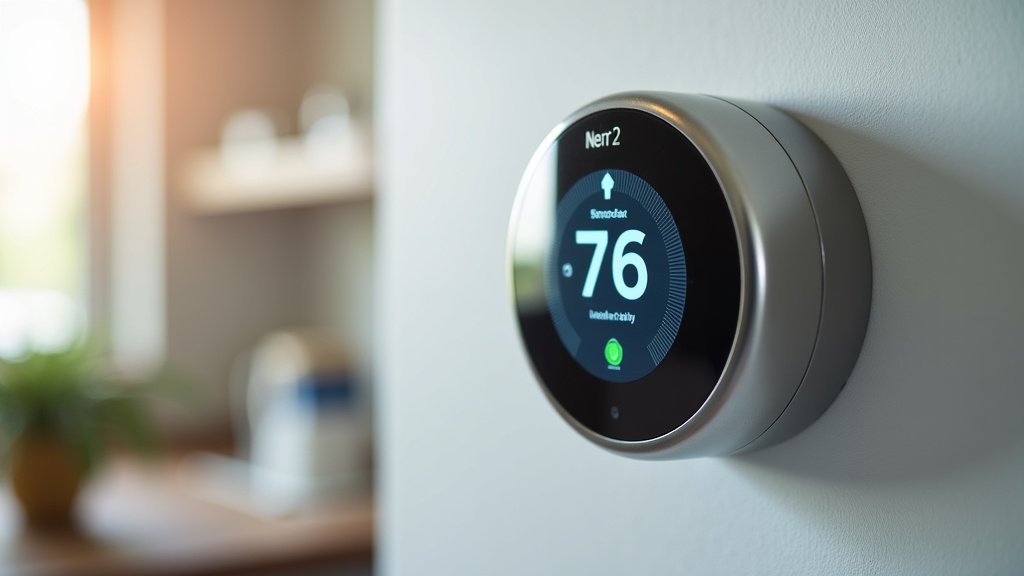
Are There Any Catches? Things to Consider
No product is perfect for everyone. While smart thermostats offer many advantages, there are a few things to keep in mind before you buy one. We want you to be fully informed.
Initial Cost and Installation
The upfront cost can be a hurdle for some. While they pay for themselves, you do need to spend money first. Most are easy to install yourself, especially if you have standard wiring. However, some systems might require professional help, adding to the initial expense.
Always check compatibility with your existing HVAC system before purchasing. This prevents frustration and extra costs later.
Dependence on Wi-Fi and Apps
Smart thermostats rely on your home’s Wi-Fi network and often a smartphone app to unlock their full potential. If your Wi-Fi is unreliable, or if you prefer not to use apps, some of the key benefits might be lost. They generally still work as basic thermostats without Wi-Fi, but you lose the “smart” features. If you’re concerned about connectivity, you might wonder if you can use a smart thermostat without Wi-Fi for basic functions.
Learning Curve (Slight)
While designed to be user-friendly, there might be a slight learning curve to fully understand all the features. We found that most people pick it up quickly, but it’s not always as simple as a basic “on/off” switch. Give yourself a little time to get familiar with it.
Maximizing Your Savings: A Checklist
To ensure your smart thermostat truly pays for itself and then some, follow these tips:
- Look for utility rebates: Many energy companies offer discounts for installing smart thermostats (Energy Star). Check with your local provider.
- Utilize all smart features: Don’t just use it manually. Enable learning, geofencing, and scheduling.
- Insulate your home well: A smart thermostat can only do so much if warm/cold air is leaking out. Seal windows and doors.
- Set realistic temperature ranges: Don’t try to make your home 60°F in summer or 80°F in winter. Small, comfortable adjustments save more.
- Monitor energy reports: Regularly check the data your thermostat provides. This helps you refine your settings.
- Perform regular HVAC maintenance: A well-maintained system works more efficiently, allowing the smart thermostat to shine.
| Feature | Traditional Programmable Thermostat | Smart Thermostat |
|---|---|---|
| Learning Your Habits | No | Yes (often automatic) |
| Remote Control via Phone | No | Yes |
| Geofencing | No | Yes (select models) |
| Energy Usage Reports | Rarely | Yes |
| HVAC System Alerts | No | Yes (select models) |
| Ease of Programming | Can be complex | Often very intuitive |
Conclusion
You’ve seen how smart thermostats offer real financial benefits. They genuinely pay for themselves, often within just a few years, by reducing your energy bills. Beyond savings, you gain comfort, convenience, and a more efficient home. We found they are a smart upgrade for almost any homeowner looking to modernize. By following our tips and checking for rebates, you can maximize your return. It’s time to take control of your home’s climate and start saving.
Frequently Asked Questions
Are smart thermostats hard to install for a DIYer?
Most smart thermostats are designed for relatively easy DIY installation. If you have standard wiring and follow the instructions, you can likely do it yourself. However, some older or more complex HVAC systems might require professional help.
Do smart thermostats work with all HVAC systems?
Not all smart thermostats are compatible with every HVAC system. Before purchasing, it’s essential to check the compatibility requirements of the specific model you’re interested in. Many manufacturers provide online compatibility checkers to help you confirm.
What if my Wi-Fi goes out? Does the smart thermostat still work?
Yes, if your Wi-Fi goes out, your smart thermostat will typically still function as a basic thermostat. You can usually adjust the temperature manually at the device itself. You will, however, lose access to remote control and other “smart” features until your Wi-Fi is restored.
Can a smart thermostat help with home resale value?
While difficult to quantify precisely, a smart thermostat can be an attractive feature for potential homebuyers. It signals a modern, energy-efficient home, which can be a selling point. It shows your home is equipped with current technology.
Is there a subscription fee for using a smart thermostat?
Most smart thermostats do not require an ongoing subscription fee for their core features. Once you buy the device, you usually get full access to its app and functionalities. Some advanced or premium services might offer optional subscriptions, but they are generally not required.
