
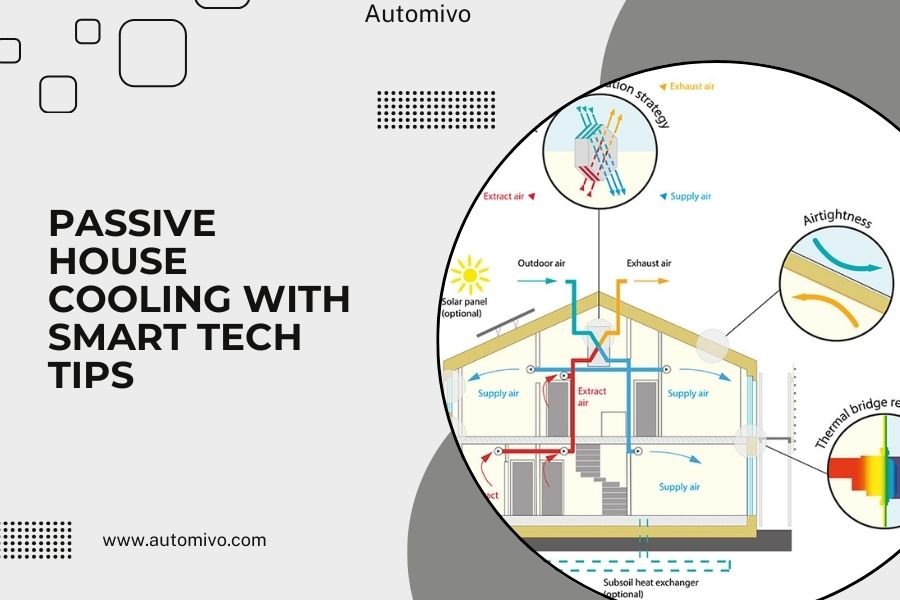
Smart passive house cooling combines energy-efficient building design with intelligent technology to maintain comfortable temperatures using minimal power.
You can reduce cooling costs by up to 90% when you pair passive house principles with smart thermostats, automated shading, and strategic ventilation controls.
Your home should feel like a sanctuary, not an energy-guzzling monster. When summer heat beats down, you want comfort without watching your electricity bill skyrocket. That’s where smart passive house cooling comes in.
Think of your home like a well-insulated thermos bottle. Just as that bottle keeps your coffee hot for hours, a passive house design keeps cool air in and hot air out. Add some smart controls, and you’ve got a cooling system that practically runs itself.
What Makes Passive House Cooling Different
Passive house cooling isn’t about bigger air conditioners or more fans. It’s about stopping heat before it gets inside. You’re essentially turning your house into a fortress against summer temperatures.
The magic happens through three main approaches. First, you prevent heat from entering through walls, windows, and the roof. Second, you remove heat that’s already inside through smart ventilation. Third, you use technology to automate the whole process.
The Science Behind Heat Prevention
Heat moves into your home three ways: conduction, convection, and radiation. Conduction happens when hot surfaces touch cooler ones. Convection occurs when hot air flows in through gaps. Radiation comes from sunlight streaming through windows.
Research from the Passive House Institute shows that proper insulation and air sealing can reduce cooling loads by 75-90%. That’s like turning a gas-guzzling truck into a fuel-efficient hybrid.
Smart Thermostats for Passive House Systems
Your smart thermostat becomes the brain of your cooling system. But in a passive house, it works differently than in regular homes. You’re not just controlling an AC unit. You’re managing a whole ecosystem of cooling strategies.
Temperature Scheduling That Actually Works
Set your smart thermostat to pre-cool your home during off-peak hours. Many utility companies charge less for electricity between 10 PM and 6 AM. Your home’s thermal mass will hold that coolness well into the next day.
I found that programming a gradual temperature increase during peak hours saves money without sacrificing comfort. Instead of maintaining 72°F all day, let it drift to 76°F between 2-6 PM when electricity costs the most.
Humidity Control Integration
Smart thermostats with humidity sensors make a huge difference. High humidity makes you feel hotter even at lower temperatures. Your thermostat can trigger dehumidification before ramping up cooling.
Research from ASHRAE suggests that 78°F with 45% humidity feels more comfortable than 72°F with 65% humidity. Your smart controls can maintain this sweet spot automatically.
Automated Window Shading Systems
Windows are heat’s favorite entry point into your home. Even triple-pane windows can’t compete with the sun’s direct radiation. That’s where smart shading swoops in to save the day.
Solar Heat Gain Control
Automated blinds and shades can reduce solar heat gain by 65-77% according to Department of Energy studies. They close automatically when sensors detect bright sunlight on specific windows.
You can program different schedules for each side of your house. East-facing windows need morning protection. West-facing ones need afternoon coverage. South-facing windows might need all-day shading in summer.
Smart Shade Integration Options
Connect your shades to weather apps for predictive control. If tomorrow’s forecast shows 95°F temps, your system can close shades earlier and keep them closed longer.
Some systems use light sensors to detect cloud cover. When clouds block the sun, shades can open to let in natural light without the heat penalty.
Exterior vs Interior Shading
Exterior shades block heat before it hits your windows. Interior shades only reduce heat after it’s already inside. It’s like the difference between using an umbrella versus wearing dark clothes in the sun.
Exterior solutions include retractable awnings, solar screens, and shutters. They cost more upfront but deliver better cooling performance.
Strategic Ventilation Controls
Natural ventilation can provide free cooling when outdoor temperatures drop below indoor ones. Smart controls help you capture these opportunities automatically.
Night Flush Cooling Systems
Night flush cooling uses cool outdoor air to remove heat stored in your home’s thermal mass. Smart controls open windows or activate exhaust fans when outdoor air becomes cooler than indoor air.
I researched systems that monitor both indoor and outdoor temperatures. They can start night flushing as soon as it becomes beneficial, usually around 10 PM in most climates.
Cross-Ventilation Optimization
Smart window actuators can create cross-ventilation patterns automatically. They open specific combinations of windows to create airflow paths through your home.
The key is opening windows on the cool side (usually north) and the warm side (usually south) simultaneously. This creates a pressure difference that moves air naturally.
Heat Recovery Ventilation
Heat recovery ventilators (HRVs) bring in fresh air while capturing coolness from outgoing stale air. Smart controls can boost HRV operation during mild weather and reduce it during peak heat.
Studies from Building Science Corporation show that smart HRV controls can reduce cooling energy by 15-25% compared to constant-speed operation.
Smart Insulation and Air Sealing
You can’t control what you can’t measure. Smart sensors help you identify where your thermal envelope needs improvement.
Thermal Monitoring Systems
Wireless temperature sensors placed throughout your home reveal hot spots and air leaks. Many systems create color-coded maps showing where cooling energy escapes.
Smart leak detectors aren’t just for water. Some models detect air movement that indicates gaps in your building envelope.
Dynamic Insulation Controls
Some advanced systems use moveable insulation panels in walls or windows. During hot days, extra insulation slides into place automatically. At night, it retracts to allow heat dissipation.
These systems remain experimental but show promise for extreme climate zones where passive cooling alone isn’t enough.
Cooling Load Monitoring
Smart energy monitors track how much cooling energy your home actually needs versus how much you’re using. This data reveals opportunities for improvement.
| Cooling Strategy | Energy Savings | Smart Control Benefit |
|---|---|---|
| Automated Shading | 15-30% | Predictive solar tracking |
| Night Flush Ventilation | 10-40% | Temperature differential optimization |
| Smart Scheduling | 5-15% | Utility rate optimization |
| Humidity Control | 8-20% | Comfort-based temperature adjustment |
Real-Time Performance Feedback
Smart dashboards show you exactly how each cooling strategy performs. You can see which techniques save the most energy on different types of days.
Some systems gamify the experience. You earn points for keeping cooling loads low or choosing the most efficient strategies during peak demand periods.
Integration with Renewable Energy
Solar panels and battery storage work beautifully with passive house cooling. Your home generates power during peak sun hours when cooling demand is highest.
Load Shifting Strategies
Smart controls can time cooling activities to match solar production. Pre-cooling happens when panels generate excess power. Passive strategies take over when solar production drops.
Battery storage systems can power fans, pumps, and controls during peak rate periods while avoiding grid electricity for cooling.
Grid-Interactive Controls
Some smart systems communicate with utility companies to reduce cooling loads during grid stress events. You get bill credits for participating in demand response programs.
Your home becomes part of the solution to peak demand problems rather than part of the problem.
Maintenance and Troubleshooting
Smart systems need smart maintenance. Sensors can detect when shades aren’t closing properly or when ventilation fans aren’t moving enough air.
Predictive Maintenance Alerts
Smart controls track how often each component operates and alert you before problems develop. Preventive maintenance costs less than emergency repairs.
Filter change reminders, motor performance monitoring, and sensor calibration checks keep everything running smoothly.
Conclusion
Smart passive house cooling transforms your home into an efficient, comfortable sanctuary that barely sips energy. By combining intelligent controls with proven passive strategies, you can slash cooling costs while staying perfectly comfortable all summer long. The technology exists today to make your home smarter, not just cooler.
How much can I save with smart passive house cooling?
Most homeowners save 60-90% on cooling costs compared to conventional air conditioning. Your exact savings depend on climate, home size, and current efficiency levels. The initial investment typically pays back within 5-10 years through energy savings.
Do smart passive cooling systems work in very hot climates?
Yes, but you may need backup mechanical cooling for the hottest days. In desert climates above 100°F, passive strategies can handle 80-90% of your cooling needs. Smart controls help optimize when to use mechanical backup most efficiently.
Can I retrofit smart cooling controls in an existing home?
Absolutely. Start with smart thermostats, automated window treatments, and ventilation controls. These provide immediate benefits while you gradually improve insulation and air sealing. Wireless sensors make retrofits much easier than before.
What happens if the smart controls malfunction?
Good systems include manual overrides and fail-safe modes. If sensors fail, the system defaults to basic operation schedules. Most components can operate independently, so one failure doesn’t shut down your entire cooling strategy.
How long does it take to see results from smart passive cooling?
You’ll notice comfort improvements immediately, especially with automated shading and smart scheduling. Energy savings become apparent on your first full month’s utility bill. Maximum benefits develop over a full cooling season as the system learns your home’s patterns.
