Optimize heat pump auxiliary heat settings by setting the temperature differential between 2-4°F and the lockout temperature between 25-35°F based on your climate zone.
Your auxiliary heat should activate only when your heat pump can’t keep up with demand, typically during extreme cold weather or rapid temperature changes.
Understanding Heat Pump Auxiliary Heat Systems
Think of auxiliary heat as your heat pump’s backup dancer. When the main performer struggles, the backup steps in to save the show. Your heat pump works efficiently in mild weather, but when temperatures drop, it needs help.
Auxiliary heat systems use electric resistance coils or gas burners. They cost more to run than your heat pump alone. That’s why getting the settings right matters for your wallet.
How Auxiliary Heat Activation Works
Your thermostat monitors two key factors: indoor temperature and outdoor conditions. When your heat pump can’t maintain your set temperature, auxiliary heat kicks in automatically.
Most systems use a temperature differential trigger. If your home drops 2-3 degrees below the thermostat setting, auxiliary heat starts working.
Emergency Heat vs Auxiliary Heat
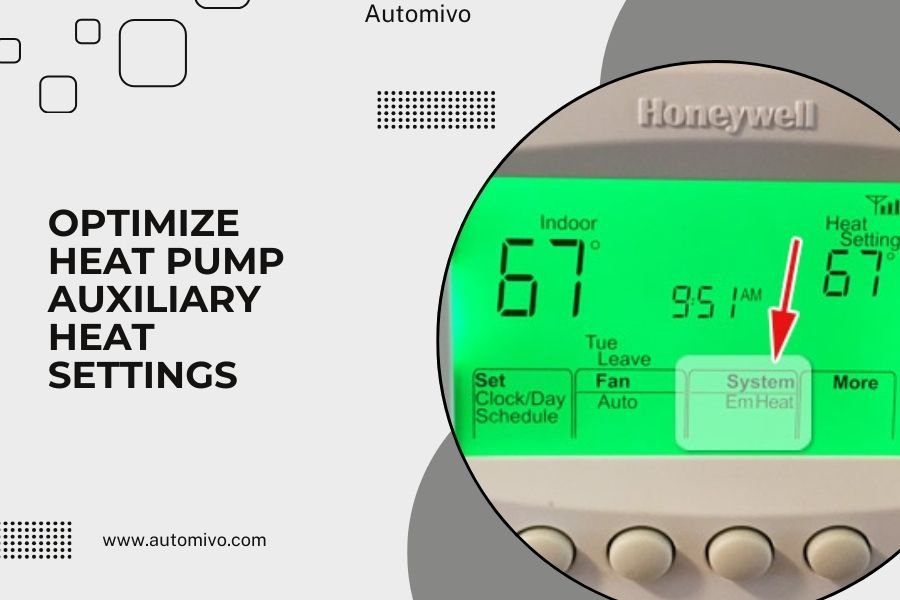
Don’t confuse these two modes. Auxiliary heat works alongside your heat pump. Emergency heat bypasses the heat pump completely and runs only the backup system.
Emergency heat costs much more to operate. Use it only when your heat pump breaks down completely.
Optimal Temperature Differential Settings
The temperature differential setting controls when auxiliary heat turns on. Most experts recommend 2-4°F as the sweet spot.
2°F Differential Setting
A 2°F setting means auxiliary heat starts when indoor temperature drops 2 degrees below your thermostat setting. This keeps your home more comfortable but uses more energy.
Choose this setting if you have family members sensitive to temperature changes or live in a poorly insulated home.
4°F Differential Setting
A 4°F differential saves energy but allows more temperature swing. Your heat pump gets more time to catch up before backup heat engages.
This works well for well-insulated homes where temperature changes happen slowly.
Finding Your Perfect Balance
Start with 3°F and monitor your comfort and energy bills for a month. Adjust up or down based on your results.
I found that most homeowners prefer 2.5-3°F after experimenting with different settings.
Lockout Temperature Configuration
Lockout temperature tells your system when outdoor conditions make heat pump operation inefficient. Below this point, your system relies more heavily on auxiliary heat.
Climate Zone Considerations
Your location determines the best lockout temperature. Northern climates need different settings than southern regions.
- Zone 1-3 (Southern): Set lockout at 25-30°F
- Zone 4-5 (Central): Set lockout at 20-25°F
- Zone 6-8 (Northern): Set lockout at 10-20°F
Heat Pump Efficiency Curves
Heat pumps lose efficiency as outdoor temperatures drop. At some point, they use more electricity than auxiliary heat would.
Research shows most standard heat pumps reach this crossover point between 20-35°F, depending on the model and installation quality.
Modern Cold Climate Heat Pumps
Newer cold-climate heat pumps work efficiently down to -5°F or lower. If you have one of these systems, set your lockout temperature much lower.
These advanced units can maintain good performance at temperatures that would cripple older models.
Thermostat Programming Best Practices
Your thermostat programming affects how often auxiliary heat runs. Smart programming reduces energy waste while maintaining comfort.
Setback Temperature Limits
Avoid large temperature setbacks in winter. Raising the temperature more than 4-6°F often triggers auxiliary heat unnecessarily.
Instead of dropping to 62°F overnight and jumping to 70°F in the morning, try smaller changes like 65°F to 68°F.
Recovery Time Programming
Give your system extra time to reach target temperatures. Start warming your home 30-60 minutes before you need comfort.
This allows your heat pump to do most of the work without backup heat assistance.
Smart Thermostat Advantages
Smart thermostats learn your heat pump’s performance characteristics. They can optimize auxiliary heat usage automatically.
Many models track outdoor temperatures and adjust settings seasonally without your input.
Monitoring and Adjusting Performance
Keep track of when auxiliary heat runs. This helps you fine-tune settings and spot potential problems.
Energy Bill Analysis
Compare monthly energy usage before and after changing settings. Look for patterns that match weather data.
Sudden spikes in usage might indicate auxiliary heat running too often or heat pump problems.
System Performance Indicators
Watch for these warning signs that suggest setting adjustments:
- Frequent short cycling of auxiliary heat
- Home taking too long to reach set temperature
- Unusual energy bill increases
- Uneven heating throughout your home
Seasonal Adjustment Schedule
Review and adjust settings at least twice yearly. Fall and spring transitions offer good opportunities for optimization.
What worked in January might not be ideal in November when temperatures are milder.
Common Setting Mistakes to Avoid
I researched common heat pump problems and found several setting mistakes that cost homeowners money.
Setting Differential Too Low
A 1°F differential makes auxiliary heat run constantly. Your system never gets a chance to work efficiently.
This mistake can double your heating costs during cold weather.
Ignoring Heat Pump Maintenance
Dirty filters and coils force auxiliary heat to work harder. Even perfect settings can’t overcome poor maintenance.
Clean or replace filters monthly during heating season.
Lockout Temperature Set Too High
Setting lockout at 40°F in most climates wastes the heat pump’s capabilities. Your system switches to expensive backup heat too early.
Many homeowners make this mistake thinking they’re protecting their equipment.
| Setting | Recommended Range | Impact of Wrong Setting |
|---|---|---|
| Temperature Differential | 2-4°F | Higher bills or comfort issues |
| Lockout Temperature | 10-35°F (climate dependent) | Reduced efficiency |
| Setback Limit | 4-6°F maximum | Unnecessary auxiliary heat use |
Conclusion
Optimizing your heat pump auxiliary heat settings requires balancing comfort, efficiency, and cost. Start with a 3°F temperature differential and set your lockout temperature based on your climate zone. Monitor your energy bills and adjust gradually until you find the sweet spot for your home.
Remember that proper settings work best with regular maintenance and smart programming habits. Take time to understand your system’s behavior patterns, and don’t be afraid to make small adjustments seasonally.
What happens if I set my temperature differential too high?
Setting the differential above 5°F can make your home uncomfortably cold before auxiliary heat starts. You’ll experience larger temperature swings, and your heat pump may struggle to catch up during very cold weather.
Can I manually control when auxiliary heat runs?
Most modern thermostats control auxiliary heat automatically based on your settings. While some advanced systems offer manual override options, automatic operation typically provides better efficiency and comfort.
How do I know if my lockout temperature is set correctly?
Monitor your energy usage during different outdoor temperatures. If bills spike significantly when temperatures are above 25°F, your lockout might be set too high. If your home struggles to stay warm below 20°F, it might be too low.
Should auxiliary heat settings change with new windows or insulation?
Yes, home improvements affect how quickly your house loses heat. Better insulation allows you to use higher temperature differentials and lower lockout temperatures because your home maintains temperature more easily.
Why does my auxiliary heat run even when it’s not extremely cold outside?
Auxiliary heat can activate during mild weather if your thermostat programming calls for rapid temperature increases, your heat pump needs maintenance, or your differential setting is too low. Check these factors before assuming equipment problems.