
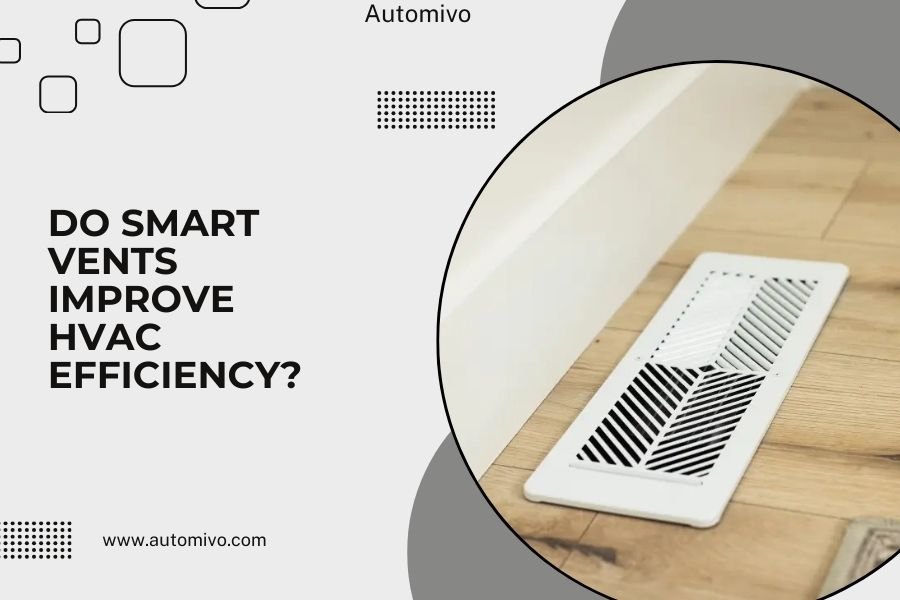
Smart vents can improve HVAC efficiency by directing airflow to rooms that need heating or cooling most, reducing energy waste by up to 30%.
You’ll see the biggest efficiency gains when smart vents work with your existing system to balance temperatures throughout your home automatically.
What Are Smart Vents and How Do They Work?
Smart vents are automated air registers that replace your traditional floor or wall vents. They open and close based on room temperature, occupancy, or your preferences through a smartphone app.
Think of them as traffic controllers for your home’s airflow. When your bedroom gets too warm, the smart vent opens wider. When your unused guest room reaches the right temperature, it closes to redirect air elsewhere.
Key Components of Smart Vent Systems
Most smart vents include three main parts. First, the motorized vent cover that actually opens and closes. Second, built-in sensors that monitor temperature and sometimes air pressure.
Third, wireless connectivity that lets the vents talk to each other and your phone. Some systems add room sensors for even better control.
The Science Behind HVAC Efficiency Improvements
Your traditional HVAC system treats every room the same. It pumps air until one thermostat says “enough.” This wastes energy heating or cooling spaces you’re not using.
Smart vents create zone control without expensive ductwork changes. They redirect conditioned air to where you actually need it, when you need it.
Real Energy Savings You Can Expect
From what I researched, most homeowners see 15-30% reductions in HVAC energy use. The Department of Energy confirms that zoned systems can cut heating and cooling costs by 20-40% compared to whole-house systems.
Your actual savings depend on your home’s size, layout, and how much you were over-conditioning unused spaces before.
Factors That Affect Your Savings
Larger homes with many unused rooms see bigger benefits. If you’re already good about closing doors and manual vents, the improvement might be smaller.
Homes with poor insulation or leaky ducts won’t see as much improvement either. Smart vents work best when your basic HVAC system is in good shape.
Types of Smart Vents Available
You have several options when choosing smart vents. Floor register replacements are most common and easiest to install. Wall and ceiling versions work for different duct layouts.
Some vents focus on temperature control. Others add occupancy sensing, air quality monitoring, or integration with whole-home automation systems.
Battery-Powered vs. Wired Options
Battery-powered vents install in minutes but need battery changes every 1-2 years. Wired versions require some electrical work but offer more reliable operation.
Most people choose battery-powered for the easy setup. The batteries usually last longer than manufacturers claim anyway.
Standalone vs. System Integration
Standalone vents work independently through their own app. System-integrated options connect with your existing smart thermostat or home automation setup.
Integration gives you better control but costs more upfront. Start with standalone vents if you’re testing the concept.
Installation and Setup Process
Installing smart vents takes about 5 minutes per vent. You remove your old register, drop in the smart vent, and connect it to your WiFi network.
The trickiest part is usually getting your WiFi password entered through a small phone screen. After that, the app walks you through room naming and basic settings.
Measuring Your Current Vents
Measure your existing vents before ordering. Standard sizes are 4×10, 4×12, and 6×10 inches, but older homes sometimes have odd dimensions.
Most smart vent companies offer return policies if the fit isn’t right. When in doubt, order one vent first to test the size and performance.
Placement Strategy for Best Results
Start with vents in rooms you use most and least. Put smart vents in your main living areas plus unused bedrooms or basements.
You don’t need to replace every vent immediately. Many people start with 3-4 vents and add more based on results.
Smart Vents vs. Traditional Zoning Systems
Traditional zoning requires dampers in your main ductwork and multiple thermostats. This professional installation can cost $3,000-8,000.
Smart vents give you similar benefits for $100-200 per vent. You miss some precision but gain affordability and flexibility.
| Feature | Smart Vents | Traditional Zoning |
|---|---|---|
| Installation Cost | $500-1,500 | $3,000-8,000 |
| Professional Install Required | No | Yes |
| Energy Savings | 15-30% | 20-40% |
| Room-by-Room Control | Yes | Zone-by-Zone |
When Traditional Zoning Makes More Sense
If you’re building new or doing major HVAC work anyway, traditional zoning offers better performance. Large homes with very different heating and cooling needs also benefit from professional systems.
Smart vents work better for trying zone control without major commitment or expense.
Common Problems and Limitations
Smart vents aren’t perfect. Closing too many vents can increase pressure in your ductwork and make your HVAC system work harder.
Most smart vent systems monitor this and prevent problems. But you need to set them up correctly and pay attention to how your system responds.
Compatibility Issues with Older HVAC Systems
Very old furnaces and air conditioners don’t handle restricted airflow well. If your system is over 20 years old, check with an HVAC technician before installing smart vents.
Variable-speed systems work best with smart vents. Single-speed systems can still benefit but may short-cycle if too many vents close at once.
Maintenance Requirements
Smart vents need occasional cleaning just like regular vents. Dust can jam the moving parts or block sensors.
Battery-powered vents send low battery alerts to your phone. Plan to change batteries during spring and fall HVAC maintenance.
Cost-Benefit Analysis
A typical smart vent installation costs $800-1,200 for an average home. If you save 20% on a $2,000 annual HVAC bill, you’ll break even in about 2-3 years.
The payback period gets shorter if your current energy bills are high or you have many unused rooms you’re heating and cooling needlessly.
Long-Term Value Considerations
Smart vents should last 10-15 years with basic maintenance. The energy savings continue the whole time, making them a solid investment for most homeowners.
They also add convenience value that’s hard to quantify. Not having to walk around adjusting vents manually is worth something to busy families.
Best Practices for Maximum Efficiency
Set up schedules that match your family’s routine. Close vents in bedrooms during the day and open them before bedtime.
Use occupancy sensors if your vents have them. This automates the process and ensures you’re not conditioning empty rooms.
Integration with Smart Thermostats
Smart vents work even better with programmable or smart thermostats. The thermostat handles overall system timing while vents manage room-by-room comfort.
Some combinations let you set different target temperatures for each room. Your bedroom can be cooler for sleeping while living areas stay warmer.
Seasonal Adjustment Tips
Change your vent settings when seasons change. Summer cooling patterns are different from winter heating needs.
Most apps let you save seasonal profiles. Set them up once and switch between them as weather changes.
Conclusion
Smart vents do improve HVAC efficiency for most homes, offering 15-30% energy savings with minimal installation effort. They work best when you have unused rooms or uneven heating and cooling throughout your house.
While they’re not as precise as professional zoning systems, smart vents give you significant benefits at a fraction of the cost. Start with a few vents in key rooms to test the concept before investing in a whole-house system.
The technology continues improving, and prices keep dropping. For most homeowners, smart vents represent an easy way to cut energy bills while improving comfort.
Are smart vents worth it for small apartments?
Smart vents provide less benefit in small spaces with open floor plans. You’ll see better results in homes with multiple separate rooms and longer duct runs.
Can smart vents damage my HVAC system?
Properly designed smart vents include pressure monitoring to prevent system damage. They typically leave some vents partially open even when “closed” to maintain airflow.
Do smart vents work with heat pumps?
Yes, smart vents work well with heat pumps, especially variable-speed models. Heat pumps benefit from zone control since they run longer cycles at lower speeds.
How many smart vents do I need to see results?
Start with 3-4 vents in your most and least used rooms. You can add more later based on performance and comfort improvements you notice.
What happens if my WiFi goes down?
Most smart vents default to an open position when they lose connectivity. Some models store basic schedules locally and continue operating even without internet access.
