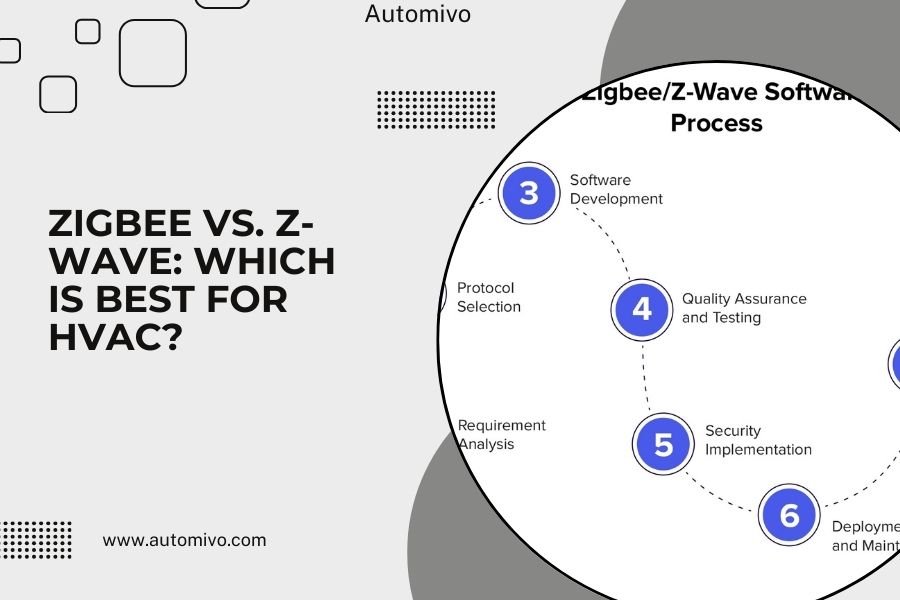
Zigbee generally works better for HVAC systems because it uses mesh networking and handles temperature data more reliably than Z-Wave.
Z-Wave offers longer range and better wall penetration, but Zigbee’s lower power consumption and faster response times make it ideal for smart thermostats and HVAC controls.
Choosing between Zigbee and Z-Wave for your HVAC system feels overwhelming. Both protocols promise to make your heating and cooling smarter. But which one actually delivers?
I’ve researched both technologies and found clear differences that matter for HVAC control. Let me break down what you need to know.
What Makes Zigbee and Z-Wave Different for HVAC
Think of Zigbee and Z-Wave as two different languages your smart home devices use to talk. Your thermostat needs to communicate with sensors, dampers, and your smartphone app.
Zigbee operates on 2.4 GHz frequency. Z-Wave uses sub-1 GHz frequencies. This difference affects how well they work with your HVAC equipment.
Zigbee’s HVAC Strengths
Zigbee shines in HVAC applications for several reasons. It handles data packets quickly. Your thermostat gets temperature readings fast.
The mesh network repairs itself automatically. If one sensor fails, others pick up the slack. Your system keeps running.
Power Efficiency Matters
Battery-powered sensors last longer with Zigbee. Temperature sensors can run for years on one battery. That’s fewer maintenance headaches for you.
Multiple Device Support
One Zigbee network supports thousands of devices. You can add room sensors, dampers, and air quality monitors without hitting limits.
Z-Wave’s HVAC Advantages
Z-Wave has its own strengths. The signal travels through walls better. Your basement thermostat stays connected to upstairs sensors.
Each Z-Wave network avoids interference from WiFi. Your neighbor’s router won’t mess with your HVAC controls.
Reliable Range Performance
Z-Wave devices communicate up to 100 feet apart. In large homes, this range advantage helps keep all zones connected.
Speed and Response Time Comparison
Your HVAC system needs quick responses. When you adjust the thermostat, you want immediate action.
Zigbee typically responds in 15-30 milliseconds. Z-Wave takes 100-200 milliseconds. For HVAC control, Zigbee’s speed wins.
Why Speed Matters for Climate Control
Fast communication prevents temperature swings. Your system adjusts before you feel uncomfortable. Slower protocols can cause overshooting.
Smart dampers need quick signals to balance airflow. Zigbee’s speed keeps each room at the right temperature.
Network Reliability and Interference
Your HVAC system runs 24/7. Network dropouts mean comfort problems and wasted energy.
Zigbee shares the 2.4 GHz band with WiFi. This can cause interference. But modern Zigbee 3.0 handles interference much better.
Mesh Network Benefits
Both protocols use mesh networking. Devices relay messages to each other. If one fails, others find new paths.
Zigbee’s mesh typically handles more route options. Your HVAC network stays connected even with device failures.
Wall Penetration Reality
Z-Wave’s lower frequency penetrates walls better. But HVAC devices often have clear line-of-sight paths through ducts and returns.
In most homes, wall penetration differences don’t matter much for HVAC applications.
Power Consumption Analysis
HVAC sensors often run on batteries. Power efficiency directly affects maintenance costs.
Zigbee devices use less power during communication. Battery life extends by months or years compared to Z-Wave.
Battery Life Expectations
Zigbee temperature sensors typically last 2-5 years on one battery. Z-Wave sensors need replacement every 1-3 years.
For systems with many sensors, this difference adds up. You’ll change fewer batteries with Zigbee.
Device Compatibility and Ecosystem
Your protocol choice affects which devices you can buy. Both have strong HVAC ecosystems.
| Feature | Zigbee | Z-Wave |
|---|---|---|
| Thermostat Brands | Ecobee, Honeywell, Sensi | Honeywell, GoControl, 2GIG |
| Sensor Options | Extensive variety | Good selection |
| Smart Vents | Keen Home, EcoVent | EcoNet, GoControl |
| Hub Requirements | SmartThings, Hubitat, Amazon Echo Plus | SmartThings, Hubitat, Vera |
Brand Standardization
Z-Wave Plus certification ensures device compatibility. Any certified device works with any Z-Wave hub.
Zigbee 3.0 now offers similar standardization. Older Zigbee devices might need specific hub compatibility.
Installation and Setup Differences
Getting your HVAC network running should be straightforward. Both protocols offer easy setup, but with different approaches.
Zigbee Setup Process
Most Zigbee devices enter pairing mode automatically. You scan for devices in your hub app. The process takes minutes.
Building the mesh happens automatically as you add devices. No manual network planning needed.
Hub Requirements
You need a Zigbee hub or compatible smart speaker. Amazon Echo Plus has built-in Zigbee. SmartThings works great too.
Z-Wave Setup Process
Z-Wave uses “inclusion” to add devices. You put the hub in include mode, then activate the device.
The process is slightly more manual but very reliable. Each device gets a unique network ID.
Network Planning Tips
Z-Wave networks benefit from planning device placement. Start with powered devices near the hub. Add battery devices last.
Cost Analysis for HVAC Systems
Budget affects your protocol choice. Let’s look at real costs for a typical smart HVAC setup.
Initial Hardware Costs
Zigbee thermostats cost $150-300. Z-Wave models run $200-400. Sensors cost about the same for both protocols.
Hub costs vary widely. Some are protocol-specific, others support both.
Long-term Expenses
Zigbee’s better battery life saves money over time. With 10 sensors, you might save $50-100 per year in batteries.
Both protocols offer similar device lifespans. Quality matters more than the protocol for longevity.
Performance in Different Home Types
Your home’s layout affects protocol performance. Let me break down what works best where.
Small to Medium Homes
Both protocols work well in homes under 2,500 square feet. Zigbee’s speed advantage shows more in responsive climate control.
Interference rarely causes problems in smaller spaces. Either choice works fine.
Large Homes and Estates
Z-Wave’s range helps in large spaces. You need fewer repeater devices to cover the same area.
But Zigbee’s device limit advantage matters more with complex zoning systems.
Apartment and Condo Considerations
Dense WiFi environments favor Z-Wave. Less chance of interference from neighbors’ networks.
But modern Zigbee 3.0 handles interference well. The difference is smaller than before.
Future-Proofing Your HVAC Network
You’re investing in technology that should last years. Which protocol has better long-term prospects?
Both protocols continue evolving. Zigbee 3.0 brought major improvements. Z-Wave Plus enhanced reliability.
Industry Adoption Trends
Major HVAC manufacturers support both protocols. Honeywell, Ecobee, and Nest offer options for each.
Smart home platforms increasingly support both. Your choice won’t lock you out of future options.
Emerging Standards
Matter (formerly Project CHIP) aims to unify smart home protocols. Both Zigbee and Z-Wave plan Matter integration.
This means your current choice won’t become obsolete. Future devices should work with existing networks.
Real-World HVAC Scenarios
Let me share what I found works best in common situations.
Multi-Zone Systems
Zigbee excels with many sensors and dampers. The device limit is practically unlimited. Response time keeps zones balanced.
Z-Wave works but might need more careful planning with complex zoning.
Single-Zone Upgrades
For basic smart thermostat upgrades, either protocol works well. Choose based on your existing smart home ecosystem.
If you have Z-Wave security, stick with Z-Wave. If you use Zigbee lights, match that protocol.
Commercial Light Applications
Small offices and shops often prefer Zigbee. The lower power consumption matters with many sensors.
Professional installers often prefer Z-Wave’s predictable behavior and certification program.
Conclusion
Zigbee wins for most HVAC applications. Its faster response times, better power efficiency, and unlimited device support make it ideal for climate control.
Choose Z-Wave if you have a large home with thick walls, existing Z-Wave devices, or need maximum range. The reliability and wall penetration help in challenging environments.
For new HVAC automation projects, Zigbee 3.0 offers the best balance of performance, efficiency, and compatibility. Your comfort system will respond quickly and run efficiently for years.
What’s the main difference between Zigbee and Z-Wave for HVAC?
Zigbee operates on 2.4 GHz with faster response times and lower power consumption, while Z-Wave uses sub-1 GHz frequencies for better wall penetration and longer range between devices.
Can I mix Zigbee and Z-Wave devices in my HVAC system?
No, Zigbee and Z-Wave devices cannot communicate directly with each other. You need separate hubs or a hub that supports both protocols to use devices from both systems together.
Which protocol works better with existing WiFi networks?
Z-Wave avoids WiFi interference entirely since it uses different frequencies. Zigbee shares the 2.4 GHz band with WiFi but modern Zigbee 3.0 devices handle interference much better than older versions.
How many HVAC devices can each network support?
Zigbee networks can theoretically support over 65,000 devices, while Z-Wave networks are limited to 232 devices. For residential HVAC, both limits are more than sufficient.
Do smart thermostats work the same with both protocols?
Smart thermostats function similarly with both protocols, but Zigbee versions typically respond faster to temperature changes and sensor updates, leading to more precise climate control and better energy efficiency.