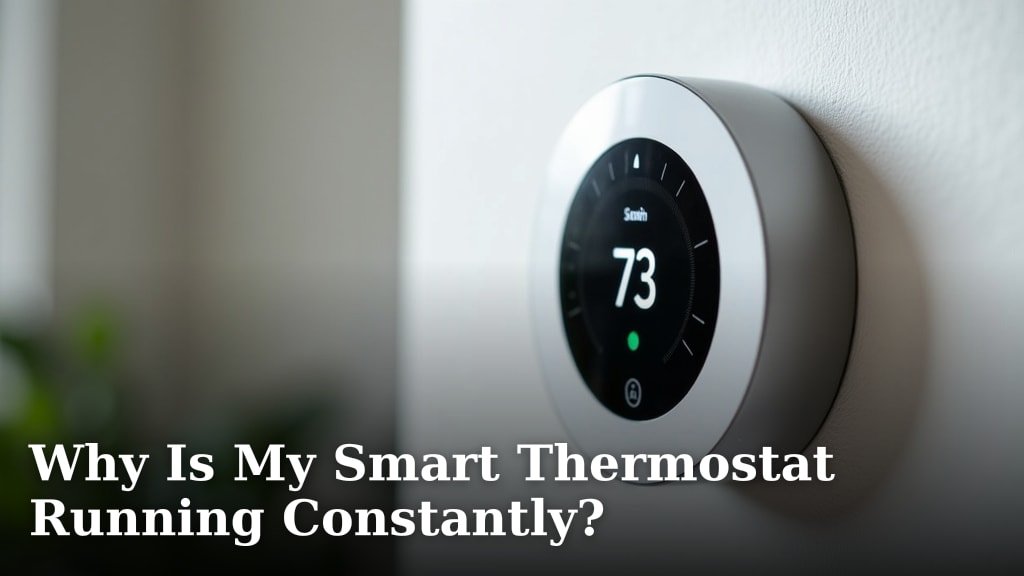
Your smart thermostat is running constantly often because of an issue with your HVAC system, incorrect thermostat settings, or poor insulation. It’s not usually a thermostat defect, but a sign of other problems causing your system to work harder than it should.
You might notice your energy bills climbing and wonder why your home isn’t staying comfortable. This constant operation can point to anything from a dirty air filter to a furnace problem. Don’t worry, these issues are often straightforward to diagnose and fix.
- Your HVAC system might have underlying issues.
- Incorrect thermostat settings can cause continuous running.
- Poor home insulation forces your system to work overtime.
- A dirty air filter restricts airflow and strains your system.
- A short cycling unit can seem like it’s always running.
Let’s walk through the common reasons why your smart thermostat is running constantly and what you can do to get things back to normal.
Why Is Your Smart Thermostat Running Non-Stop?
If your smart thermostat seems to be constantly running, it’s a sign that your heating, ventilation, and air conditioning (HVAC) system is working harder than it should. This isn’t usually a flaw with the thermostat itself, but rather an indication of other issues within your home or HVAC setup. Let’s look at the most common culprits.
HVAC System Overworking Due to External Factors
Sometimes, the problem isn’t with the internal mechanics of your HVAC system, but with how well your home retains temperature. Your system might be battling against outside forces to maintain your desired comfort.
Poor Insulation and Air Leaks
Think of your home as a giant cooler. If the lid isn’t on tight or there are holes in the sides, it won’t keep things cold for long, will it? The same principle applies to your home’s insulation and air sealing. Poor insulation allows conditioned air to escape and outside air to sneak in. This makes your smart thermostat call for more heating or cooling to try and keep up.
- Where to check: Common culprits include attics, walls, and crawl spaces.
- Air leaks: Look for drafts around windows, doors, electrical outlets, and plumbing penetrations. We found that even small gaps can lead to significant energy loss (U.S. Department of Energy).
Sealing these leaks and improving insulation can make a big difference in how efficiently your HVAC system operates. Your thermostat will thank you by running less often.
Incorrect Thermostat Placement
Where you put your smart thermostat matters more than you might think. If it’s in a spot that gets direct sunlight, near a drafty window, or above a heat source like a television, it can get a false reading of your home’s temperature. This causes your system to turn on and off at the wrong times, or worse, run constantly trying to cool a “hot” spot that isn’t representative of the whole house.
Ideally, your thermostat should be on an interior wall, away from direct sunlight, windows, and heat-generating appliances. This ensures it’s reading the ambient air temperature of your main living area accurately.
HVAC System Performance Issues
Sometimes the issue lies within the HVAC system itself. These problems can range from simple maintenance tasks to more complex repairs. Ignoring them can lead to higher energy bills and a shorter lifespan for your equipment.
Dirty Air Filters
This is one of the most common and easiest problems to fix. Your air filter is like the lungs of your HVAC system. Its job is to catch dust, dirt, pet dander, and other particles before they enter your furnace or air conditioner. When the filter gets clogged, your system has to work much harder to pull air through it. This restricted airflow makes your system run longer and more frequently to reach your desired temperature settings.
- How often to check: We recommend checking your air filter monthly and replacing it every 1-3 months, depending on usage and household conditions (many HVAC professionals agree).
- The impact: A clean filter not only improves efficiency but also maintains indoor air quality.
Low Refrigerant Levels (for AC)
If your air conditioner is running constantly, especially during warm weather, low refrigerant might be the problem. Refrigerant is the substance that absorbs heat from your home’s air. If levels are low, often due to a leak, your AC unit won’t be able to cool effectively. It will run continuously, trying in vain to reach the set temperature. This is a job for a professional, as adding refrigerant isn’t a DIY task and requires special tools and training.
Fan Issues or Blower Problems
The fan inside your furnace or air handler is responsible for distributing conditioned air throughout your home. If the fan motor is weak, or the fan blades are dirty, it won’t move air efficiently. This means your system runs longer because the heat or cool air isn’t being circulated properly. Sometimes, the fan setting might be stuck on “ON” instead of “AUTO,” which means it runs continuously regardless of whether your system is actively heating or cooling.
Dirty Evaporator or Condenser Coils
Both your indoor (evaporator) and outdoor (condenser) coils play critical roles in heat exchange. If they get covered in dirt and grime, they can’t transfer heat effectively. Imagine trying to cool a drink with an ice cube covered in mud – it wouldn’t work well, would it? When coils are dirty, your AC or furnace has to run longer to achieve its goal, leading to constant operation. Regular professional cleaning can prevent this.
Thermostat Settings and System Configuration
Sometimes, your smart thermostat runs constantly simply because of how it’s programmed or how it interacts with your HVAC system.
Aggressive Temperature Setpoints
Are you asking your system to work too hard? If you set your thermostat to an extremely low temperature in summer (e.g., 68°F when it’s 95°F outside) or an extremely high temperature in winter, your system might struggle to reach and maintain that setting. It will just keep running, trying to hit an unrealistic target. We found that most people are comfortable with indoor temperatures between 72-78°F in summer and 68-72°F in winter. Slightly adjusting your setpoints can give your system a much-needed break.
Fan Set to “ON” Instead of “AUTO”
This is a common oversight. Most thermostats have two settings for the fan: “AUTO” and “ON.” When set to “AUTO,” the fan only runs when your system is actively heating or cooling. When set to “ON,” the fan runs continuously, 24/7, even if your HVAC system isn’t actively conditioning the air. While this circulates air, it also uses energy and can make it seem like your system is always running. Check your thermostat’s fan setting and switch it to “AUTO” unless you have a specific reason for continuous circulation.
Short Cycling
While the opposite of running constantly, short cycling can sometimes *appear* like constant running because your unit turns on, runs for a very short period, turns off, and then almost immediately turns back on. This rapid on-off cycle is highly inefficient and puts immense stress on your system. It can be caused by an oversized unit, a clogged filter, or even a faulty thermostat sensor. If you notice this, it’s a clear sign your system needs attention.
Zoning System Issues
If you have a zoned HVAC system, where different parts of your home can be heated or cooled independently, a problem in one zone can affect the whole system. A faulty damper, a broken sensor, or a communication issue between your smart thermostat and a zone controller can cause your main unit to run constantly, trying to satisfy a call for heating or cooling in a zone that isn’t responding correctly.
Troubleshooting Checklist for Your Smart Thermostat
Before calling a professional, go through this quick checklist. You might find an easy fix!
- Check your air filter: Is it clean? Replace it if it looks dirty.
- Review thermostat settings: Is the fan set to “AUTO”? Are your temperature setpoints reasonable?
- Inspect around your thermostat: Is it in direct sunlight or near a heat source?
- Look for drafts: Can you feel air leaking around windows or doors?
- Check vents: Are any supply or return vents blocked by furniture or rugs?
When to Call a Professional
While many issues can be resolved with a bit of DIY detective work, some problems require expert attention. Here’s a quick guide:
| Problem Type | When to DIY | When to Call a Pro |
|---|---|---|
| Air Filter | Always replace dirty filters yourself. | If replacement doesn’t solve airflow issues or you suspect other problems. |
| Thermostat Settings | Adjust temperature, fan settings, and schedules. | If the thermostat itself isn’t responding or seems faulty. |
| Insulation/Air Leaks | Seal minor drafts around windows/doors with caulk or weatherstripping. | For major insulation upgrades, attic sealing, or identifying hidden leaks. |
| System Malfunctions | Nothing beyond basic filter changes or thermostat setting adjustments. | Low refrigerant, dirty coils, fan motor issues, short cycling, strange noises, or no heating/cooling at all. |
| Zoning Issues | Ensure all zone thermostats are set correctly. | If zones aren’t responding, or one zone is constantly calling for conditioning. |
If you’ve gone through the basic troubleshooting steps and your smart thermostat is still running constantly, it’s time to bring in a qualified HVAC technician. They have the tools and expertise to diagnose underlying mechanical or electrical problems safely and effectively.
Conclusion
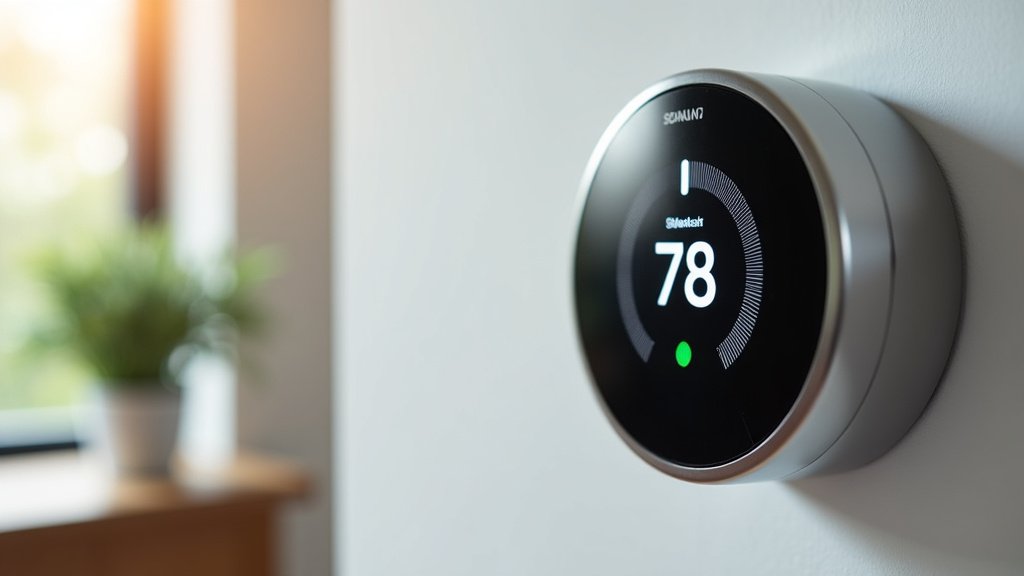
When your smart thermostat runs constantly, it’s usually a clear signal your HVAC system or home needs attention. You’ve learned to check everything from simple settings and dirty filters to complex issues like poor insulation or refrigerant leaks. Addressing these problems not only restores comfort but also saves you money on energy bills and extends your system’s lifespan.
By taking a proactive approach and knowing when to call in a professional, you can ensure your home remains comfortable and your HVAC system operates efficiently. Don’t let constant running go unchecked; your system, and your wallet, will thank you.
Frequently Asked Questions
Is it bad if my smart thermostat is always running?
Yes, it generally indicates an underlying issue. Your HVAC system shouldn’t need to run continuously under normal circumstances. Constant operation means higher energy bills, increased wear and tear, and potentially reduced comfort in your home.
How often should my HVAC system cycle on and off?
A properly sized and functioning HVAC system typically cycles 2-3 times per hour, running for about 10-20 minutes each time. This can vary based on outside temperature and your home’s insulation, but constant running or very short cycles are usually red flags.
Can a faulty thermostat make my AC run constantly?
Absolutely. If your smart thermostat’s sensor is malfunctioning, or if there’s a wiring issue, it might incorrectly detect the room temperature. This can cause it to continuously signal your AC or furnace to run, even if the desired temperature has already been reached.
Will closing vents make my smart thermostat run more?
Closing too many vents can disrupt your HVAC system’s balance. It increases pressure in the ductwork, which can reduce airflow to other areas and make your system work harder. This might cause your thermostat to call for more heating or cooling to satisfy the entire home, leading to longer run times.
Why is my fan constantly running even when the AC or heat is off?
This usually means your fan setting is on “ON” instead of “AUTO.” Check your thermostat’s fan settings and switch it to “AUTO.” This ensures the fan only operates when your heating or cooling system is actively conditioning the air.
