
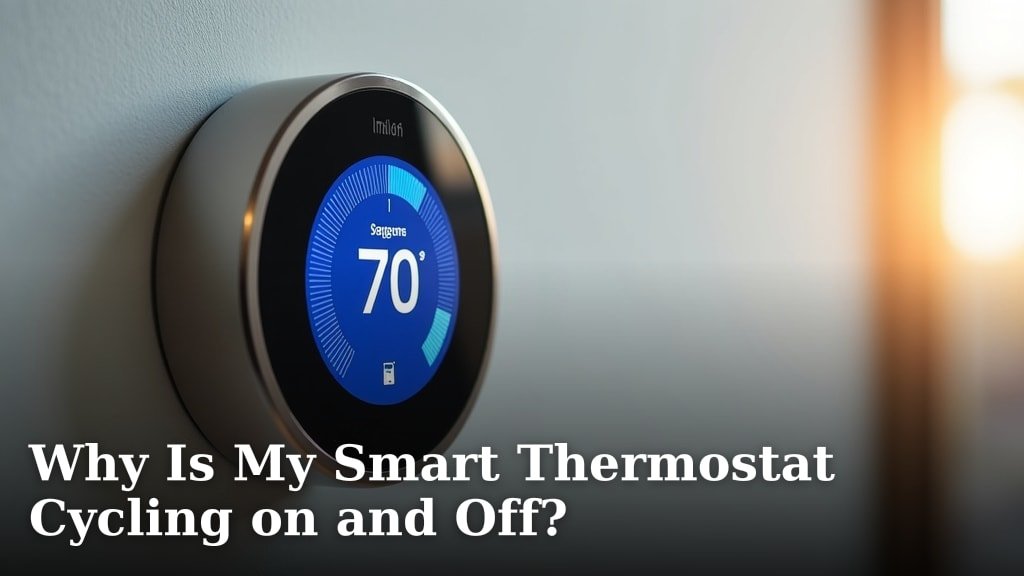
Your smart thermostat might be cycling on and off because of sensor issues, problems with your HVAC system, or even incorrect settings. This rapid on-and-off behavior is often called short cycling, and it can cause problems.
When your thermostat short cycles, it means your heating or cooling system isn’t running long enough to properly adjust your home’s temperature. This can lead to wasted energy and uneven heating or cooling throughout your house. It’s a common issue that many smart thermostat users encounter.
- Smart thermostats cycle on and off due to sensor problems.
- HVAC system issues can also cause short cycling.
- Incorrect settings or thermostat placement are common culprits.
- This behavior wastes energy and wears out your system faster.
- Checking wiring and airflow can help fix the issue.
Let’s walk through some of the most common reasons why your smart thermostat might be short cycling and what you can do to fix it.
Why Your Smart Thermostat Keeps Cycling
You’ve likely noticed your smart thermostat acting a little strange, turning your HVAC system on and off frequently. This behavior, known as short cycling, can be frustrating and even costly. Let’s explore the common reasons why this happens and how you can get things back to normal.
Sensor Troubles: The Eyes and Ears of Your System
Your smart thermostat relies heavily on its sensors to know what’s happening in your home. If these sensors aren’t working right, your thermostat can get confused and start short cycling.
Placement Problems
Where you put your thermostat matters a lot. If it’s in a drafty area, near a window, or next to a heat source like a lamp, it can get false temperature readings. This makes your thermostat think your home is colder or hotter than it really is, leading to unnecessary cycling. We found that placing a thermostat on an interior wall, away from direct sunlight and vents, often provides the most accurate readings.
Dirty or Obstructed Sensors
Dust, dirt, or even small insects can sometimes cover the tiny sensors inside your thermostat. When sensors are blocked, they can’t accurately detect the room temperature. It’s like trying to see with blurry glasses – you can’t quite tell what’s going on. A quick, gentle cleaning with a soft brush can often resolve this.
HVAC System Issues: More Than Just the Thermostat
Sometimes, the problem isn’t your smart thermostat at all. Your heating, ventilation, and air conditioning (HVAC) system might be the real culprit. Think of your thermostat as the brain and your HVAC as the muscle; if the muscle isn’t performing well, the brain gets confused.
Clogged Air Filters
This is one of the most common reasons for short cycling. A dirty air filter restricts airflow, making your furnace or AC work much harder. It struggles to pull enough air, causing it to overheat or freeze up and shut down prematurely. This protective measure prevents damage to the unit. We recommend checking your filters monthly and replacing them every 1-3 months (Environmental Protection Agency).
Low Refrigerant Levels (AC Only)
If your air conditioner is short cycling, it might be running low on refrigerant. Refrigerant is what absorbs heat from your home. When levels are low, the AC struggles to cool the air, causing the evaporator coil to freeze. The system then shuts off to defrost, leading to frequent cycling. This issue usually requires a professional to diagnose and fix.
Oversized or Undersized HVAC Unit
An HVAC system that’s too big for your home will cool or heat the space too quickly, then shut off. It satisfies the thermostat’s call for temperature change too fast, then turns right back on when the temperature drifts a little. Conversely, a system that’s too small will run constantly and still struggle to reach the set temperature, eventually leading to short cycling due to wear and tear. Proper sizing is key for efficient operation (U.S. Department of Energy).
Faulty Capacitors or Fan Motors
Your HVAC system has various components that help it run smoothly. A weak capacitor might prevent the compressor or fan motor from starting correctly, causing the unit to attempt to start repeatedly. A failing fan motor can also lead to overheating and premature shutdowns. These are often subtle issues that require an HVAC technician to pinpoint.
Incorrect Settings & Installation: The Human Element
Even the smartest thermostats need a little help from us. Sometimes, the settings you choose or how the thermostat was installed can lead to short cycling.
Wrong Thermostat Settings
Are your settings too aggressive? If you have a very narrow temperature swing setting – meaning your system turns on for even a half-degree change – it will cycle frequently. Most thermostats have a “cycle rate” or “swing” setting that lets you control how often the system turns on. Adjusting this to a wider range (e.g., 1-2 degrees) can reduce cycling without sacrificing comfort.
Improper Wiring
Smart thermostats require specific wiring to communicate correctly with your HVAC system. If the wiring isn’t done right, or if there’s a loose connection, the thermostat might send incorrect signals or lose power intermittently. This can cause erratic behavior, including short cycling. Checking the wiring connections at both the thermostat and the HVAC control board can sometimes reveal simple issues. Always turn off power to your HVAC system before checking wires.
Compatibility Issues
Not all smart thermostats work with all HVAC systems. While most are designed to be broadly compatible, some older or more complex systems might not play nice with certain smart thermostats. If you recently installed a new smart thermostat and started experiencing short cycling, double-check its compatibility with your specific HVAC unit model. We found that consulting your thermostat’s manual or the manufacturer’s website is the best way to confirm compatibility.
Quick Checklist for Troubleshooting
Before calling a professional, run through this quick checklist. You might be able to solve the problem yourself!
- Check your air filter: Is it clean? Replace it if it looks dirty.
- Inspect thermostat placement: Is it away from drafts, sunlight, or heat sources?
- Clean thermostat sensors: Gently wipe any dust or debris from the thermostat’s vents/sensors.
- Review thermostat settings: Adjust the temperature differential or swing settings to be less sensitive.
- Verify wiring: With the power off, ensure all wires are securely connected to the terminals.
- Restart your HVAC system: Turn off the power at the breaker for a few minutes, then turn it back on.
The Importance of Addressing Short Cycling
You might wonder, “Is this really a big deal?” Yes, it is! Short cycling isn’t just annoying; it can lead to several problems for your home and your wallet.
| Impact of Short Cycling | Explanation |
|---|---|
| Increased Energy Bills | Starting up an HVAC system uses more energy than keeping it running. Frequent starts mean higher energy consumption. |
| Reduced System Lifespan | The constant turning on and off puts extra stress on components like the compressor and fan motor, leading to premature wear and tear. |
| Uneven Home Temperatures | Your system doesn’t run long enough to properly mix and distribute air, resulting in hot or cold spots in different rooms. |
| Poor Dehumidification (AC) | During cooling cycles, your AC removes humidity. Short cycles don’t allow enough run time for effective moisture removal, leaving your home feeling clammy. |
Addressing short cycling promptly can save you money on energy bills and potentially extend the life of your expensive HVAC equipment. Think of it as preventative maintenance for your comfort system.
Conclusion
Dealing with a smart thermostat that constantly cycles on and off can be frustrating. However, by systematically checking common issues like sensor placement, dirty filters, and incorrect settings, you can often pinpoint the problem yourself. Remember, ignoring short cycling can lead to higher energy bills and premature wear on your valuable HVAC system.
If you’ve gone through the troubleshooting steps and your system is still misbehaving, don’t hesitate to call a professional HVAC technician. They have the tools and expertise to diagnose complex issues, ensuring your home remains comfortable and your system runs efficiently for years to come.
Frequently Asked Questions
Is short cycling bad for my HVAC system?
Yes, short cycling is definitely bad for your HVAC system. It puts extra stress on components like the compressor and fan motor, leading to faster wear and tear. This can shorten the lifespan of your unit and lead to costly repairs down the road.
How do I stop my smart thermostat from short cycling?
Start by checking simple things: clean your air filter, ensure your thermostat is placed correctly away from drafts or heat sources, and clean its internal sensors. Also, review your thermostat’s “swing” or “cycle rate” settings; widening this range can often help.
Can a dirty air filter cause short cycling?
Absolutely. A dirty or clogged air filter restricts airflow, forcing your HVAC system to work harder. This can cause the unit to overheat or freeze up and shut down prematurely, leading to frequent short cycling to protect itself.
What is a normal cycle time for an AC unit?
A typical AC cycle should last at least 15-20 minutes, especially during warmer weather. If your unit is consistently running for less than 10 minutes at a time, it’s likely short cycling. The goal is to run long enough to properly cool and dehumidify your home.
When should I call a professional for short cycling?
If you’ve checked all the common causes like filters, thermostat placement, and settings, and the short cycling continues, it’s time to call an HVAC professional. Issues like low refrigerant, faulty components, or an improperly sized unit require expert diagnosis and repair.
