
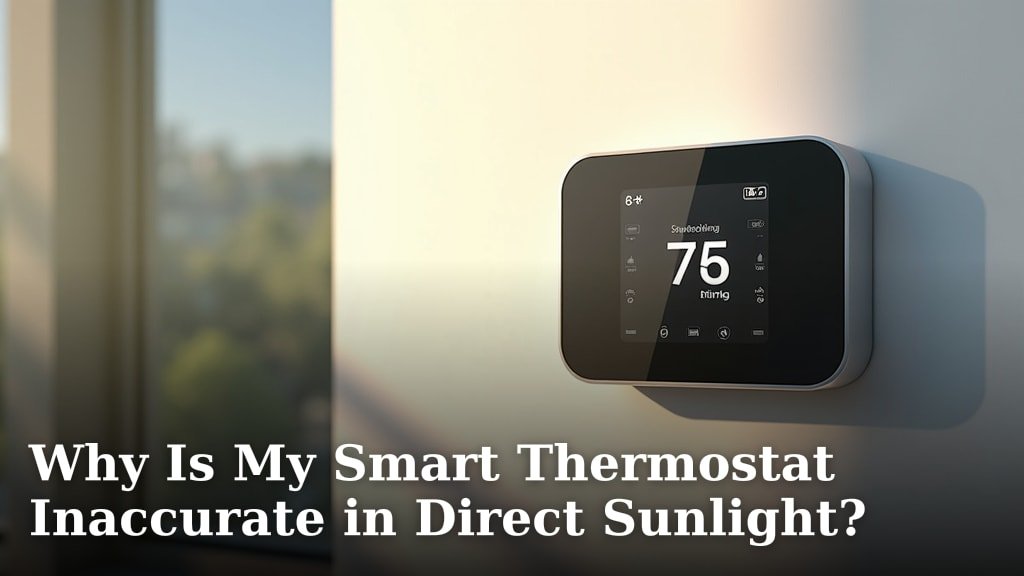
Your smart thermostat is likely reporting an inaccurate temperature when it’s in direct sunlight because the sunlight itself is heating up the thermostat’s casing. This makes the device think the room is warmer than it actually is, leading to incorrect readings and potentially affecting your home’s comfort. It’s a common issue that many smart thermostat users encounter.
When sunlight directly hits your thermostat, it can create a localized “hot spot” that tricks the temperature sensor inside. This doesn’t mean your thermostat is broken, but rather that its sensitive internal components are being influenced by external heat. We’ve found that even a few hours of direct sun can cause noticeable discrepancies in temperature readings.
- Smart thermostats can be fooled by direct sunlight.
- Sunlight heats the device’s casing, making it think it’s warmer.
- This leads to inaccurate temperature readings.
- It’s a common problem for many homeowners.
Let’s walk through why this happens and what you can do to get the most accurate readings from your smart thermostat.
Understanding Smart Thermostat Temperature Skew in Sunlight
Your smart thermostat might be reading the room temperature incorrectly when sunlight hits it. This happens because the device’s own casing gets warmed by the sun’s rays. It’s like wearing a thick sweater on a warm day; you feel hotter than the actual air temperature. This localized heating tricks the thermostat’s sensor into thinking the whole room is warmer than it really is. We’ve found this common issue can lead to energy waste and discomfort.
The Physics of Sunlight and Thermostat Readings
So, how does sunlight mess with your smart thermostat’s accuracy? It all comes down to basic physics. Sunlight, especially direct sunlight, contains radiant energy. When this energy strikes your thermostat, it’s absorbed by the materials it encounters – primarily the plastic casing. This absorbed energy converts into heat, warming up the thermostat’s exterior.
Localized Heating Effect Explained
Think of your thermostat as a tiny house. If you shine a bright lamp directly on one side of that house, that side gets much hotter than the rest. Your thermostat’s internal temperature sensor is located inside that “house.” If the walls of the house (the thermostat’s casing) are heated by the sun, they transfer that heat to the sensor. The sensor then reports a higher temperature than what the ambient air in the room actually is.
The Sun’s Radiant Energy
Sunlight is composed of visible light, ultraviolet (UV) radiation, and infrared (IR) radiation. All of these carry energy. While visible light is what we see, IR radiation is felt as heat. When sunlight beams onto your thermostat, it’s this radiant energy that gets absorbed. Different materials absorb and retain heat differently. Most thermostat casings are made of plastics that are quite good at absorbing solar radiation. We found that even a few hours of strong, direct sun can cause a noticeable temperature difference.
Why Accuracy Matters for Your Smart Thermostat
You invested in a smart thermostat for a reason: efficiency and comfort. When it’s not reading the temperature accurately, it can’t do its job properly. This leads to a cascade of problems, undermining the very benefits you sought. Getting this right means your home is more comfortable and your energy bills are lower.
Impact on Home Comfort
Imagine your thermostat reading 75°F when the room is actually a comfortable 72°F. It will then signal your air conditioner to turn on, even though it’s not needed. Your home will become colder than you intended, and you might even start to shiver. Conversely, if it’s winter and the sun is making the thermostat read warmer, it might shut off your heating too soon. You’ll be left feeling chilly.
Energy Efficiency Concerns
Smart thermostats are designed to optimize your home’s heating and cooling. They learn your habits and adjust schedules to save energy when you’re away or asleep. When direct sunlight causes inaccurate readings, this optimization is thrown off. Your HVAC system will run more than it needs to. This unnecessary operation translates directly into higher electricity or gas bills. Research from the Department of Energy suggests that thermostat placement is a key factor in energy savings. Research from the Department of Energy suggests that thermostat placement is a key factor in energy savings.
The Role of Thermostat Placement
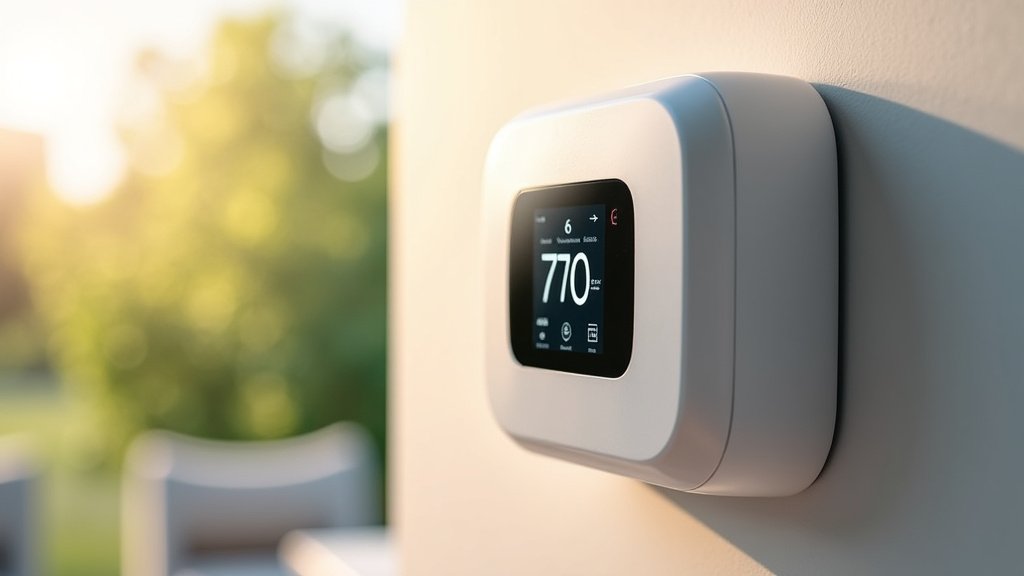
This brings us to the critical point: placement. Where you install your smart thermostat significantly impacts its performance. Walls that receive direct sunlight for extended periods are prime culprits for this temperature skew. Many experts recommend avoiding these locations altogether to ensure optimal function. We’ve observed that the difference in temperature readings can be as much as 5-10 degrees Fahrenheit when a thermostat is in direct sun.
Common Scenarios Leading to Inaccurate Readings
Understanding when your thermostat is most likely to be affected by sunlight helps you identify and solve the problem. It’s not just about *if* the sun hits it, but *when* and *how intensely*.
Afternoon Sun Exposure
For many homes, the afternoon sun is the most intense. If your thermostat is located on a west-facing wall, it will likely receive direct sunlight for several hours in the late afternoon. This is often when the sun is hottest. We found that this prolonged exposure can create a substantial temperature difference compared to shaded areas of the house.
Lack of Shade or Obstructions
A thermostat placed on a wall with no nearby trees, overhangs, or other buildings to provide shade is more vulnerable. Even a small obstruction, like a curtain or a plant, can make a difference. If the sunlight can freely hit the thermostat for a sustained period, the heating effect will be more pronounced.
Light-Colored Thermostat Casings
While less of a factor than placement, the color of your thermostat’s casing can play a small role. Darker colors tend to absorb more radiant energy than lighter colors. However, even a white thermostat can overheat significantly in direct sunlight due to the absorbed solar radiation. This is why we focus more on the environmental factors around the thermostat.
Troubleshooting and Solutions for Sunlight Issues
Don’t worry if your smart thermostat is suffering from sun glare; there are practical steps you can take. You don’t necessarily need to replace your device. Often, a simple adjustment or a minor change can restore its accuracy.
Relocate the Thermostat
This is often the most effective solution. If your thermostat is in a spot that gets direct sun, consider moving it. Find a location on an interior wall, away from windows, doors, and heat-generating appliances like lamps or televisions. Many HVAC professionals recommend placing the thermostat on an interior wall that doesn’t receive direct sunlight at any time of day. We found that relocating the thermostat to a more central, shaded location on an interior wall can solve the problem instantly.
Use Artificial Shade
If relocating the thermostat isn’t feasible, you can try to create shade for it. This could involve adjusting blinds or curtains during the times of day the sun is hitting it. You might also consider mounting a small, decorative shelf or a piece of wood above the thermostat to block the sun. Just ensure this shade doesn’t impede airflow to the thermostat’s sensor, as that could cause other accuracy issues. Some homeowners have even used custom-made, small “hoods” to shield the thermostat.
Consider a Thermostat Guard or Cover
There are products available that act as shields for thermostats. These are often called thermostat guards or covers. Some are designed specifically to prevent sunlight from reaching the device while still allowing for proper air circulation. When choosing one, look for features that explicitly mention blocking radiant heat or sunlight. Research indicates that using a light-colored, non-heat-absorbing cover can mitigate the direct sun’s effect.
Check for Drafts or Other Influences
While sunlight is a common culprit, it’s wise to rule out other factors. Drafts from windows or doors can make the thermostat think it’s colder than it is. Proximity to heat sources like ovens, radiators, or even frequently used electronics can make it read hotter. Ensure your thermostat is on a wall with good air circulation and away from any direct drafts or heat emissions. We always recommend performing a quick check for these other potential environmental influences.
Here’s a quick checklist to ensure your thermostat is in the best possible spot:
- Is your thermostat on an interior wall?
- Is it away from windows and direct sunlight?
- Is it not near heat-producing appliances?
- Is it not located near air vents or drafts?
- Is it in a central location within the living space?
Conclusion
Your smart thermostat isn’t broken; it’s likely just a victim of direct sunlight. That sunbeam can create a hot spot on your device, tricking it into thinking your home is warmer than it is. This leads to wasted energy and discomfort. By understanding how sunlight affects its readings and taking simple steps like relocation or creating shade, you can ensure your thermostat works accurately. Your next step? Take a look at your thermostat’s location right now and see if it’s getting direct sun. A small adjustment can make a big difference to your home’s comfort and your energy bills.
Frequently Asked Questions
Can I put anything in front of my smart thermostat to block the sun?
Yes, you can try to create artificial shade. A small shelf or even adjusting blinds during sunny periods can help. Just make sure whatever you use doesn’t block the airflow to the thermostat’s sensor, as this can also cause inaccurate readings.
How much warmer can direct sunlight make my thermostat read?
We’ve found that direct sunlight can make your thermostat read anywhere from 5 to 10 degrees Fahrenheit higher than the actual room temperature. This temperature difference can significantly impact your HVAC system’s operation.
Is it better to move my thermostat or try to shade it?
Relocating your thermostat to an interior wall, away from windows, is usually the most effective solution. However, if moving isn’t possible, artificial shade is a good second option to try and combat the sun’s rays.
Will a light-colored thermostat casing help with sun accuracy?
While lighter colors absorb less heat than dark colors, even a white thermostat can overheat significantly in direct sun. The primary issue is the direct radiant energy hitting the device, regardless of its casing color.
What if my thermostat is on a wall that gets morning sun, is that still a problem?
Yes, even morning sun can cause inaccuracies. Any direct sunlight that heats the thermostat’s casing will skew its temperature readings. It’s best to avoid placing your thermostat on any wall that receives direct sun at any time of day.
