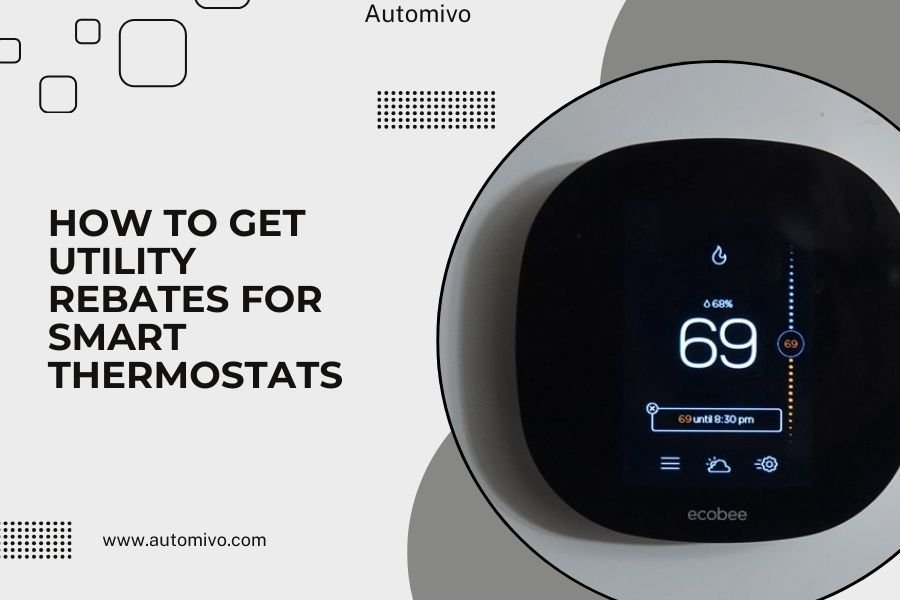
You can get utility rebates for smart thermostats by checking your local utility company’s website for available programs, submitting required paperwork before or after purchase, and meeting their specific energy efficiency requirements.
Most utility companies offer rebates ranging from $50 to $200 for ENERGY STAR certified smart thermostats, with some programs requiring pre-approval while others allow post-purchase applications.
What Are Utility Rebates for Smart Thermostats?
Think of utility rebates as cashback rewards from your power company. They want you to use less energy during peak hours. Smart thermostats help with that goal.
Your utility company pays part of your thermostat cost. Why? Because when you use less energy, they don’t need to build expensive new power plants.
It’s a win-win situation. You save money on the purchase and on your monthly bills.
Why Do Utility Companies Offer These Rebates?
Utility companies face huge costs building new power plants. It’s much cheaper to help customers use less energy instead.
Smart thermostats can reduce heating and cooling costs by 10-15% according to ENERGY STAR data. That takes pressure off the power grid during busy times.
Peak Demand Management
Summer afternoons are brutal for power companies. Everyone cranks up their air conditioning at once. Smart thermostats can shift some of that demand to off-peak hours.
Some utilities even have special programs where your thermostat adjusts automatically during peak times. You get extra rebates for joining these programs.
How Much Money Can You Get Back?
Rebate amounts vary widely by location and utility company. Here’s what I found when researching different programs:
| Rebate Range | Common Amount | Requirements |
|---|---|---|
| Basic Programs | $50-$75 | ENERGY STAR certified only |
| Standard Programs | $100-$150 | ENERGY STAR + utility participation |
| Premium Programs | $200-$300 | Smart grid participation required |
State and Federal Incentives
Some states stack additional rebates on top of utility programs. You might qualify for both a utility rebate and a state energy efficiency credit.
Federal tax credits sometimes include smart thermostats as part of larger home energy improvements. Check current IRS guidelines for qualifying purchases.
Step-by-Step Guide to Getting Your Rebate
Step 1: Find Your Utility Company’s Program
Start with your electric bill. Look for your utility company’s name and website. Most companies have dedicated rebate pages under “Energy Efficiency” or “Rebates.”
Call their customer service if you can’t find rebate information online. Ask specifically about smart thermostat programs.
What to Ask Customer Service
- Do you offer smart thermostat rebates?
- What’s the rebate amount?
- Which thermostat brands qualify?
- Do I need pre-approval?
- What paperwork do you need?
- How long does processing take?
Step 2: Check Eligibility Requirements
Most programs have specific rules. You’ll typically need to be a residential customer with an existing heating and cooling system.
Some utilities only cover one rebate per household. Others limit rebates to certain home types or age ranges.
Common Eligibility Rules
- Must replace a working thermostat (not new construction)
- Home must be your primary residence
- Account must be current with no past-due balances
- Previous rebate recipients may have waiting periods
Step 3: Choose a Qualifying Thermostat
Your utility company will have a list of approved models. Don’t buy first and check later. You might pick one that doesn’t qualify.
ENERGY STAR certification is usually the minimum requirement. Some programs get more specific about features or connectivity.
Popular Qualifying Brands
- Nest Learning Thermostat
- Ecobee SmartThermostat
- Honeywell T9 Smart Thermostat
- Emerson Sensi Touch
- Johnson Controls GLAS
Step 4: Understand Pre-Approval vs. Post-Purchase
Some programs require you to apply before buying. Others let you purchase first and apply later. This is really important to get right.
Pre-approval programs often have limited funding. You might apply in January but not get approved until March when new budget money becomes available.
Pre-Approval Programs
You apply first, wait for approval, then buy your thermostat. The utility might send you a special code or voucher to use at checkout.
These programs often offer higher rebate amounts. They also guarantee your rebate before you spend money.
Post-Purchase Programs
Buy your qualifying thermostat first. Save all receipts and packaging. Then submit your rebate application within the time limit.
Most post-purchase programs give you 60-90 days to submit paperwork. Don’t wait until the last minute.
Required Documentation and Paperwork
What You’ll Need to Submit
Gather these documents before starting your application. Missing paperwork is the main reason rebate applications get delayed or rejected.
- Original purchase receipt showing date, store, and model number
- Thermostat packaging with UPC barcode (cut it out and save it)
- Completed rebate application form
- Copy of recent utility bill
- Installation photos (some programs require these)
Professional Installation Requirements
Some utility programs require professional installation. Others allow DIY installation but need proof that it works properly.
If you hire an HVAC contractor, get a receipt that shows the installation service. Some programs want the contractor’s license number too.
DIY Installation Documentation
Take photos of your old thermostat before removal. Take more photos showing the new thermostat installed and working.
Some applications ask for your thermostat’s WiFi connection status or app screenshots. This proves the smart features are actually working.
Common Mistakes That Kill Rebate Applications
Buying Non-Qualifying Models
This is the biggest mistake people make. They see a great deal on a smart thermostat and buy it without checking their utility’s approved list.
Even popular brands might have specific models that don’t qualify. Always verify the exact model number before purchasing.
Missing Application Deadlines
Most programs give you 60-90 days after purchase to apply. Mark this deadline on your calendar right after buying your thermostat.
Late applications get rejected automatically. There’s usually no appeal process for missed deadlines.
Incomplete Documentation
Don’t submit partial applications thinking you can send missing documents later. Most programs want everything at once.
Make copies of everything before mailing. Use certified mail or online submissions with delivery confirmation.
Special Utility Programs and Extra Benefits
Demand Response Programs
Some utilities offer higher rebates if you join their demand response program. Your thermostat automatically adjusts during peak energy times.
You might get an extra $50-100 for participating. The temperature changes are usually small – just 2-3 degrees for short periods.
Time-of-Use Rate Programs
If your utility offers time-of-use rates, smart thermostats become even more valuable. They can pre-cool your house during cheap energy hours.
Some utilities give bonus rebates to customers who combine smart thermostats with time-of-use rate plans.
Low-Income Assistance Programs
Many utilities have special programs for qualifying low-income households. These often provide free thermostat installation plus ongoing energy assistance.
Income limits and application processes vary by utility. Contact your local community action agency for help with applications.
How to Speed Up Your Rebate Processing
Submit Applications Online When Possible
Online applications usually process faster than mail submissions. You’ll get instant confirmation that your application was received.
Upload clear, readable photos of receipts and documentation. Blurry photos cause delays while staff request new copies.
Follow Up Appropriately
Most programs tell you the expected processing time upfront. Don’t call every week asking for updates.
Do follow up if you haven’t heard anything after the promised timeframe. Keep records of when and who you spoke with.
What Happens If Your Application Gets Rejected?
Common Rejection Reasons
Most rejections happen because of missing documentation or non-qualifying equipment. The utility should tell you exactly why your application was denied.
Sometimes it’s a simple fix. Maybe your receipt was too blurry to read the model number. Resubmit with a clearer copy.
Appeal Process
Ask about the appeal process when you get a rejection notice. Some utilities allow you to provide additional documentation or clarification.
Appeals usually have tight deadlines – often just 30 days from the rejection notice. Don’t delay if you think the rejection was wrong.
Maximizing Your Smart Thermostat Investment
Stack Multiple Incentives
Look for ways to combine utility rebates with manufacturer promotions, store discounts, or credit card rewards. Every little bit helps offset the cost.
Some retailers time their sales to coincide with utility rebate programs. You might save $100 on the purchase price plus get a $150 utility rebate.
Consider Upgrading Multiple Thermostats
If you have multiple HVAC zones, check if your utility offers rebates for each thermostat. Some households can get $300-500 in total rebates.
Installing multiple smart thermostats gives you better control over your energy use. You can set different schedules for different parts of your house.
Conclusion
Getting utility rebates for smart thermostats isn’t complicated, but it does require attention to detail. Start by checking your utility company’s website or calling their customer service line. Make sure you understand whether you need pre-approval or can apply after purchase.
The key is choosing a qualifying thermostat model and keeping all your documentation organized. Most people can get $100-200 back, which covers a significant portion of the thermostat cost. Combined with monthly energy savings, smart thermostats often pay for themselves within two years.
Don’t let free money sit on the table. Millions of homeowners are eligible for these rebates but never apply. Take 30 minutes to research your local programs and start the application process. Your wallet will thank you.
Can I get rebates for multiple smart thermostats in my home?
Many utility programs allow rebates for multiple thermostats if you have separate HVAC zones. Check with your utility about household limits, as some cap rebates at 2-3 thermostats per residence while others allow one per heating/cooling system.
What happens if I move before my rebate application is processed?
Most utility rebate programs require you to remain a customer at the installation address for a minimum period, typically 6-12 months. If you move early, you may need to repay the rebate. Contact your utility immediately if you plan to move during the processing period.
Do I need to keep my smart thermostat for a certain amount of time after getting the rebate?
Yes, most programs require you to keep the thermostat installed and operational for 1-3 years. If you remove it early or it stops working, you may have to repay some or all of the rebate. Check your program’s specific terms for equipment retention requirements.
Can renters apply for smart thermostat rebates or only homeowners?
Renters can often apply if they’re the utility account holder and have landlord permission to modify the thermostat. You’ll need written permission from your landlord and must meet all other program requirements. The rebate typically goes to whoever pays the utility bill.
What should I do if my utility company doesn’t offer smart thermostat rebates?
Check with your state energy office, local government programs, and thermostat manufacturers for alternative incentives. Some states offer tax credits, and manufacturers occasionally run cash-back promotions. Also ask your utility about general energy efficiency rebates that might include smart thermostats.