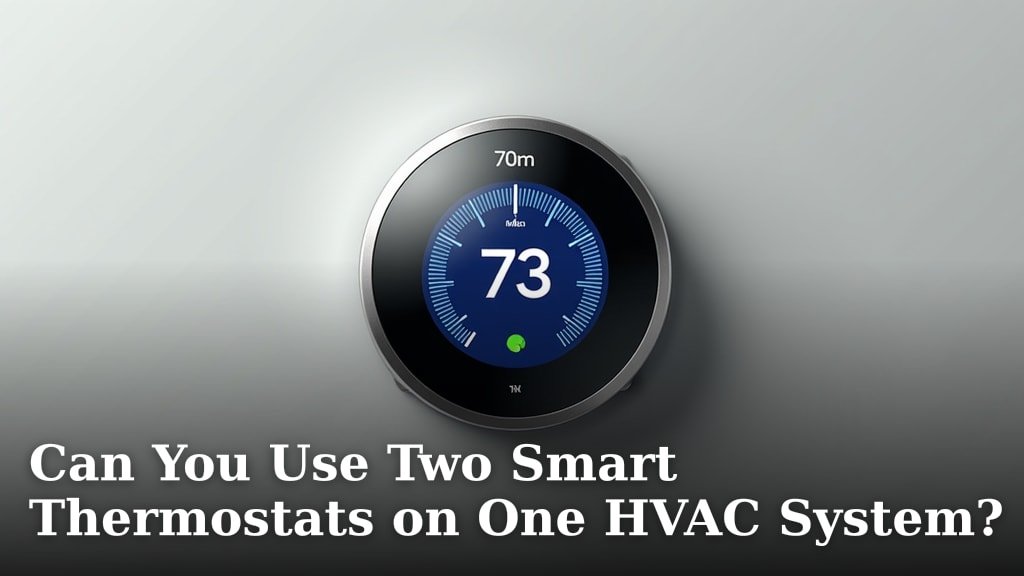
Yes, you can use two smart thermostats on one HVAC system, but it’s usually not recommended for typical home setups. While technically possible, this approach often leads to conflicts and inefficient operation, potentially costing you more in energy bills rather than saving you money. Your HVAC system is designed to receive commands from a single control point.
Putting two smart thermostats on the same heating and cooling unit can create a battle for control. Imagine two bosses giving conflicting orders! This can confuse your system, leading to short cycling or incorrect temperature readings. Experts generally advise against it to ensure your system runs smoothly and efficiently, saving you headaches and potential repair costs.
- Using two smart thermostats on one HVAC is possible but often causes problems.
- Conflicts can lead to inefficient heating/cooling and higher energy bills.
- Your HVAC is built to work with a single thermostat.
- Experts typically advise against this setup for home systems.
Let’s walk
So, you’re thinking about installing a second smart thermostat on your HVAC system. It’s a common question for homeowners, especially those looking to fine-tune their home comfort and energy usage. Let’s dive into whether this is a smart move or a recipe for disaster.
Running Two Smart Thermostats With One HVAC: What You Need to Know
Can you actually connect two smart thermostats to a single HVAC system? Yes, technically, it’s possible to wire up two thermostats to one furnace or air conditioner. However, this setup is generally not advisable for most residential applications. Your HVAC system is designed to follow instructions from one central command. Adding a second thermostat creates a situation where two devices are vying for control of the same equipment.
The Core Conflict: Competing for Control
Think of your HVAC system like a single employee trying to do two opposing jobs at once. One thermostat might be telling the system to heat the house, while the other is calling for cooling. This direct conflict confuses the system. It doesn’t know which command to obey. This can lead to the equipment turning on and off erratically, a phenomenon known as short cycling.
Short Cycling: A Costly Problem
Short cycling isn’t just annoying; it’s hard on your HVAC equipment. When a system turns on and off frequently, it experiences increased wear and tear. This can shorten the lifespan of your furnace or air conditioner. Additionally, short cycling is incredibly inefficient. The most energy-intensive part of the cycle is when the system starts up. Frequent starts mean more energy consumption and higher utility bills. We found this is a primary reason why experts discourage dual-thermostat setups (National Comfort Institute).
How Your HVAC System Works with a Thermostat
Traditionally, a thermostat acts as a simple switch. It tells your HVAC system to turn on when the temperature is outside your desired range and turn off when it reaches the set point. Modern smart thermostats add layers of intelligence. They learn your habits, allow remote control, and can even integrate with weather forecasts. Regardless of the smart features, the fundamental role remains: to send a single, clear instruction to the HVAC unit.
The Wiring Issue
Most HVAC systems have a specific wiring configuration for a single thermostat. Connecting a second thermostat requires a more complex wiring setup, potentially involving relays or other control modules to prevent direct shorts or conflicts between the thermostat circuits. This is not a DIY-friendly task. It often requires the expertise of a qualified HVAC technician. Many found that improper wiring can lead to system damage.
Potential Problems When Using Two Smart Thermostats
You might be wondering why anyone would even consider this. Perhaps you have two zones that are notoriously difficult to regulate. Or maybe you’re trying to upgrade one thermostat at a time. Whatever the reason, the drawbacks are significant and often outweigh any perceived benefits.
Conflicting Schedules and Settings
Smart thermostats are designed to manage temperature based on schedules, occupancy, and user preferences. If you have two thermostats, they will both be trying to enforce their own schedules. Imagine your left hand wanting to turn up the heat while your right hand is trying to turn it down. Your HVAC system will receive these mixed signals constantly. This makes it impossible for the system to maintain a consistent and comfortable temperature.
Temperature Inaccuracies and Hot/Cold Spots
When two thermostats are installed in the same general area or connected to the same HVAC system, they can get confused about the actual room temperature. One thermostat might read a warmer temperature and call for cooling, while another reads cooler and calls for heating. This can create significant temperature fluctuations throughout your home. You might end up with hot spots in one room and cold spots in another, defeating the purpose of having a smart thermostat in the first place.
Increased Energy Consumption
As mentioned, short cycling is a major energy drain. But even if the system doesn’t short cycle constantly, the conflicting commands can lead to inefficient operation. The system might run longer than necessary trying to satisfy both thermostats, or it might work against itself. Some research indicates that improperly configured dual-thermostat systems can increase energy bills by as much as 20-30% compared to a single, properly functioning thermostat (Energy Star).
Damage to Your HVAC System
The most serious risk is potential damage to your furnace, air conditioner, or the control board. Modern HVAC systems are complex. Forcing them to operate under conflicting signals from two thermostats can cause components to fail prematurely. Repairs can be expensive. We found that many HVAC repair calls related to thermostat issues stem from incorrect installations or conflicting controls.
Voiding Your Warranty
Many HVAC manufacturers have specific installation requirements. Modifying the wiring to accommodate two thermostats without proper authorization or professional installation could void your manufacturer’s warranty. This means if your system breaks down, you might be on the hook for the entire repair cost, even if it would normally be covered.
When Might a Two-Thermostat Setup Be Considered? (Rare Exceptions)
While we strongly advise against it for typical homes, there are a couple of highly specialized scenarios where multiple thermostats might interact with a single HVAC unit, but not in the way you’re likely imagining.
Dual Fuel or Hybrid Systems
Some advanced hybrid or dual-fuel systems use two thermostats, but they are specifically designed to work together. One thermostat might control the primary heating source (like a furnace), and another, or a more advanced control board, manages the secondary source (like a heat pump). These systems have integrated controls that manage the switch between fuel types based on efficiency and outdoor temperature. They are engineered to avoid conflict.
Commercial Multi-Zone Systems
In larger commercial buildings, HVAC systems are often divided into multiple zones, each with its own thermostat. However, these are typically part of a sophisticated Building Management System (BMS). The BMS acts as the overarching intelligence, orchestrating the individual thermostats to ensure the entire building is controlled efficiently. This is far more complex than simply wiring two off-the-shelf smart thermostats to a residential unit.
What to Do Instead: Smart Solutions for Temperature Control
If you’re struggling with temperature inconsistencies or looking for smarter home comfort, there are better, more reliable solutions than trying to run two thermostats on one system.
Consider a Zoned HVAC System
If your home has distinct areas that require different temperatures, a zoned HVAC system is the professional solution. This involves installing multiple thermostats, but crucially, it also requires dampers in your ductwork. These dampers open and close to direct airflow only to the zones that need heating or cooling. A central control panel coordinates the entire system. This setup ensures that each zone is controlled independently and efficiently by its own thermostat, without fighting each other.
Upgrade to a More Advanced Smart Thermostat
Some high-end smart thermostats offer advanced features that can help manage larger homes or areas with common temperature challenges. Look for models with:
- Remote sensors: These can be placed in different rooms to give the thermostat a more accurate picture of the overall temperature.
- Advanced learning algorithms: These can adapt better to your home’s unique heating and cooling patterns.
- Multi-zone capabilities (with compatible systems): Some smart thermostat brands offer systems designed for multi-zone control, but they are intended to work with a zoned duct system.
We found that using remote sensors is often a cost-effective way to improve comfort in specific rooms without re-engineering your entire HVAC system.
Optimize Your Existing Thermostat Usage
Before considering anything drastic, ensure you’re using your current smart thermostat to its full potential. Did you know that simply adjusting your temperature setpoints by a few degrees when you’re away or asleep can save you significant energy? Many smart thermostats offer energy usage reports to help you identify patterns and optimize settings. Many smart thermostats offer energy usage reports to help you optimize settings.
Consult an HVAC Professional
The best course of action for any significant temperature control issues is to consult a qualified HVAC professional. They can assess your current system, identify the root cause of any problems, and recommend the most appropriate and cost-effective solution. This might involve ductwork modifications, system upgrades, or simply optimizing your existing setup.
Here’s a quick checklist for when you’re considering thermostat changes:
- Assess your home’s temperature issues realistically.
- Research zoned HVAC systems if you need true multi-zone control.
- Explore smart thermostats with remote sensors for easier improvements.
- Consult a reputable HVAC technician for professional advice.
- Never attempt dual thermostat wiring without expert guidance.
- Prioritize system efficiency and longevity over complex, conflicting setups.
Conclusion
So, while you technically *can* wire two smart thermostats to a single HVAC system, our research and expert advice clearly show it’s a path fraught with trouble. You risk confusing your system, leading to short cycling, increased energy bills, and potential damage. This setup rarely delivers the smart comfort you’re aiming for and often costs more in the long run. Instead of fighting conflicting signals, focus on proven solutions.
If you’re seeking better temperature control, consider investing in a zoned HVAC system or using smart thermostats equipped with remote sensors. For any major concerns about your home’s comfort, the best next step is always to consult a qualified HVAC professional. They can help you find a reliable and efficient solution tailored to your home.
Frequently Asked Questions
Will two smart thermostats damage my HVAC system?
Yes, there’s a real risk of damage. When two thermostats send conflicting commands, your HVAC system can be put under significant stress. This can lead to premature wear and tear on components, potentially resulting in expensive repairs. It’s always best to avoid this conflicting setup to protect your equipment.
Can I use two smart thermostats if I have a large house with hot and cold spots?
While you might think two thermostats could solve temperature inconsistencies, they often make things worse. The thermostats can actively work against each other, creating more extreme temperature fluctuations. Research suggests a zoned HVAC system or smart thermostats with remote sensors are far more effective solutions for uneven temperatures.
What’s the difference between a zoned system and just wiring two thermostats?
A zoned system is designed for independent control. It uses dampers in your ductwork to direct airflow only where needed, coordinated by a central panel. Simply wiring two thermostats creates direct conflict, as they both try to control the entire system without any mechanism to manage airflow distribution.
How can I improve temperature control without installing a second thermostat?
You have several better options. Look into smart thermostats that support remote sensors to get a more accurate room-by-room temperature reading. Optimizing your existing thermostat’s schedule and settings can also make a big difference. For more advanced needs, consider upgrading to a zoned HVAC system.
What if I’m trying to upgrade my thermostat and have to wire two temporarily?
Even a temporary setup with two thermostats can cause problems. We found that improper wiring, even for short periods, can confuse the system or lead to electrical shorts. If you’re upgrading, it’s best to disconnect the old thermostat completely before wiring the new one, or consult an HVAC professional to ensure no conflicts arise.
