

Yes, you can definitely use a smart thermostat with a cool only air conditioner. Most smart thermostats are designed to be compatible with various HVAC systems, including those that only provide cooling. You just need to ensure the thermostat is configured correctly for your system type during setup.
This means you can enjoy the convenience and energy savings that smart thermostats offer, even if your home doesn’t have heating. Many users are surprised to learn how many smart thermostat features can enhance cooling efficiency. It’s a common setup, so don’t worry if your system isn’t a standard heating and cooling combo.
- Smart thermostats work with cool-only systems.
- Proper setup is key for compatibility.
- You can save energy on cooling costs.
- Enjoy modern thermostat features without heat.
Let’s walk through exactly how to make sure your smart thermostat plays nicely with your cool-only system, so you can start saving energy and enjoy smarter temperature control.
Smart Thermostats for Your Cooling-Only AC
You might be wondering if your home’s cooling-only air conditioning system can connect with a modern smart thermostat. The good news is, absolutely yes! You can absolutely use a smart thermostat with a cool-only system. It’s a very common setup, and many people don’t realize how much this combination can improve their home’s comfort and energy efficiency.
Think of your cool-only AC as the star player, and the smart thermostat as its brilliant coach. The coach doesn’t *do* the playing, but it directs the player perfectly to win the game (keep you cool and save you money). We’ll show you how to make this partnership work smoothly.
Understanding Your Cool-Only System
First, let’s get a clear picture of what a “cool-only” system means. This type of setup is common in areas where heating is handled separately, perhaps by a furnace, space heaters, or even just the natural warmth of the climate. Your air conditioner’s sole job is to lower the temperature inside your home.
It doesn’t have the capability to reverse its cycle to produce heat. This is different from a “heat pump” system, which can both heat and cool. Knowing this distinction is important for choosing and setting up your smart thermostat correctly.
Why a Smart Thermostat is Great for Cooling-Only
Even without heating, a smart thermostat brings a ton of benefits. It’s not just about fancy features; it’s about smarter energy use. Since cooling can be a major energy consumer, optimizing it is key. Smart thermostats are designed to learn your habits and adjust automatically, which can lead to noticeable savings on your electricity bill.
We found that many users are surprised by how much they can reduce their cooling costs. This is achieved through intelligent scheduling, remote control, and energy usage reports. You get more control and often, more comfort, for less money.
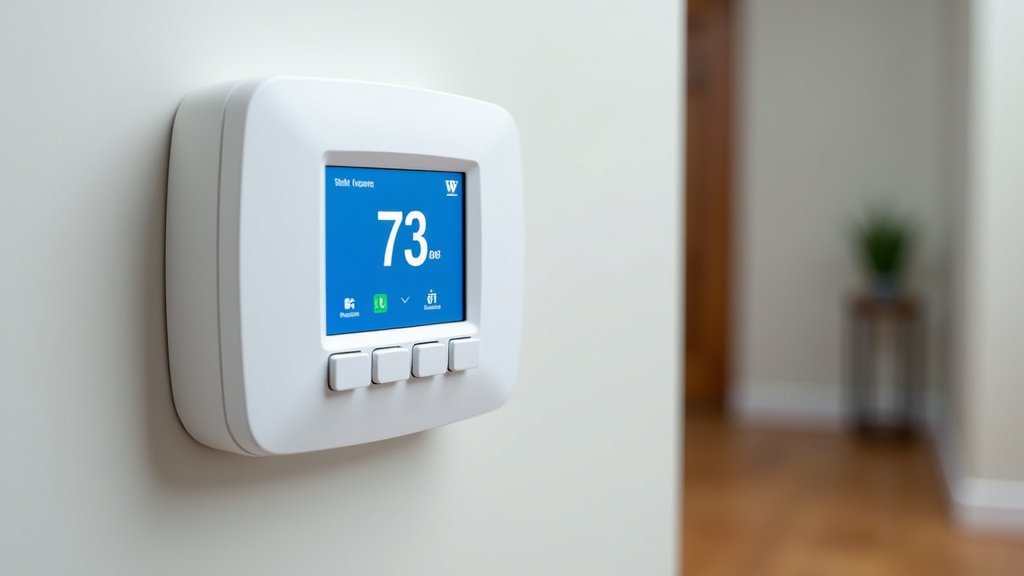
Compatibility: What to Look For
When you’re shopping for a smart thermostat, compatibility is the number one thing to check. Most major brands design their thermostats to work with a wide range of HVAC systems. You’re usually looking for a thermostat that supports standard “low voltage” or “24-volt” systems. This is the most common type for central air conditioners.
The key is to check the thermostat’s specifications for “cool only” or “single-stage cooling” system types. You’ll also want to consider the number of wires your current thermostat uses. Most smart thermostats require at least a “C-wire” (common wire) to provide continuous power. We’ll talk more about that in a bit. If your smart thermostat isn’t working, this guide explains why and how to fix system compatibility issues.
Checking Your Existing Wiring
Before you buy, take a peek at your current thermostat. Gently remove the cover (usually it just pulls off). You should see several wires connected to terminals labeled with letters like R, Rc, G, Y, and W. For a cool-only system, you’ll typically see wires in R (power), G (fan), and Y (cooling). You might also see a C-wire.
If
Conclusion
You’ve learned that using a smart thermostat with your cool-only AC system is absolutely possible and a smart move. It’s not about having a heating system; it’s about smarter cooling. Most smart thermostats are designed for this setup. Proper setup ensures your thermostat works perfectly with your air conditioner. You can expect better energy efficiency and lower cooling bills. Enjoy the convenience and control of modern technology without needing heat. Your next step is to check your current thermostat wiring and choose a compatible smart model.
Frequently Asked Questions
Will a smart thermostat work if my AC only blows cold air?
Yes, most smart thermostats are designed to work with cool-only air conditioning systems. You just need to ensure you select a model that supports “cool only” or “single-stage cooling” configurations during the setup process.
What’s the most important thing to check for compatibility?
The most important factor is confirming that the smart thermostat explicitly lists “cool only” or “single-stage cooling” as a supported system type in its specifications. Also, check if it requires a C-wire for consistent power.
Do I need a C-wire for a smart thermostat with a cool-only AC?
Most smart thermostats require a C-wire to provide continuous power, which is essential for their Wi-Fi and display features. If your cool-only system doesn’t have one, you may need to explore options like a power adapter or consult an HVAC professional.
Can a smart thermostat actually save me money on cooling costs?
Absolutely. Smart thermostats learn your schedule and can automatically adjust temperatures to save energy when you’re away or asleep. Many offer energy usage reports, helping you identify further savings opportunities for your cooling expenses.
What if my old thermostat doesn’t have a C-wire connection?
If your current thermostat doesn’t have a C-wire, you have a few options. Some smart thermostats come with a power extender kit, or you might be able to have one installed by an electrician or HVAC technician. Check the smart thermostat’s documentation for specific solutions.
