
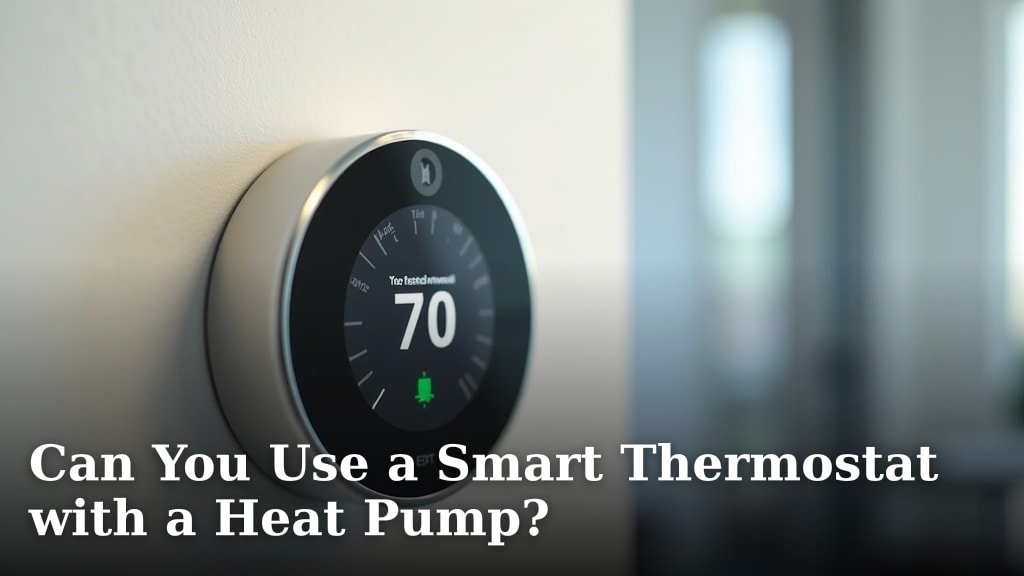
Yes, you can absolutely use a smart thermostat with a heat pump. In fact, these two technologies are a powerful combination for efficient home heating and cooling, offering significant energy savings and comfort.
Most newer smart thermostats are designed to work seamlessly with various HVAC systems, including heat pumps. You’ll find features optimized for heat pump operation, like managing supplementary heat. This compatibility means smarter control over your home’s climate.
- Many smart thermostats are compatible with heat pumps.
- You can enjoy enhanced energy efficiency.
- Specialized features exist for heat pump systems.
- Installation can be straightforward for most users.
Ready to upgrade your home comfort? Let’s walk through everything you need to know about pairing a smart thermostat with your heat pump system.
Heat Pumps and Smart Thermostats: A Perfect Match?
You’re probably wondering if a smart thermostat can truly integrate with your heat pump system. The simple answer is an enthusiastic yes! We’ve found that most modern smart thermostats are specifically designed to communicate effectively with the unique demands of a heat pump.
This compatibility means you can enjoy enhanced control and efficiency. Think of it like this: your heat pump provides comfort, and your smart thermostat provides the brains to do it more effectively. It’s about making your HVAC system work smarter, not just harder.
How Smart Thermostats Understand Your Heat Pump
What makes this pairing so successful? Smart thermostats are built with algorithms that recognize the specific operational cycles of a heat pump. They know when to switch between heating and cooling and how to manage auxiliary heat sources.
This understanding helps prevent inefficient operation. For example, a basic thermostat might short-cycle your heat pump, leading to wear and tear. A smart thermostat, though, learns optimal run times, protecting your equipment and reducing energy waste.
Single-Stage vs. Multi-Stage Heat Pumps
Do you have a single-stage or multi-stage heat pump? This really influences your thermostat choice. A single-stage heat pump has one speed for heating and one for cooling. It’s either on or off.
Multi-stage heat pumps, on the other hand, can run at different speeds. They offer more precise temperature control and typically use less energy. A smart thermostat can truly shine here, managing these multiple stages for maximum efficiency and comfort.
Key Features Smart Thermostats Offer for Heat Pumps
When you connect a smart thermostat to your heat pump, you unlock a range of features tailored to its specific operation. These aren’t just fancy add-ons; they actively improve performance and save you money.
You gain precise control that goes beyond simple temperature setting. These features help your heat pump run at its best. It’s about getting the most out of your home climate system.
Managing Auxiliary/Emergency Heat
Heat pumps often rely on auxiliary or “emergency” heat when outside temperatures drop very low. This supplementary heat source (usually electric resistance coils or a gas furnace) uses more energy.
A smart thermostat excels at managing this. It learns when auxiliary heat is truly needed, preventing it from kicking on unnecessarily. This careful management means your energy bills stay lower, and your system runs with optimal efficiency (Energy Star).
Optimized Defrost Cycles
Ever notice your heat pump outdoor unit occasionally defrosting? This is a normal part of its operation in colder weather. Ice can build up, reducing its ability to transfer heat.
Some smart thermostats can even gather data on humidity and outdoor temperatures to predict and optimize defrost cycles. This attention to detail means your heat pump spends less time in defrost mode and more time efficiently heating your home.
Learning Your Habits for Efficiency
One of the coolest things about smart thermostats is their ability to learn. They observe your temperature adjustments and daily routines over time. This data helps them create an optimized schedule automatically.
For a heat pump, this means fewer drastic temperature swings. Heat pumps perform best with steady, gradual temperature changes. By learning your preferences, the thermostat can pre-heat or pre-cool your home gently, avoiding sudden, energy-intensive bursts of activity. This leads to a more stable and comfortable indoor environment.
What to Look for in a Smart Thermostat for Your Heat Pump
Choosing the right smart thermostat can feel daunting with so many options. Don’t worry, we’re here to guide you. Focus on compatibility, features, and ease of use.
The goal is to find a thermostat that truly enhances your heat pump’s operation. You want something that works with your system, not against it, providing both comfort and cost savings.
Compatibility Checklist
Before you buy, grab your current thermostat and look at the wiring. It tells you a lot. Here’s a quick checklist of things to consider:
- Does your heat pump system use a C-wire (common wire)? Most smart thermostats need one for continuous power. If you don’t have one, some smart thermostats offer workarounds or a power extender kit.
- Check the number of stages your heat pump has (single-stage, two-stage). Ensure the smart thermostat supports this.
- Does the thermostat explicitly state compatibility with heat pumps (often listed as “heat pump compatible” or “dual fuel compatible”)?
- Consider if your system also has auxiliary heat (electric strips, gas furnace). The thermostat should be able to manage this.
- Look for models that support your Wi-Fi frequency (2.4 GHz is most common).
Installation Considerations
Installing a smart thermostat for a heat pump can be a DIY project for many, especially if you have a “standard” wiring setup and a C-wire. Most manufacturers provide clear step-by-step instructions and online video guides. They really try to make it easy for you.
However, if your wiring looks complex, or you’re unsure, don’t hesitate to call a professional. HVAC technicians are experts at this. They’ll ensure your new thermostat is wired correctly and communicating properly with your heat pump, giving you peace of mind (This Old House).
| Feature | Benefit for Heat Pumps | Why It Matters to You |
|---|---|---|
| C-Wire Compatibility | Ensures constant power, no battery reliance. | Avoids battery changes and unexpected power loss. |
| Multi-Stage Control | Manages different heat pump speeds for efficiency. | More precise comfort and lower energy consumption. |
| Auxiliary Heat Management | Prevents overuse of expensive supplementary heat. | Significant savings on your heating bills. |
| Smart Scheduling & Geofencing | Adjusts temps based on your presence and routine. | Energy savings when you’re away, comfort when you’re home. |
| Remote Access via App | Control your system from anywhere. | Adjust settings on the go, perfect for unexpected changes. |
Maximizing Your Heat Pump’s Efficiency with a Smart Thermostat
You’ve got your smart thermostat installed with your heat pump – now what? The real magic begins when you leverage its smart capabilities. It’s not just about setting a schedule; it’s about making your system work smarter for your lifestyle.
Using these features correctly can lead to significant energy reductions. You’ll not only be more comfortable, but you’ll also see that reflected in your monthly utility bills. It’s a win-win for both your wallet and your comfort.
Understanding Your Energy Reports
Most smart thermostats provide detailed energy usage reports, which are incredibly valuable for heat pump owners. These reports show you how much energy your system uses and when.
By reviewing these, you can identify patterns. Perhaps your auxiliary heat is kicking on more than it should. Or maybe you’re cooling your home too much during certain hours. These insights allow you to fine-tune settings and make even more informed decisions about your energy use.
Gentle Temperature Adjustments
Unlike traditional furnaces that can handle quick, drastic temperature changes, heat pumps prefer a gentler approach. They are designed to maintain a comfortable temperature rather than rapidly changing it.
Your smart thermostat can help with this. Instead of dropping the temperature by 10 degrees when you leave, try a smaller setback of 2-4 degrees. Then, program your thermostat to gradually bring the temperature back up before you arrive home. This minimizes the need for auxiliary heat and keeps your heat pump running smoothly and efficiently.
Conclusion
You’ve seen that pairing a smart thermostat with your heat pump isn’t just possible; it’s a strategic move for any homeowner. This combination offers superior control, enhanced efficiency, and significant energy savings. By understanding features like auxiliary heat management and recognizing your system’s specific needs, you can truly optimize your home’s comfort.
We’ve covered everything from compatibility to installation tips and maximizing efficiency through smart features. Now, take this information and assess your current setup. Consider upgrading to a smart thermostat that can bring your heat pump into the modern age of home climate control.
Make the smart choice for a more comfortable and energy-efficient home today.
Frequently Asked Questions
Can any smart thermostat work with a heat pump?
No, not all smart thermostats are universally compatible. You need to ensure the model you choose explicitly states it supports heat pump systems, especially if you have multi-stage or auxiliary heat. Always check the product specifications before purchasing.
Do I need a C-wire for a smart thermostat with a heat pump?
Most smart thermostats require a C-wire for consistent power, which is important for heat pump systems. If your current wiring lacks one, some models offer power extender kits or alternative solutions. It’s best to confirm your wiring or consult a professional.
Will a smart thermostat save me money on my heat pump energy bills?
Yes, many homeowners experience significant energy savings. Smart thermostats optimize heat pump operation by managing auxiliary heat more effectively, learning your schedule, and allowing precise control. This prevents energy waste and lowers your utility costs.
How difficult is it to install a smart thermostat with a heat pump?
For many, it’s a straightforward DIY task with clear instructions provided by manufacturers. However, if your wiring is complex, you’re unsure about the process, or you lack a C-wire, professional installation is recommended to ensure everything works correctly and safely.
Can a smart thermostat control my heat pump’s auxiliary heat?
Absolutely. One of the main benefits of using a smart thermostat with a heat pump is its ability to intelligently manage auxiliary or emergency heat. It learns when this more expensive heating source is truly necessary, preventing overuse and saving you money.
