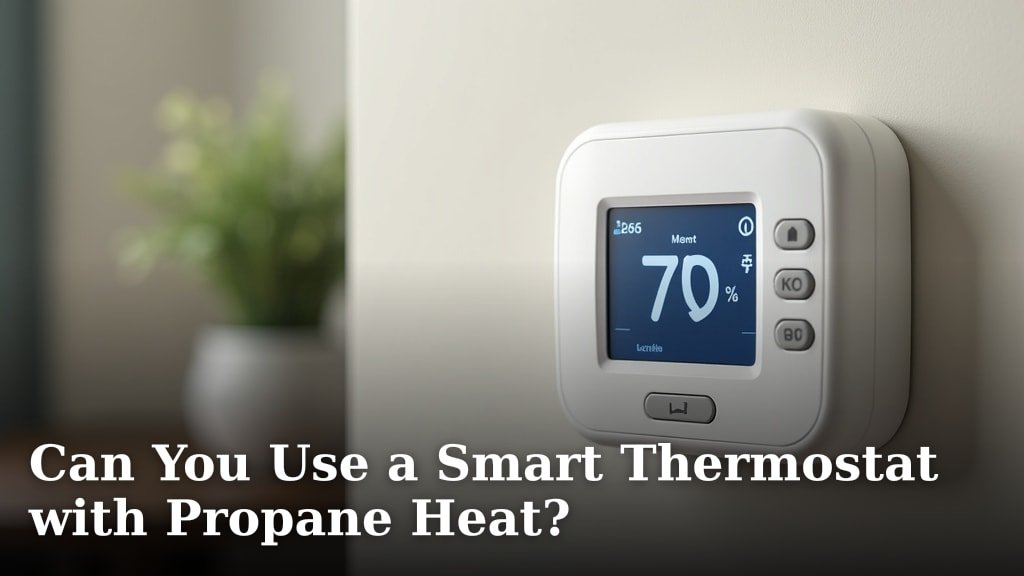
Yes, you can absolutely use a smart thermostat with propane heat. Many smart thermostats are universally compatible with various heating systems, including propane furnaces. This means you can enjoy the benefits of smart home control, like remote access and energy savings, even with your propane system.
When you’re looking to upgrade your heating control, it’s important to know that not all propane systems are the same. We found that most modern propane furnaces work well with these smart devices. However, older or less common setups might require a little more attention to ensure proper integration and functionality for your propane heating.
- Yes, smart thermostats work with propane heat.
- Most modern propane systems are compatible.
- You can gain remote control and save energy.
- Always check your specific propane furnace model.
Let’s walk through what you need to know to make sure your smart thermostat and propane heat are a perfect match.
Smart Thermostat Compatibility with Propane Heating Systems
You’re probably wondering if your propane heating system can play nice with a shiny new smart thermostat. The good news is, for most of you, the answer is a resounding **yes**! We’ve researched this quite a bit, and it turns out that smart thermostats are designed to be pretty **flexible**. They can often work with a wide range of heating setups, and propane is usually included in that.
Think of it like upgrading your old flip phone to a smartphone. Most of the time, it just works! Your propane furnace likely has the standard wiring that most smart thermostats are looking for. This means you can likely get all those **convenient features** like controlling your home’s temperature from your phone and potentially saving some money on your energy bills.
Understanding Your Propane System’s Wiring
To really be sure your propane heat will work with a smart thermostat, you need to take a peek at your current system’s wiring. Most propane furnaces use what’s called a **low-voltage system**. This is the standard that smart thermostats are built to communicate with. It’s like having a common language that both your furnace and the thermostat understand.
You’ll typically find a wire labeled “R” (for power) and a wire labeled “W” (for heat). Many systems also have a “C” wire, which provides continuous power to the thermostat. This “C” wire is becoming increasingly important for smart thermostats to function correctly, especially for Wi-Fi connectivity and continuous operation.
The Role of the “C” Wire
We found that the presence of a “C” wire is often the **biggest factor** in whether a smart thermostat will install easily with your propane system. This wire acts like a dedicated power line for your smart thermostat, keeping it constantly supplied with electricity. Without it, your thermostat might rely on batteries or ‘borrow’ power from your heating system, which can lead to issues.
If your system doesn’t have a “C” wire, don’t panic! Many smart thermostat manufacturers offer solutions. Some come with a power adapter or a “power extender kit.” These kits essentially create a virtual “C” wire by cleverly managing the power flow. So, even if you’re missing that specific wire, you likely still have options to get your smart thermostat up and running.
Checking Your Existing Thermostat
The easiest way to get an idea of what you’re working with is to look at your **current thermostat**. Carefully remove its cover (usually it just snaps off or has a couple of small screws). Inside, you should see terminals where wires are connected. Each terminal usually has a letter next to it. If you see wires connected to R, W, and C terminals, you’re probably in good shape!
Take a clear picture of the wiring before you disconnect anything. This can be a lifesaver if you need to refer back to it during the installation process. It’s also a good idea to note the brand and model of your current thermostat and your furnace. This information can be super helpful if you need to contact customer support for either device.
How Smart Thermostats Communicate with Propane Furnaces
So, how does the magic happen? A smart thermostat acts as the **brain** of your heating system. When you tell your smart thermostat (either directly or through an app) that you want the heat on, it sends a signal. This signal travels through the wires to your propane furnace.
Your propane furnace receives this signal and knows it’s time to start up. It ignites the propane, heats the air, and then your home’s fan system distributes that warm air throughout your house. The smart thermostat constantly monitors the room temperature and tells the furnace when to turn on and off to maintain your **desired comfort level**.
Understanding the Communication Protocols
Most smart thermostats communicate with heating systems using simple electrical signals. It’s not complicated technology; it’s more like a light switch. When the thermostat “closes the circuit” for heat, the furnace turns on. When it “opens the circuit,” the furnace turns off.
Some advanced systems might use proprietary communication methods, but these are less common for basic heating and cooling. For the vast majority of propane furnace setups, the standard low-voltage wiring is all that’s needed. The smart features, like app control and scheduling, happen through the thermostat’s Wi-Fi connection to your home network and the manufacturer’s servers.
Troubleshooting Potential Compatibility Issues
While most systems work well together, you might run into a hiccup here and there. Don’t let that discourage you! Many common issues have **straightforward solutions**.
The “No Heat” Scenario
If you’ve installed your smart thermostat and your propane furnace isn’t kicking on, the first thing we recommend checking is your wiring. Double-check that all wires are securely connected to the correct terminals. A loose wire can easily prevent communication.
We also found that sometimes the thermostat’s setup menu needs to be configured correctly. Many smart thermostats ask you to specify your heating system type during setup. Making sure you’ve selected “Gas” or “Propane” (if that’s an option) and “Forced Air” is critical. This tells the thermostat how to properly control your specific furnace.
Intermittent Heating or Short Cycling
If your heat turns on and off very quickly, or if it cycles on and off too frequently, this can be frustrating. This “short cycling” might be an issue with your thermostat’s settings or a problem with the furnace itself. Sometimes, adjusting the “swing” or “differential” setting on the smart thermostat can help.
This setting determines how much the temperature needs to drop before the furnace turns back on. A wider swing means the furnace runs for longer periods but less often. A narrower swing means it runs more frequently for shorter bursts. We found that finding the right balance can improve comfort and system efficiency. If adjusting this doesn’t help, it might be time to consult your furnace’s manual or a qualified HVAC technician.
When to Call a Professional
Sometimes, despite your best efforts, you might encounter a problem that’s beyond simple troubleshooting. If you’ve confirmed your wiring is correct, your settings are right, and you’re still having issues, it’s probably time to **call in the experts**. An experienced HVAC technician will have the tools and knowledge to diagnose more complex problems with your propane furnace or the communication between your devices.
It’s also worth noting that if your propane furnace is very old or has a unique control system, it might not be directly compatible with many smart thermostats without modifications. A technician can assess this for you. Safety is always the top priority when dealing with home heating systems, so never hesitate to seek professional help if you’re unsure about something.
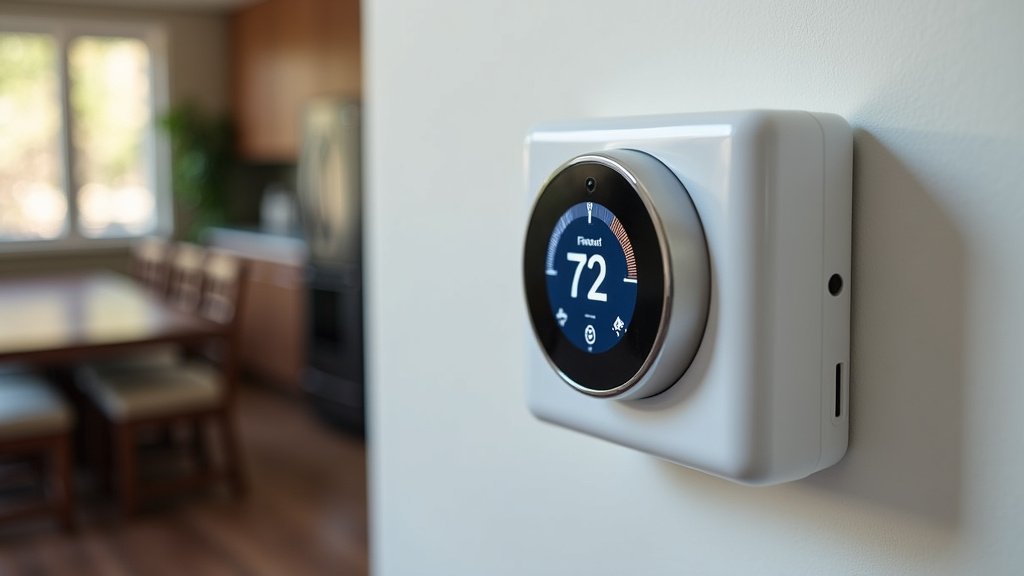
Benefits of Pairing Smart Thermostats with Propane Heat
Once you’ve got your smart thermostat hooked up to your propane system, you’ll start to see why so many people make the switch. The benefits are pretty significant and extend beyond just convenience.
- Remote Control: Imagine adjusting your thermostat from your couch, your office, or even while you’re on vacation. This is a huge **convenience** and allows you to make sure your home is comfortable exactly when you want it to be.
- Energy Savings: Smart thermostats can learn your habits and optimize your heating schedule to avoid wasting energy when you’re asleep or away. Many studies point to **significant savings** on heating bills. For example, the U.S. Department of Energy suggests that homeowners can save 5-15% annually on their heating and cooling bills by using a programmable thermostat.
- Customizable Schedules: You can set up different temperature schedules for different days of the week or even specific times of day. This means you’re not heating an empty house!
- Usage Monitoring: Many smart thermostats provide detailed reports on your energy usage. This data can help you identify patterns and find more ways to **conserve energy**.
- Voice Control: Integrate your smart thermostat with voice assistants like Alexa or Google Assistant for hands-free adjustments. “Hey Google, turn the heat up 2 degrees” can be your new favorite phrase!
These features work just as well with propane as they do with other heating sources. The smart thermostat simply sends its commands to your propane furnace, making your existing system work smarter, not harder.
Key Takeaways for Propane System Owners
We’ve covered a lot of ground, but let’s boil it down to the essentials for you.
- Compatibility is High: Most modern propane furnaces work well with smart thermostats.
- Check Your Wiring: Look for R, W, and especially a C wire.
- “C” Wire is Helpful: If you don’t have one, solutions like power adapter kits exist.
- Setup is Key: Ensure your thermostat is configured for a gas/propane forced-air system.
- Professional Help is Available: Don’t hesitate to call an HVAC technician if you’re stuck.
Conclusion
You’ve learned that using a smart thermostat with propane heat is definitely achievable for most homes. The key is understanding your propane system’s wiring, particularly the presence of a “C” wire, and ensuring your smart thermostat is configured correctly. While some older systems might present challenges, common solutions and professional help are readily available. Embracing a smart thermostat can lead to greater comfort, convenience, and potential savings on your energy bills. Your next step should be to check your current thermostat’s wiring and compare it with the smart thermostat models you’re considering.
Frequently Asked Questions
Will a smart thermostat actually save me money on propane costs?
Yes, smart thermostats can help you save money. They allow you to create custom schedules, so you’re not heating an empty house. Many also learn your habits and adjust automatically for efficiency, leading to noticeable reductions in your propane bills.
What if my propane furnace is very old? Is it still compatible?
Older propane furnaces may require a bit more investigation. While many smart thermostats are flexible, very old systems might have different wiring or control mechanisms. It’s best to check your furnace’s manual or consult an HVAC professional to confirm compatibility before purchasing a smart thermostat.
How do I know if my propane system has a “C” wire?
The easiest way to check for a “C” wire is to carefully remove the cover of your current thermostat. Look for wires connected to terminals labeled with letters. If you see a wire connected to the terminal marked “C,” then your system has one. If not, don’t worry, there are often workarounds.
Can I install a smart thermostat myself with a propane system?
For many people, DIY installation is possible, especially if you have standard wiring and a “C” wire. However, if you’re not comfortable with electrical wiring or if your system is complex, it’s always safer and recommended to hire a qualified HVAC technician. If you’re not comfortable with electrical wiring, hiring a qualified HVAC technician is always safer.
What’s the difference between a smart thermostat and a programmable thermostat for propane heat?
A programmable thermostat lets you set schedules, but you usually have to do it directly on the device. A smart thermostat offers the same scheduling but adds Wi-Fi connectivity, allowing remote control via an app, voice commands, and often smarter learning features for better energy management.
