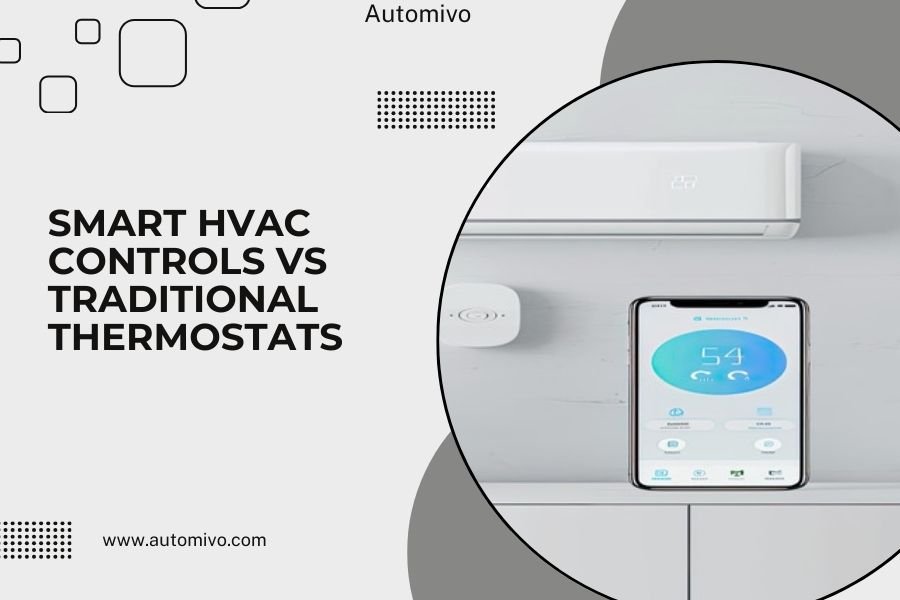
Choosing between smart HVAC controls and traditional thermostats is an important decision for homeowners looking to improve comfort and manage energy costs. While both serve the same basic purpose, controlling heating and cooling, the way they operate and the value they provide are very different.
This guide explains the key differences between smart HVAC controls and traditional thermostats to help you decide which option is right for your home.
What Is a Traditional Thermostat
A traditional thermostat is a basic device used to manually control heating and cooling systems. Most traditional thermostats allow users to set a fixed temperature or simple daily schedule.
These thermostats operate without internet connectivity and rely entirely on manual input. Once set, they follow the same routine until changed.
What Are Smart HVAC Controls
Smart HVAC controls are advanced systems that use sensors, software, and connectivity to manage indoor climate automatically. They can adjust temperatures based on occupancy, schedules, and environmental conditions.
Most smart HVAC controls connect to a mobile app, allowing remote control and monitoring from anywhere.
Key Differences Between Smart HVAC Controls and Traditional Thermostats
Automation and Intelligence
Traditional thermostats require manual adjustments. Smart HVAC controls automatically learn user habits and optimize heating and cooling without constant input.
This automation leads to more efficient energy use and consistent comfort.
Remote Access
Smart HVAC controls allow users to adjust settings remotely using a smartphone or tablet. Traditional thermostats only work when you are physically present.
Remote access is especially useful for travel, vacation homes, and unpredictable schedules.
Energy Efficiency
Traditional thermostats operate on fixed schedules that may waste energy when no one is home.
Smart HVAC controls reduce unnecessary energy use by detecting occupancy, adjusting temperatures dynamically, and optimizing system runtime. This often results in lower energy bills.
Comfort and Temperature Consistency
Traditional thermostats can struggle to maintain even temperatures throughout a home.
Smart HVAC controls work with sensors and zoning systems to balance temperatures across rooms, reducing hot and cold spots.
Energy Monitoring and Insights
Traditional thermostats provide little to no information about energy usage.
Smart HVAC controls offer detailed energy reports that show consumption patterns and highlight opportunities for savings.
Integration With Smart Home Devices
Smart HVAC controls integrate with other smart home devices such as smart sensors, smart speakers, and home automation hubs.
Traditional thermostats do not support smart home integration.
Cost Comparison
Traditional thermostats are usually less expensive upfront. However, they lack energy-saving features.
Smart HVAC controls typically cost more initially, but energy savings over time can offset the higher purchase price.
For many households, long-term savings make smart HVAC controls a better investment.
Installation and Compatibility
Traditional thermostats are often simple to install and compatible with most HVAC systems.
Smart HVAC controls may require specific wiring, such as a C-wire, and compatibility should be checked before purchase. Some systems offer professional installation options.
Which Option Is Right for You
A traditional thermostat may be sufficient if:
- You prefer simple manual control
- Your schedule rarely changes
- Energy efficiency is not a top priority
Smart HVAC controls are a better choice if:
- You want lower energy bills
- Your schedule varies
- You want remote access and automation
- You are building a smart home ecosystem
Final Thoughts
While traditional thermostats still work for basic temperature control, smart HVAC controls offer significantly more value in terms of efficiency, comfort, and convenience.
For homeowners looking to modernize their homes and reduce energy waste, smart HVAC controls are a clear upgrade.
Explore our related guides and comparisons to find the best smart HVAC control solutions for your needs.
