
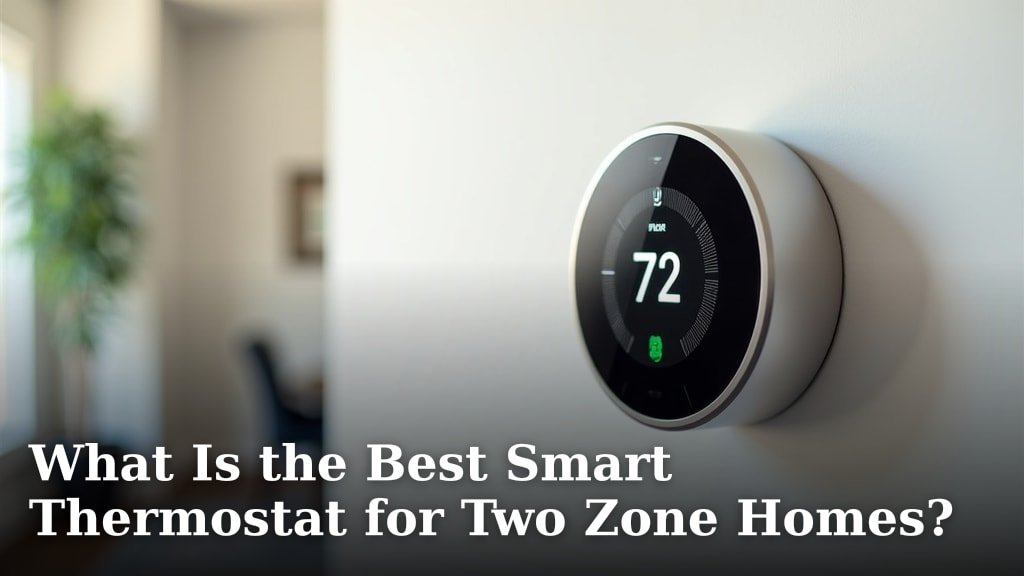
When choosing the best smart thermostat for a two-zone home, you’re looking for devices that offer independent temperature control for each area. Many smart thermostats are designed for single-zone systems, but several top models easily handle multi-zone setups, allowing you to customize comfort and save energy in different parts of your house. Look for thermostats that explicitly state compatibility with multiple zones or HVAC systems. We found that brands like Ecobee and Google Nest are popular choices for this reason.
Managing two zones means you have the potential for significant energy savings. You can set different schedules and temperatures for areas that are used more or less frequently. This flexibility is key to maximizing comfort while minimizing your utility bills. Understanding how your current HVAC system is configured for two zones will also help you select the right smart thermostat. Many systems use dampers to control airflow to different zones.
TL;DR:
- Smart thermostats can manage two zones independently.
- Look for models that explicitly support multi-zone systems.
- You can save energy by setting different temperatures.
- Ecobee and Google Nest are good starting points.
- Check your HVAC system’s configuration first.
Let’s dive into which smart thermostats are best suited for your two-zone home and how they can make your life more comfortable and cost-effective.
Smart Thermostat Options for Your Two-Zone Home
You’ve got a two-zone home, and you’re ready to get smarter about your heating and cooling. That means independent temperature control for different areas of your house. You can finally stop overheating the upstairs while the downstairs is freezing, or vice versa! Finding the right smart thermostat is key to making this a reality. We’ve looked into what makes a smart thermostat great for two zones. Understand if you can use two thermostats on one AC unit for your setup.
The main thing to look for is explicit support for multi-zone systems. Some thermostats are only designed for a single HVAC setup. Others, however, can manage two or even more independent zones. This is usually handled through wiring or smart sensors. You’ll want a system that lets you set different schedules and temperatures for each zone without a fuss. Many experts suggest starting your search with brands known for their advanced features.
We found that brands like Ecobee and Google Nest are often at the top of the list. They offer models that are well-suited for two-zone homes. These systems aim to give you Learn about the differences between Nest and Ecobee to make an informed choice.maximum comfort and energy savings. You get fine-tuned control over your home’s climate. Let’s break down the best contenders and what they bring to your two-zone setup.
Understanding Your Two-Zone HVAC System
Before you pick a thermostat, it helps to know how your two zones work. Most two-zone systems use dampers. These are like little gates in your air ducts. They open or close to direct heated or cooled air where it’s needed. Your HVAC system then has a control board that communicates with the thermostat. This board tells the dampers when to adjust. It’s a clever way to manage different temperatures in different parts of your home.
How Dampers Work
Think of dampers as traffic controllers for your air. When your thermostat calls for heat or cool air in Zone 1, the damper for Zone 1 opens. The damper for Zone 2 might close or partially close. This ensures the conditioned air goes mainly to the area you’ve selected. Your current system likely has a dedicated zone control panel. This panel works with your thermostat to manage these dampers. Knowing if you have a bypass system or a modulating system can also be helpful, though most smart thermostats are designed to work with common setups.
Wiring Considerations
Smart thermostats need to communicate with your HVAC system. For a two-zone setup, this often means you’ll need specific wiring. Most smart thermostats come with a base station or hub. This hub connects to your HVAC system. Then, your thermostats communicate wirelessly with the hub. Some systems might require a dedicated wire run to each zone’s control panel. Always check the manufacturer’s installation guide. They will list the specific wiring requirements for multi-zone setups. It’s usually pretty straightforward if you have basic DIY skills or hire an HVAC professional.
Top Smart Thermostat Choices for Two Zones
You’re looking for that perfect balance of smart features, ease of use, and effective zone control. We’ve researched some of the top players in the smart thermostat market that excel with two-zone systems. These devices offer robust control and energy-saving capabilities.
Ecobee Smart Thermostats
Ecobee is a front-runner for multi-zone homes. Their systems are known for working well with existing HVAC setups. The Ecobee Smart Thermostat Premium and the Ecobee Smart Thermostat Enhanced are great examples. They can manage up to 32 zones right out of the box. This is far more than you’ll need for a two-zone home, meaning it’s incredibly scalable.
How Ecobee Manages Two Zones
Ecobee thermostats typically use remote sensors. These sensors are placed in different rooms or zones. The main thermostat communicates with these sensors. This allows for averaging temperatures across zones or focusing on specific rooms. For a two-zone system, you’d place one thermostat in the main zone and use a remote sensor in the second zone. This setup helps eliminate hot and cold spots. It ensures your desired temperature is met more accurately throughout your home. Many users find this sensor-based approach very effective.
Key Features of Ecobee
- Advanced sensor technology for precise temperature readings.
- Energy-saving algorithms that learn your habits.
- Voice control capabilities, often integrated with smart assistants.
- User-friendly app for remote control and scheduling.
- Compatibility with most HVAC systems, including staged heating and cooling.
Google Nest Thermostats
Google Nest also offers excellent solutions for multi-zone homes. The Nest Learning Thermostat and the Nest Thermostat are popular choices. While they don’t natively support multiple *thermostats* for independent zones in the way Ecobee does with sensors, they can be managed through the Google Home app if you purchase two separate units. This requires installing two thermostats, one for each zone, and managing them individually.
Managing Zones with Multiple Nest Thermostats
To control two zones with Nest, you’ll typically need two Nest thermostats. Each thermostat connects to its respective zone’s HVAC controls. You then manage both thermostats through the Google Home app. This gives you independent control over each zone. It might require a bit more setup than a single-thermostat-with-sensors approach. However, it provides robust control. Research and found that many users appreciate the clean interface and learning capabilities of Nest devices.
Key Features of Nest
- Learns your schedule and preferences over time.
- Sleek, minimalist design that blends into home decor.
- Energy Star certified for efficiency.
- Remote control via the Google Home app.
- Integration with other smart home devices.
Comparing Ecobee and Nest for Two Zones
Let’s look at how these two leading brands stack up for your specific needs:
| Feature | Ecobee (e.g., Smart Thermostat Premium) | Google Nest (e.g., Learning Thermostat) |
|---|---|---|
| Multi-Zone Control Method | Single thermostat with multiple remote sensors. | Two separate thermostats managed via app. |
| Installation Complexity (Two Zones) | Generally simpler, as one unit handles multiple sensors. | Requires installation of two thermostats. |
| Temperature Averaging | Yes, via sensors for balanced comfort. | No native averaging; relies on individual zone settings. |
| Smart Features | Advanced scheduling, built-in Alexa, air quality monitoring. | Learning capabilities, elegant interface, energy reports. |
| App Control | Comprehensive app for all zones and sensors. | Google Home app for managing both thermostats. |
Installation and Setup for Your Two-Zone System
Getting your smart thermostat installed correctly is vital. For a two-zone system, this can sometimes be more complex than a single-zone setup. However, many modern smart thermostats are designed for DIY installation. If you’re comfortable with basic wiring, you might be able to do it yourself. If not, hiring a professional is always a good idea.
DIY Installation Tips
First, always turn off power to your HVAC system at the breaker box. This is for your safety. Then, carefully remove your old thermostat. Take a picture of the existing wiring before disconnecting any wires. This is a lifesaver! Refer to the smart thermostat’s installation manual. It will guide you through connecting the wires to the new thermostat base and any necessary hub or power adapter.
For systems using remote sensors (like Ecobee), you’ll need to install these sensors in your desired zones. Make sure they are placed away from direct heat sources or drafts. If you’re using two separate thermostats (like with Nest), you’ll repeat the wiring process for each location. Connecting to your Wi-Fi network and setting up your account through the app usually follows the physical installation.
When to Call a Professional
If your existing zone control panel is complex, or if you’re unsure about the wiring, it’s best to call an HVAC technician. They have the tools and expertise to ensure the system is wired correctly. This is especially true if your system uses proprietary zone control modules. A professional installation means your smart thermostat will function as intended. It also helps prevent potential damage to your HVAC equipment. Many manufacturers offer professional installation services or can recommend certified installers.
Maximizing Energy Savings with a Two-Zone System
One of the biggest benefits of a smart thermostat in a two-zone home is energy savings. You can tailor your heating and cooling schedules for each zone. This means you’re not wasting energy conditioning an empty room or a zone that’s used less often. It’s about being smart with your comfort and your budget.
You can set back the temperature in a guest room or a seldom-used office during the day. Then, have it warm up or cool down before you need it. This kind of zoning can lead to significant reductions in your energy bills. Research from the Department of Energy suggests that properly used programmable thermostats can save you about 10% per year on heating and cooling costs.
Smart Scheduling Strategies
Create schedules that reflect your family’s lifestyle. For example, one zone might be the main living area, while the other is bedrooms. You’ll want the living area comfortable during waking hours. Bedrooms can be cooler at night and then warmed up in the morning. Use the remote sensors with your Ecobee to ensure the temperature is just right. If you have two Nest thermostats, set individual schedules for each zone. Don’t forget to adjust for weekdays versus weekends. Your home’s needs change throughout the week.
Using Smart Features for Efficiency
Many smart thermostats offer features like geofencing. This uses your phone’s location to adjust the temperature when you leave or arrive home. They also learn your preferences over time. They can automatically optimize your schedule for energy savings. Some models even monitor your HVAC system’s performance. They can alert you to potential issues. This proactive maintenance can prevent costly repairs and keep your system running efficiently. Keeping your system well-maintained is key to long-term savings (U.S. Department of Energy).
Is a Two-Zone Smart Thermostat Worth It?
Absolutely! For homes with two zones, the investment in a smart thermostat pays off. You gain personalized comfort. You achieve significant energy savings. The ability to control different areas independently is a game-changer. You’re no longer settling for one-temperature-fits-all. You can create the perfect environment in every part of your home.
Key Takeaways for Your Decision
When you’re ready to buy, remember these points:
- Verify multi-zone compatibility explicitly.
- Consider your preferred control method: sensors or separate units.
- Check wiring requirements for your specific HVAC system.
- Prioritize ease of use with the app and thermostat interface.
- Look for energy-saving features like learning and scheduling.
- Don’t hesitate to consult a professional for installation if needed.
Conclusion
You’ve seen how smart thermostats can transform your two-zone home into a haven of personalized comfort and energy efficiency. By understanding your HVAC system and choosing the right device, like an Ecobee with its remote sensors or two Nest thermostats managed through the Google Home app, you gain independent control. This means no more battling hot and cold spots. You can finally enjoy optimal temperatures where and when you need them. Take the next step by assessing your current system and exploring models that fit your lifestyle. Your future comfort and savings await!
Frequently Asked Questions
Do I need two smart thermostats for a two-zone home?
Not necessarily. Systems like Ecobee use a single main thermostat paired with remote sensors to manage multiple zones effectively. Other brands, like Google Nest, allow you to install two separate thermostats, one for each zone, and manage them via their app.
Can I use a smart thermostat with my existing zone control panel?
Most smart thermostats are designed to be compatible with common two-zone HVAC systems, including those with a zone control panel. However, it’s always best to check the specific model’s compatibility list or consult your HVAC professional to be sure.
How do smart thermostats save energy in a two-zone home?
They save energy by allowing you to set different temperatures and schedules for each zone. You can avoid heating or cooling unoccupied areas, reducing overall energy consumption and lowering your utility bills.
What’s the difference between using sensors and two thermostats for zoning?
Using sensors means one thermostat monitors and controls multiple zones, often averaging temperatures or prioritizing specific rooms. Using two thermostats means each zone has its own independent smart control unit, managed separately.
Is professional installation required for a two-zone smart thermostat setup?
While many systems are designed for DIY installation, professional help is recommended if you’re unsure about wiring or if your zone control system is complex. An HVAC technician can ensure a safe and correct setup for optimal performance.
