
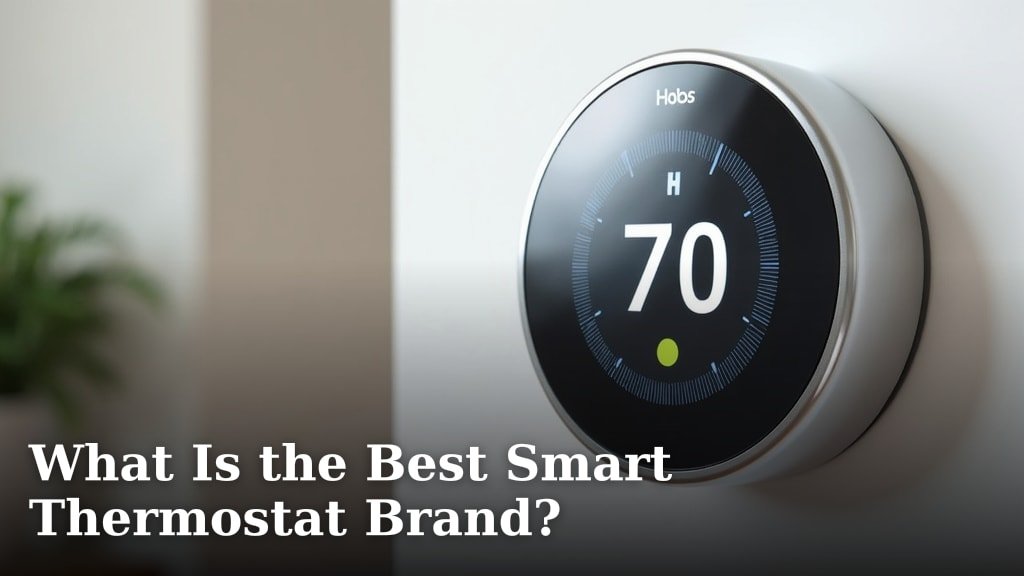
The best smart thermostat brand for you largely depends on your specific needs, but Ecobee and Google Nest often lead the pack for their features and user experience. We found that both brands offer excellent energy savings and smart home integration. Choosing the best smart thermostat brand means weighing your budget, desired features, and existing smart home ecosystem.
When searching for a smart thermostat, you’re looking for more than just temperature control. You want convenience, energy efficiency, and smart features that fit your lifestyle. We understand you want to find a thermostat that helps you save money and makes your home more comfortable without a fuss. It’s about finding the perfect blend of technology and practicality for your home.
- Ecobee and Google Nest are top contenders.
- Consider your budget and desired features.
- Look for energy efficiency and smart home integration.
- Find a thermostat that fits your existing smart home.
- The “best” truly depends on your personal needs.
Let’s dive into the details and help you decide which smart thermostat brand is the perfect fit for your home comfort needs.
Picking the Right Smart Thermostat Brand for Your Home
You’re ready to upgrade your home’s climate control, and that’s a smart move. Modern smart thermostats do so much more than just keep your house warm or cool. They learn your habits, save you money on energy bills, and integrate with your smart home setup. But with so many brands out there, how do you choose? We get it; the options can feel overwhelming. Let’s break down what makes a brand stand out and help you find your perfect match.
Leading Smart Thermostat Contenders: Ecobee vs. Google Nest
When you start looking into smart thermostats, two names consistently pop up: Ecobee and Google Nest. They are the giants in this space for good reason. Both offer sophisticated features, sleek designs, and genuinely help you save energy. But they have different strengths, and understanding these differences is key to making your decision.
Ecobee: Focused on Comfort and Control
Ecobee thermostats are often praised for their robust features and emphasis on whole-home comfort. They focus on understanding every room in your house, not just where the thermostat is located. This can be a game-changer if you have areas that are always too hot or too cold.
- Room Sensors: Ecobee popularized the use of remote sensors. These little devices measure temperature and occupancy in different rooms. This means your thermostat can average temperatures across your home, or prioritize comfort in occupied rooms. Say goodbye to that chilly den!
- Advanced Scheduling: You can create highly customized schedules based on your routine. Plus, features like “Follow Me” detection make sure the system only heats or cools rooms you’re actually using.
- Integration: Ecobee plays well with almost every major smart home platform. Alexa, Google Assistant, Apple HomeKit – you name it, Ecobee probably works with it. This makes it a very versatile choice if you already have a smart home ecosystem.
- Voice Assistant Built-In: Higher-end Ecobee models, like the SmartThermostat with Voice Control, have Amazon Alexa built right in. This means it acts like an Echo device, letting you play music, ask questions, and control other smart devices directly from your thermostat. It’s seriously convenient.
Google Nest: Sleek Design and Intuitive Learning
Google Nest thermostats are known for their iconic design and incredibly intuitive learning capabilities. If you want a thermostat that practically thinks for itself, Nest is a powerful contender. It’s designed to fade into the background and simply work.
- Learning Algorithms: The Nest Learning Thermostat is famous for its ability to learn your preferences over time. Adjust the temperature a few times, and it starts to build a schedule around your habits. It learns when you come and go and adjusts accordingly.
- Energy History: Nest provides detailed energy reports, showing you how much energy you’re using and why. This feedback can be incredibly helpful for understanding your consumption and finding ways to save even more.
- Home/Away Assist: Using geofencing from your phone and motion sensors, Nest can tell if you’re home or away. It automatically adjusts the temperature to save energy when no one is there. No more accidentally heating an empty house!
- Design: Let’s be honest, smart thermostats are often prominently displayed. Nest’s sleek, minimalist design blends seamlessly into most modern décors. It often wins awards for its aesthetic appeal.
Factors to Consider When Choosing Your Smart Thermostat
While Ecobee and Google Nest are often top picks, your ideal choice depends on your personal situation. We found several key areas that you should think about as you shop around. Thinking through these points will help you narrow down the field significantly.
Your Existing HVAC System Compatibility
This is probably the most practical and important consideration. Not all smart thermostats work with all heating and cooling systems. Do you have a conventional system, or a heat pump? Do you have a C-wire? A C-wire (common wire) provides continuous power to your thermostat. Many smart thermostats require one. If you don’t have one, some brands offer workarounds, or you might need a professional installation. Always check compatibility with your specific HVAC setup before buying. We found that most manufacturers provide an online compatibility checker, which is super handy.
Smart Home Ecosystem Integration
Do you already have a smart home setup? Are you an Apple HomeKit user, or do you prefer Amazon Alexa or Google Assistant? You’ll want a thermostat that integrates smoothly with your existing devices. This allows for voice control and unified control through a single app. Imagine telling Alexa to “turn down the heat” and your thermostat instantly responding. It’s a comfort you don’t want to miss once you have it.
Budget and Long-Term Savings
Smart thermostats can range from around $100 to over $250. While the initial cost might seem high, remember these devices are designed to save you money on your energy bills. Many energy companies offer rebates for installing a smart thermostat, which can significantly offset the upfront cost. Always check with your local utility provider!
We found that energy savings can range from 10-20% on heating and cooling costs (Energy Star). This means your thermostat can pay for itself in a few years, making it a wise investment in the long run.
Specific Features You Value
What’s most important to you? Is it voice control, remote room sensors, detailed energy reports, or just a simple, elegant design? Listing your must-have features can help guide your decision. Some people adore the idea of their thermostat “learning” their schedule, while others prefer to manually set up precise schedules. There’s no right or wrong answer here, just what works best for YOU.
Other Notable Smart Thermostat Brands
While Ecobee and Google Nest dominate the conversation, they aren’t the only players. You might find another brand that perfectly fits your unique needs or budget. It’s smart to look at the whole picture when making such an important decision for your home.
Honeywell Home (Resideo)
Honeywell has been a long-standing name in thermostats, and their smart home offerings continue that legacy. They offer a range of smart thermostats, often with reliable performance and straightforward installation. Their T-series models are popular, providing good smart features without unnecessary complexity. Many homeowners appreciate the familiar brand and quality associated with Honeywell products.
Emerson Sensi
Sensi smart thermostats are often praised for their ease of installation and relatively lower price point, making them a great value option. They offer essential smart features like remote control, flexible scheduling, and geofencing. If you’re looking for a reliable smart thermostat that covers the basics without breaking the bank, Sensi is definitely worth a look.
Comparing Top Smart Thermostat Features
To help you visualize the differences, here’s a quick comparison of some popular models and their key features. Remember, features can vary even within a single brand’s product line, so always check the specific model you’re interested in.
| Feature | Ecobee SmartThermostat | Google Nest Learning Thermostat | Emerson Sensi Touch |
|---|---|---|---|
| Room Sensors | Yes (included) | No (sold separately) | No |
| Learning Function | Limited (scheduling) | Yes (learns behavior) | No (scheduled) |
| Built-in Voice Assistant | Yes (Alexa) | No (Google Assistant compatible) | No |
| Geofencing | Yes | Yes | Yes |
| C-Wire Requirement | Usually (adapter included) | Often (power sharing technology) | Most models |
| Apple HomeKit Certified | Yes | No | Yes |
A Checklist for Your Smart Thermostat Decision
Before you make your final choice, run through this quick checklist. It will help ensure you’ve thought about all the important aspects. Making an informed decision now will prevent headaches later and ensure you pick the perfect smart thermostat for your home comfort.
- Does it work with your specific HVAC system (C-wire, heat pump, etc.)?
- Is it compatible with your existing smart home system (Alexa, Google, HomeKit)?
- Does it have the specific features you absolutely need (e.g., room sensors, learning)?
- Does the price align with your budget and potential energy savings?
- Is the installation something you can do, or will you need professional help?
- Do you like the look and feel of the thermostat itself?
Conclusion
Choosing the best smart thermostat brand really comes down to your personal priorities and home setup. We’ve shown you that Ecobee and Google Nest often lead the way with their powerful features, but other brands like Honeywell Home and Emerson Sensi offer great alternatives. Focus on your HVAC compatibility, smart home ecosystem, budget, and desired features to make an informed choice.
Ultimately, a smart thermostat is an investment in your comfort and energy savings. Take the time to review your specific needs, use our checklist, and you’ll find the perfect match. Your ideal smart thermostat is out there, ready to make your home smarter and more efficient.
Frequently Asked Questions
Do smart thermostats really save money on utility bills?
Yes, absolutely. We found that most smart thermostats can save you between 10-20% on heating and cooling costs. They do this by learning your schedule, using geofencing, and optimizing your home’s temperature when you’re away. This makes them a wise financial investment over time.
Can I install a smart thermostat myself, or do I need a professional?
Many smart thermostats are designed for DIY installation, especially if you have a common C-wire connection. Most brands provide clear instructions and online video guides. However, if your wiring is complex or you’re unsure, professional installation is always a safe bet.
What if my home doesn’t have a C-wire?
If your home lacks a C-wire, don’t worry, you still have options. Some smart thermostats, like certain Ecobee models, include an adapter. Google Nest uses a power-sharing technology that often works without one. Always check the specific thermostat’s requirements before purchasing.
Are smart thermostats compatible with all HVAC systems?
No, not all smart thermostats work with every HVAC system. Compatibility depends on factors like your heating and cooling type (e.g., conventional, heat pump, boiler) and wiring setup. We recommend using the online compatibility checker provided by most manufacturers before you buy.
How do room sensors help with home comfort?
Room sensors, commonly associated with Ecobee, help by measuring temperature and occupancy in different areas of your home. This allows your thermostat to average temperatures, or prioritize comfort in occupied rooms. This can eliminate hot or cold spots and ensure more consistent comfort throughout your house.
