

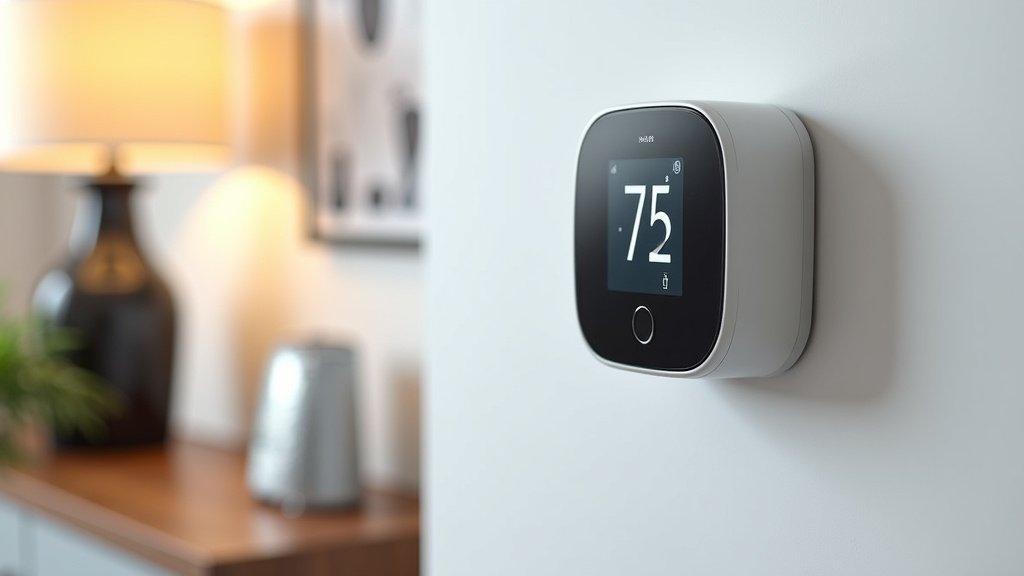
The best placement for a smart thermostat is usually on an interior wall in a central, actively used room, away from drafts and direct sunlight. This helps it get the most accurate temperature readings for your home. You want a spot that reflects the temperature you feel.
Finding the right spot makes a big difference in how well your smart thermostat works. A poorly placed thermostat can lead to uneven heating or cooling and wasted energy. We found that location is key for both comfort and efficiency.
- Place on an interior wall.
- Choose a central, active room.
- Avoid drafts and direct sunlight.
- Keep away from heat sources.
Let’s walk through exactly how to pick the perfect spot for your smart thermostat, ensuring your home stays comfortable and energy-efficient.
Optimal Smart Thermostat Placement for Accuracy and Comfort
The best place for your smart thermostat is on an interior wall in a central, actively used room. This ensures it reads the temperature that matters most to you, avoiding uncomfortable hot or cold spots.
Understanding Your Home’s Thermal Dynamics
Think of your home as a living, breathing organism. Air currents, sunlight, and heat sources all affect its temperature. Your thermostat needs to feel what you feel, where you spend the most time.
We found that many people place their thermostats in hallways. While this might seem central, hallways are often colder or warmer than living spaces, leading to inaccurate readings (Energy Star).
The Role of Interior Walls
An interior wall is key because it’s less exposed to outside temperature fluctuations. Exterior walls can get hot from the sun or cold from the winter air, confusing your thermostat. Your smart device would then overcompensate, making your living areas too hot or too cold.
Placing it on an exterior wall is like trying to guess the temperature of a room by feeling the outside of the house. It just doesn’t work well.
Selecting the Right Room
Where do you spend most of your waking hours? Is it the living room, the family room, or perhaps a home office? This is where your thermostat should live.
You want your thermostat to be in the room that best represents your home’s overall temperature. If your thermostat is in a seldom-used guest bedroom, it won’t accurately reflect your comfort in the main living space.
Consider the daily flow of your home. If your mornings are spent in the kitchen and evenings in the living room, a spot that balances these areas is ideal.
Avoiding Temperature Extremes
Your smart thermostat is sensitive. It picks up on the slightest temperature changes. That’s why you need to protect it from anything that might trick it into thinking your home is hotter or colder than it truly is.
- Direct Sunlight: Sunlight streaming onto the thermostat can make it think the room is much hotter than it is. This might cause your AC to kick on unnecessarily.
- Drafts: Cold drafts from windows or doors can trick your thermostat into running the heater more than needed. Warm drafts from vents can do the opposite.
- Heat Sources: Lamps, TVs, and even kitchen appliances emit heat. Placing your thermostat too close to these can cause false readings and impact your energy bills.
- Behind Doors or Curtains: Obstructions block airflow, creating a little microclimate around the thermostat that isn’t representative of the room.
Why Specific Locations Are Problematic
Let’s dive into some common mistakes people make and why they can lead to discomfort and higher energy costs.
| Problematic Location | Why It’s Bad | Impact on Comfort/Efficiency |
|---|---|---|
| Exterior Wall | Affected by outside temperature, causing inaccurate readings. | System overworks, leading to discomfort and wasted energy. |
| Near Window/Door | Exposed to drafts, direct sunlight, or cold/hot air leaks. | False temperature readings, uneven heating/cooling. |
| Near Vents/Registers | Direct blast of conditioned air skews sensor readings. | System cycles inefficiently, thermostat thinks desired temp is met. |
| Near Heat-Emitting Appliances | Picks up heat from lamps, TVs, kitchen appliances, or fireplaces. | System cools unnecessarily, or doesn’t heat enough. |
| Hallways/Entryways | Often colder or warmer than main living areas, less accurate. | Comfort issues in active rooms, higher bills. |
| Hidden Behind Furniture/Curtains | Blocks airflow around the sensor, creating a microclimate. | Thermostat doesn’t read true room temperature, poor performance. |
We found that moving a thermostat just a few feet can sometimes save homeowners hundreds of dollars a year. It’s about letting your thermostat do its job properly (U.S. Department of Energy).
The Ideal Height for Installation
It’s not just about the wall; it’s also about how high up on that wall. The sweet spot for thermostat placement is usually about 52 to 60 inches from the floor. This is about eye-level for most adults.
Why this specific height? It’s typically where the air temperature is most stable and representative of the room. Too low, and it might be affected by floor drafts. Too high, and it might read warmer air that rises.
Think of it as where you’d hold a hand thermometer to get a good average reading of the room.
Considering Smart Thermostat Features
Many modern smart thermostats come with advanced features that can help overcome some placement challenges. For example, some offer remote sensors.
These small, wireless devices can be placed in other rooms. Your smart thermostat can then average the temperatures or prioritize comfort in a specific room. This is particularly helpful if you have a large home or distinct hot/cold zones.
If your primary thermostat location isn’t perfect, these remote sensors can be a great backup plan to get a more accurate overall picture of your home’s temperature.
A Checklist for Optimal Thermostat Placement
Before you commit to a spot, run through this quick checklist. It will help you confirm you’ve chosen the best possible location for your smart thermostat.
- Is it on an interior wall?
- Is it in a central, actively used room?
- Is it away from direct sunlight?
- Is it free from drafts (windows, doors, vents)?
- Is it away from heat-emitting appliances?
- Is it installed at an appropriate height (52-60 inches)?
If you can answer “yes” to all these, you’re well on your way to a comfortable, energy-efficient home. Your smart thermostat will thank you, and so will your energy bill.
Conclusion
Finding the right spot for your smart thermostat truly makes a difference in your home’s comfort and your energy bills. We found that choosing an interior wall in an active, central room is critical. By avoiding drafts, direct sunlight, and heat sources, you ensure accurate readings.
You want your thermostat to sense the temperature you actually feel, not a misleading microclimate. Take a moment to review your chosen spot with our checklist. You’ll be amazed at the comfort and efficiency improvements a thoughtful placement brings.
Frequently Asked Questions
Can I put my smart thermostat in a hallway?
While often central, hallways can have different temperatures than your main living areas. This can lead to your thermostat misreading the home’s actual temperature. It’s usually better to place it directly in a frequently used room for better accuracy.
What if my home has multiple levels?
For homes with multiple levels, one smart thermostat might not be enough. Consider a smart thermostat system with remote sensors to monitor and average temperatures across different floors. This helps ensure comfort throughout your entire home.
Does the color of the wall affect thermostat readings?
No, the color of the wall itself doesn’t directly impact your thermostat’s temperature readings. The key is ensuring the wall is an interior wall and not exposed to external temperature changes that could skew the sensor’s accuracy.
My smart thermostat has a motion sensor. Does placement matter less then?
Placement still matters significantly, even with a motion sensor. While the sensor helps detect occupancy, the core temperature reading comes from the thermostat’s internal sensor. Optimal placement ensures this sensor gets the most accurate ambient temperature.
How do I know if my thermostat is in a bad spot?
If you notice frequent hot or cold spots in your home, or if your HVAC system seems to run too much or too little, your thermostat might be poorly placed. Inconsistent comfort or unexpectedly high energy bills are also strong indicators.
