
A C wire on a thermostat is a common wire that provides continuous 24V power to your thermostat, drawing it directly from your HVAC system. It is essential for many modern smart thermostats to function correctly.
Many older homes lack a C wire connection, causing compatibility issues with newer smart devices. Without it, your thermostat might rely on batteries or “power stealing,” which can lead to unreliable performance or early battery drain.
- The C wire provides constant power to your thermostat.
- It’s crucial for most smart thermostat models.
- Older homes often don’t have a C wire.
- No C wire can mean battery reliance or system issues.
Let’s dive into why this little wire is so important for your home’s comfort system.
Understanding Your Thermostat’s Electrical Needs
Your thermostat, whether traditional or smart, needs electricity to work. But how it gets that power can vary a lot. A C wire provides a direct, consistent power source from your heating and cooling system.
Think of it like this: your thermostat is a small computer. Like your smartphone, it needs consistent energy to run its screen, Wi-Fi, and temperature sensors. The C wire is the dedicated charging cable for that computer, always plugged in.
How Does a C Wire Work?
The “C” in C wire stands for “common.” It completes a low-voltage electrical circuit, returning power to your HVAC transformer. Without it, the circuit can’t flow continuously, leading to power interruptions.
This wire carries a steady 24-volt alternating current (VAC). This constant power ensures your thermostat’s internal components, like its display and connectivity modules, always have the energy they need.
It acts differently from other thermostat wires, which typically send signals to turn your furnace or AC on and off. The C wire is purely for power, not for activating heating or cooling functions (Nest Guides).
Why is Constant Power So Important?
Imagine your phone screen flickering off every few minutes because it couldn’t get enough energy. That’s what some older thermostats might experience without a C wire. Constant power ensures reliable operation and avoids outages.
Many smart thermostats have features like Wi-Fi, touchscreens, and motion sensors. These features are power-hungry. They need a steady diet of electricity from the C wire to function correctly.
Without constant power, your smart thermostat might struggle to maintain its Wi-Fi connection, update its software, or even display the correct temperature. This leads to frustration and inefficiency.
The Differences: C Wire vs. No C Wire Setup
Not every thermostat needs a C wire. Older, simpler thermostats often got by with different power methods. But the advent of smart technology changed these electrical demands.
Let’s look at how thermostats typically get their power, with or without a C wire, and what each method means for you.
Terminals and What They Mean
When you look at your thermostat’s wiring, you’ll see several labeled terminals. These terminals connect to different wires, each with a specific job:
- R (Red): Supplies 24V power. This is the “hot” wire carrying power from your transformer.
- G (Green): Controls the fan or blower.
- Y (Yellow): Controls the cooling (air conditioner).
- W (White): Controls the heating (furnace).
- C (Common): Completes the 24V circuit, providing continuous power to the thermostat.
Some systems might have additional terminals for multi-stage heating/cooling or heat pumps. Your thermostat manual will have a wiring diagram to help you identify them.
Thermostats Without a C Wire
Before smart thermostats became popular, many thermostats powered themselves in one of two main ways:
Battery Power
Many older digital thermostats run purely on AA or AAA batteries. These are simple devices that don’t need a constant power connection from your HVAC system. They last for months, but you have to replace them regularly.
The problem? Smart thermostats often can’t run on batteries alone because of their higher power needs. They’d drain batteries too fast, becoming impractical.
“Power Stealing”
Some thermostats without a C wire use a clever trick called “power stealing.” They draw small amounts of power by “stealing” it from the heating or cooling circuit when those systems are running.
It’s like siphoning a tiny bit of gas from another car while it’s driving. This method is less reliable and can sometimes cause problems. For example, your system might short-cycle (turn on and off too quickly) or your thermostat screen might dim.
Power stealing is generally not recommended for smart thermostats. They need more power than can be reliably stolen without affecting your HVAC system’s performance (Energy.gov).
Signs Your Thermostat Needs a C Wire
How do you know if your current setup is missing this crucial wire? Here are a few common clues that a C wire might be necessary for your thermostat to work its best:
- Your smart thermostat’s display frequently goes blank or flickers.
- The Wi-Fi connection on your smart thermostat is unreliable or drops often.
- You’re constantly changing batteries in your “smart” thermostat (that shouldn’t need them).
- Your HVAC system short cycles or behaves strangely after installing a new thermostat.
- The thermostat manufacturer’s instructions specifically mention needing a C wire.
If you experience any of these, it’s a good time to investigate whether a C wire is missing or incorrectly connected.
Checking for a C Wire in Your Current Setup
Before you panic about needing an electrician, it’s worth checking if you already have a C wire. Many older homes have an unused C wire tucked away behind the thermostat or in the furnace.
Here’s a quick checklist to help you:
Your C Wire Checklist:
- Turn off power to your HVAC system at the breaker. Safety first!
- Remove your existing thermostat from the wall plate.
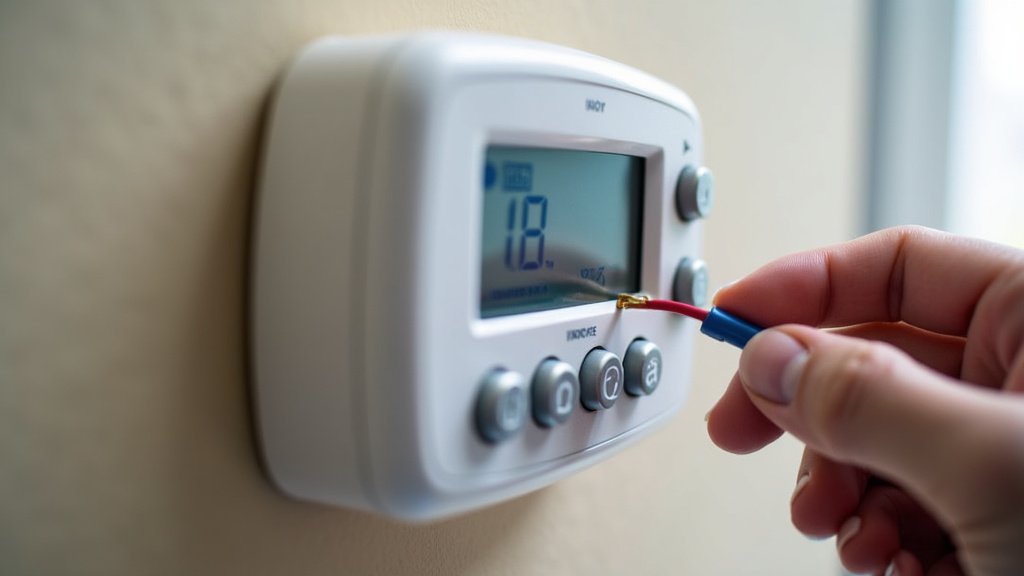
- Look at the wires connected to the terminals. Is there a wire connected to the “C” terminal?
- If not, gently pull the wire bundle out from the wall. Are there any unused wires tucked back inside, perhaps capped off?
- Go to your furnace or air handler. Check the control board. Are there any unused wires connected to the “C” terminal there?
Sometimes, what looks like a missing C wire is just a wire that was never hooked up. If you find one, you might be in luck and simply need to connect it.
Why Many Older Homes Lack a C Wire
It’s not uncommon for homes built before the 2000s to lack a C wire. Why is this so prevalent?
Older homes were built when thermostats were much simpler. They didn’t have Wi-Fi, elaborate displays, or advanced programming features. Therefore, they didn’t require the constant power that newer devices demand.
The wiring in your walls reflects the technology of its time. Back then, electricians simply didn’t need to run an extra wire for continuous power, so they didn’t. It saved on materials and installation time.
We’ve found that about half of homes built before 1990 might need a C wire adapter or new wiring for smart thermostat compatibility (Home Technology Association data).
Is a C Wire Always Necessary for Smart Thermostats?
While many smart thermostats absolutely require a C wire for optimal performance, there are some exceptions and workarounds. You have options!
Some smart thermostats are designed to work without a C wire, often by relying on a battery or by intelligently using “power stealing” in a more refined way. However, even these can experience limitations.
Other solutions include C wire adapters or power extenders. These devices can convert existing wiring or provide external power to your thermostat, bridging the gap if you don’t have a direct C wire.
Here’s a quick comparison of common power methods:
| Power Method | Description | Pros | Cons | Best For |
|---|---|---|---|---|
| C Wire Connection | Direct 24V power from HVAC system. | Consistent, reliable power; supports all smart features. | May require installation if missing. | Any smart thermostat, especially high-feature models. |
| Battery Power | Thermostat runs on replaceable batteries. | Easy to install (no specific wiring needed). | Batteries need regular replacement; not suitable for most smart thermostats. | Basic digital or non-smart thermostats. |
| Power Stealing | Draws minimal power from heating/cooling wires. | No extra wiring needed. | Can cause HVAC system issues; less reliable power; not ideal for smart features. | Some older digital or low-power smart thermostats. |
| C Wire Adapter Kit | Converts existing wires to simulate a C wire. | Avoids running new wires; often a DIY solution. | Installation can be tricky; might not work with all systems. | Homes with 4 wires but no C terminal on HVAC. |
| External Transformer | Plugs into an outlet, provides dedicated power. | Guaranteed power, no HVAC wiring changes. | Requires an available outlet near thermostat; can be unsightly. | Rental properties, or if other options aren’t viable. |
As you can see, the C wire connection is generally the preferred method for seamless smart thermostat integration. It offers the most stable and reliable power supply.
Conclusion
Understanding the role of a C wire is vital for optimizing your home’s comfort system, especially with today’s smart thermostats. It’s the steady power source that lets your smart device perform its best, keeping your home comfortable and connected. While older homes may lack one, you now know how to check for it and the various solutions available.
Take the time to assess your current setup. Knowing whether you have a C wire, or if you need to add one, will help you make informed decisions for a more efficient and reliable smart home experience.
Frequently Asked Questions
Can I install a smart thermostat without a C wire?
Yes, some smart thermostats are designed to work without a C wire, often relying on internal batteries or innovative power-stealing methods. However, these might offer limited features or require more frequent battery changes than C-wire powered models.
What happens if I connect a smart thermostat without a C wire?
Without a C wire, your smart thermostat may experience issues like a blank or flickering display, difficulty maintaining a Wi-Fi connection, or constant battery drain. In some cases, it could even cause your HVAC system to short cycle or malfunction.
Is it difficult to add a C wire to my thermostat?
Adding a C wire can vary in difficulty. If you find an unused wire in your thermostat bundle and at your furnace, it might be a simple connection. Otherwise, it might involve running new wiring or installing an adapter, which could be a DIY task or one for a professional HVAC technician.
Will a C wire adapter work for any smart thermostat?
Most C wire adapters are designed to be compatible with a wide range of smart thermostats. However, it’s always best to check the specific requirements of your thermostat and the specifications of the adapter to ensure they match before purchasing.
Where does the C wire connect on my furnace?
The C wire typically connects to the terminal labeled “C” (for common) on your furnace’s control board. This connection completes the 24V circuit, ensuring a continuous return path for power to your thermostat.
