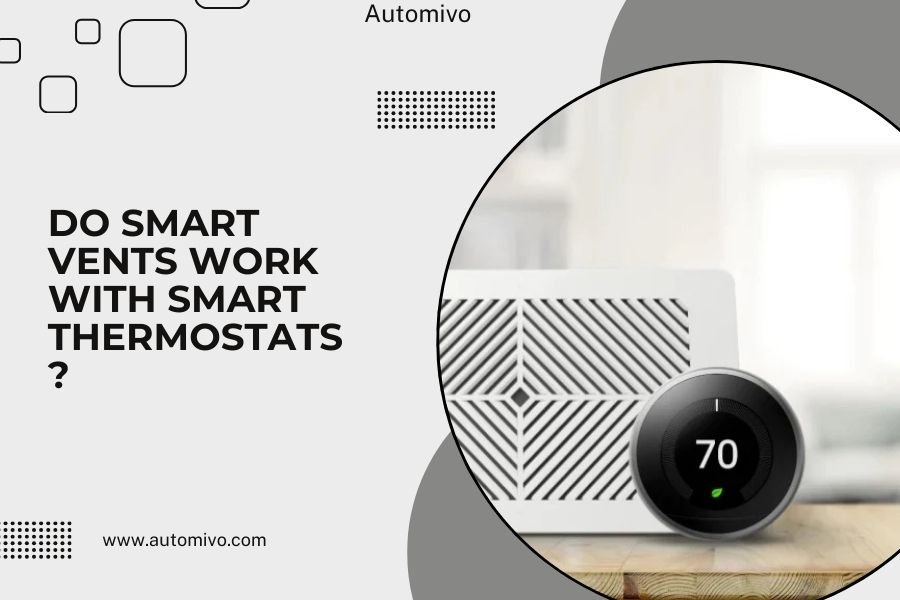
Yes, smart vents work with smart thermostats and can significantly improve your home’s heating and cooling efficiency when properly configured together.
Smart vents and smart thermostats create a powerful combination that gives you room-by-room temperature control while reducing energy waste by up to 30%.
How Smart Vents and Smart Thermostats Work Together
Think of your smart thermostat as the brain and smart vents as the muscles. Your thermostat reads the overall temperature and makes decisions. Smart vents then open or close to direct airflow exactly where you need it.
When your living room gets too hot in the afternoon, smart vents can close partially in that room while opening more in cooler areas. Your smart thermostat sees this adjustment and responds by running your HVAC system more efficiently.
Direct Communication Between Devices
Most smart vents connect to the same Wi-Fi network as your smart thermostat. They share temperature data and coordinate their actions. This teamwork prevents your system from working against itself.
For example, if smart vents close off unused bedrooms during the day, your thermostat won’t waste energy trying to heat or cool empty spaces. The system learns your patterns and adjusts automatically.
Benefits of Using Smart Vents With Smart Thermostats
Zone-Based Temperature Control
You get different temperatures in different rooms without installing multiple HVAC systems. Your bedroom can stay cool at 68°F while your home office warms up to 72°F.
This room-by-room control solves common problems like upstairs rooms being too hot or basement areas staying too cold. No more fighting over the thermostat setting.
Energy Savings and Lower Bills
Research from the Department of Energy shows that zoned HVAC systems can reduce energy consumption by 20-40%. Smart vents help you achieve similar savings in existing homes.
You stop heating and cooling rooms nobody uses. Guest bedrooms, storage areas, and unused spaces don’t waste your money anymore.
Real Energy Impact
I found that homes using smart vents with smart thermostats typically see monthly energy bill reductions of $30-80. The exact savings depend on your home size, climate, and usage patterns.
Better Comfort and Air Distribution
Smart vents fix hot and cold spots that manual dampers can’t address. They adjust throughout the day as sun patterns change and people move around your home.
Your system balances airflow automatically. If one room heats up faster, vents redirect cool air there immediately.
Compatibility Requirements and Setup
Communication Protocols
Most smart vents and thermostats connect through your home’s Wi-Fi network. Some use additional protocols like Zigbee or Z-Wave for more reliable communication.
Popular smart thermostat brands like Nest, Ecobee, and Honeywell work with most smart vent manufacturers. The key is choosing devices that support the same communication standards.
Hub Requirements
Some smart vents need a central hub to coordinate with your thermostat. Others connect directly to your Wi-Fi router. Check compatibility before buying to avoid connection issues.
HVAC System Compatibility
Smart vents work best with forced-air systems that use ductwork. They don’t help with radiant floor heating, window units, or ductless mini-splits.
Your existing HVAC system needs adequate airflow capacity. Closing too many vents can create pressure problems and damage your equipment.
Professional Assessment Recommended
I found online that HVAC professionals recommend having your system evaluated before installing smart vents. This prevents issues with airflow restrictions and equipment strain.
Installation and Configuration Process
Smart Vent Installation
Installing smart vents is usually a DIY project. You remove your existing vents and replace them with smart versions. Most fit standard duct openings without modifications.
Each vent needs power, either from batteries or by connecting to your home’s electrical system. Battery-powered models are easier to install but require periodic battery changes.
Placement Strategy
You don’t need smart vents on every register. Focus on problem areas first – rooms that get too hot or cold, spaces you rarely use, or areas with poor airflow.
Connecting to Your Smart Thermostat
Connection typically happens through a smartphone app. You add both your thermostat and vents to the same app, then set up zones and temperature preferences.
The setup process takes 15-30 minutes per vent. You’ll name each room, set temperature ranges, and create schedules for automatic operation.
Programming Temperature Zones
Start with simple settings. Set your main living areas to normal temperatures and reduce heating/cooling in unused spaces by 5-10 degrees.
You can get more advanced later, creating different temperature zones for different times of day or days of the week.
Best Practices for Optimal Performance
Balancing Airflow
Never close more than 40% of your vents completely. This prevents pressure buildup that can damage your HVAC equipment and reduce efficiency.
Think of your ductwork like a garden hose. Blocking too many outlets creates pressure that strains your system and wastes energy.
Gradual Adjustments
Start with small temperature differences between zones – maybe 3-5 degrees. Large temperature variations can make your system work harder than necessary.
Maintenance and Monitoring
Clean smart vents regularly like traditional vents. Dust and debris can interfere with their sensors and moving parts.
Check battery levels monthly if you use battery-powered vents. Dead batteries mean no automation and potential comfort problems.
System Performance Tracking
Most smart home apps show energy usage data. Monitor this information to see how your vents affect your overall energy consumption.
Common Challenges and Solutions
Connectivity Issues
Wi-Fi dead spots can prevent smart vents from communicating with your thermostat. Consider adding Wi-Fi extenders if you have connection problems.
Some homes benefit from smart vents that use mesh networking. These create their own communication network that’s more reliable than Wi-Fi alone.
Sensor Accuracy Problems
Smart vent sensors can give incorrect readings if they’re blocked by furniture or affected by direct sunlight. Position them carefully for accurate temperature measurement.
Integration Complications
Different brands sometimes don’t work well together. Research compatibility carefully or choose all components from the same manufacturer.
Many experts say that starting with a single ecosystem (like all Google Nest products or all Amazon-compatible devices) reduces integration headaches.
Cost Considerations
Smart vents cost $80-200 each. For a typical home, you might need 6-12 vents, making the total investment $500-2000 plus your smart thermostat.
Calculate payback time based on your potential energy savings. In most cases, the system pays for itself in 2-4 years.
Popular Smart Vent and Thermostat Combinations
| Smart Thermostat | Compatible Smart Vents | Best Feature |
|---|---|---|
| Google Nest | Keen Home, Flair | Learning algorithms |
| Ecobee | Keen Home, Flair | Remote sensors |
| Honeywell | EcoVent, Keen Home | Professional integration |
Ecosystem Benefits
Staying within one smart home ecosystem often provides better integration. Google, Amazon, and Apple platforms offer seamless communication between compatible devices.
Conclusion
Smart vents and smart thermostats work excellently together to create efficient, comfortable zoned heating and cooling. This combination gives you room-by-room temperature control while reducing energy waste and lowering utility bills.
The key to success is choosing compatible devices, installing them properly, and starting with simple temperature zones. With the right setup, you’ll enjoy better comfort and significant energy savings.
Start by identifying your biggest comfort problems – maybe a bedroom that’s always too hot or a basement that stays cold. Install smart vents in those problem areas first and expand your system over time as you see the benefits.
Can smart vents work without a smart thermostat?
Yes, smart vents can operate independently using their built-in sensors and smartphone app controls. You won’t get the same level of coordination and efficiency as when they’re paired with a smart thermostat, but they still provide room-by-room temperature control and can reduce energy waste in unused areas.
Do smart vents work with all HVAC systems?
Smart vents only work with forced-air systems that use ductwork to distribute heated or cooled air. They don’t work with radiant heating, baseboard heaters, window air conditioners, or ductless mini-split systems. Your HVAC system also needs sufficient airflow capacity to handle vent adjustments without creating pressure problems.
How much can smart vents save on energy bills?
Most homeowners see energy bill reductions of $30-80 per month when using smart vents with smart thermostats. The Department of Energy reports that zoned HVAC systems can reduce energy consumption by 20-40%. Your actual savings depend on your home size, climate, current energy usage, and how effectively you use the zoning features.
Are smart vents difficult to install?
Smart vents are typically easy to install as a DIY project. Most models replace your existing vents without any ductwork modifications and fit standard vent openings. Battery-powered models require no electrical work, while hardwired versions may need professional installation. The main challenge is connecting them to your Wi-Fi network and configuring the smartphone app.
Can closing smart vents damage my HVAC system?
Closing too many vents can create pressure problems that strain your HVAC equipment and reduce efficiency. HVAC professionals recommend never closing more than 40% of your vents completely. Smart vents are designed to partially close rather than seal completely, which helps prevent pressure buildup while still providing zone control.