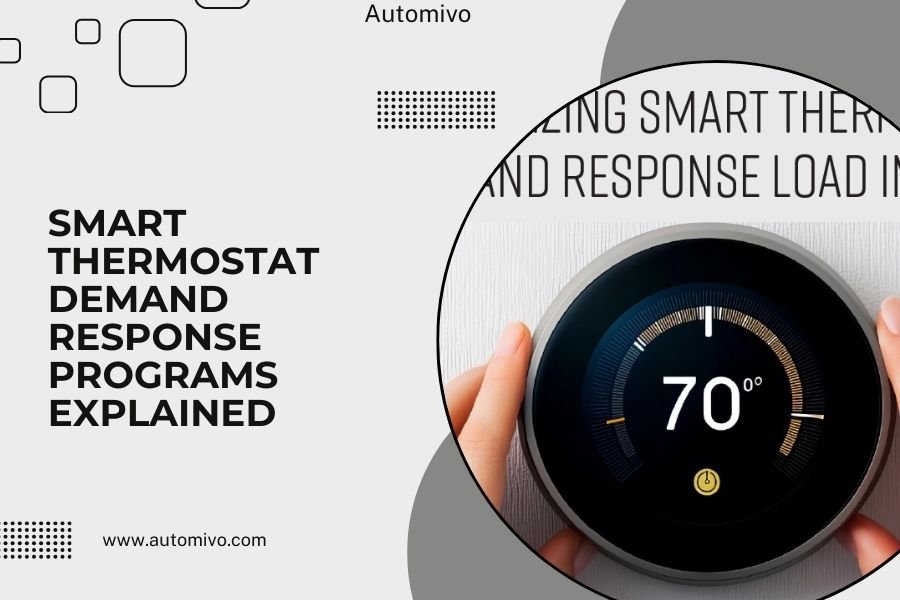
Smart thermostat demand response programs let you earn money by allowing your utility company to adjust your home’s temperature during peak energy periods.
These programs work by temporarily raising or lowering your thermostat settings when the electrical grid needs help, typically saving you 10-20% on energy bills while preventing blackouts.
What Are Smart Thermostat Demand Response Programs
Think of demand response programs as your thermostat getting a part-time job with the electric company. When energy demand spikes on hot summer days, your utility can remotely adjust your AC by a few degrees.
You get paid for this small inconvenience. The grid stays stable. Everyone wins.
Your smart thermostat connects to your utility’s system through your home WiFi. During high-demand periods, it receives signals to temporarily change your temperature settings.
How the Technology Works
Smart thermostats use built-in communication modules to talk with utility companies. They receive signals during peak demand events, usually lasting 1-4 hours.
The thermostat automatically adjusts your temperature by 2-4 degrees. You can override this adjustment anytime if you’re uncomfortable.
After the event ends, your thermostat returns to your normal settings. Most people don’t even notice the change.
Benefits You’ll Actually Experience
I researched multiple utility programs and found consistent benefits across different regions.
Direct Financial Rewards
Most programs pay you $40-100 per year just for participating. Some offer higher rates based on your home’s energy usage.
You also save money through reduced energy bills. Peak-hour electricity costs more, so using less during these times cuts your monthly payments.
Environmental Impact
Demand response programs reduce the need for “peaker” power plants. These backup plants burn more fossil fuels and create more pollution.
By joining, you help prevent blackouts without building new power plants. It’s like carpooling for electricity.
Grid Stability Benefits
Your participation helps prevent rolling blackouts in your community. When everyone reduces usage together, the electrical grid stays balanced.
This matters more as extreme weather events become common. Heat waves push energy demand to dangerous levels.
Types of Demand Response Programs
Different utilities offer different program structures. Here are the main types you’ll encounter.
Peak Time Rebate Programs
These programs pay you for reducing energy use during specific peak hours. Summer peak times typically run from 2-8 PM on weekdays.
You earn credits for every kilowatt-hour you save compared to your normal usage. Rates range from $0.50-2.00 per kWh saved.
Critical Peak Pricing
Your electricity rate increases dramatically during critical peak events. Smart thermostats help you automatically avoid these high-cost periods.
Peak rates can be 5-10 times higher than normal rates. Your thermostat adjustment prevents bill shock.
Direct Load Control Programs
The utility directly controls your thermostat during peak events. You receive guaranteed annual payments regardless of how often events occur.
This offers the most predictable income but gives you less control over timing.
Bring Your Own Thermostat Programs
Many utilities let you use your existing smart thermostat. Popular brands like Nest, Ecobee, and Honeywell work with most programs.
You just register your device and link it to your utility account. No additional equipment needed.
Utility-Provided Thermostat Programs
Some programs give you a free smart thermostat in exchange for participation. These devices come pre-configured for demand response.
This works well if you don’t already own a smart thermostat.
How to Find and Join Programs
Finding available programs takes some detective work, but the process is straightforward once you know where to look.
Check Your Utility Company First
Start with your electric utility’s website. Look for sections labeled “Energy Efficiency,” “Smart Programs,” or “Rebates.”
Call their customer service line if you can’t find information online. Many programs exist but aren’t heavily advertised.
Third-Party Program Providers
Companies like OhmConnect, CPower, and Voltus partner with utilities to run demand response programs. They often offer better customer service than direct utility programs.
These companies handle enrollment, payments, and technical support. They make money by aggregating many homes into larger demand response resources.
Smart Thermostat Manufacturer Programs
Google Nest offers “Rush Hour Rewards” in many areas. Ecobee has similar partnerships with utilities nationwide.
Check your thermostat’s mobile app for available programs in your area.
Common Program Requirements
Most programs have similar eligibility requirements, but details vary by utility.
Equipment Requirements
You need a compatible smart thermostat with WiFi connectivity. Most programs support popular brands made after 2015.
Your home must have central air conditioning or a heat pump. Window units and baseboard heating usually don’t qualify.
Participation Rules
You typically commit to 1-3 years of participation. Some programs allow you to opt out of individual events without penalty.
Your thermostat must remain connected to the internet during the program season. Lost connectivity can result in missed payments.
Override Policies
Most programs let you override temperature adjustments when needed. You might lose that day’s incentive payment, but you won’t face penalties.
Some programs allow 1-2 overrides per month without payment reduction.
Real-World Performance and Savings
I found research from the Department of Energy showing typical program results across different regions.
| Program Type | Average Annual Payment | Typical Events Per Year | Average Temperature Adjustment |
|---|---|---|---|
| Peak Time Rebate | $50-80 | 10-15 | 2-3 degrees |
| Direct Load Control | $75-125 | 15-25 | 3-4 degrees |
| Critical Peak Pricing | $60-100 | 8-12 | 2-4 degrees |
Comfort Impact Studies
Research from Lawrence Berkeley National Laboratory found that 85% of participants report no noticeable comfort impact during events.
The key is proper thermostat programming and home insulation. Well-insulated homes maintain comfortable temperatures longer during adjustment periods.
Actual Bill Savings
Beyond direct payments, participants save 8-15% on summer cooling costs. The combination of payments and savings often totals $100-200 annually.
Savings vary based on your home’s size, insulation, and local electricity rates.
Potential Drawbacks to Consider
Demand response programs aren’t perfect. Here are realistic downsides I found through research.
Privacy and Control Concerns
You’re giving a utility company limited control over your home’s temperature. Some people feel uncomfortable with this arrangement.
Your thermostat usage data gets shared with the utility. This information helps them plan future events but raises privacy questions.
Comfort During Events
Temperature adjustments can make your home slightly less comfortable. This matters more during extreme weather events.
Events often happen when you need cooling most – hot summer afternoons. The timing isn’t convenient.
Technology Dependence
Programs require reliable internet connectivity. WiFi outages can prevent your participation and reduce payments.
Smart thermostats sometimes have software bugs or connectivity issues. These problems can disrupt program participation.
Tips for Maximizing Benefits
Smart program participation can increase your savings and improve comfort during events.
Optimize Your Home’s Efficiency
Seal air leaks and add insulation before joining programs. Efficient homes maintain comfort longer during temperature adjustments.
Clean your AC filters regularly. Dirty filters make your system work harder, reducing program effectiveness.
Strategic Thermostat Programming
Pre-cool your home before typical event times. Lower your temperature by 1-2 degrees an hour before peak periods start.
This gives you a comfort buffer when the utility adjusts your settings during events.
Monitor Your Participation
Track events through your thermostat app or utility portal. Understanding event patterns helps you prepare better.
Check your monthly statements to confirm you’re receiving promised payments.
Future of Demand Response Programs
These programs are expanding rapidly as more homes get smart thermostats.
Technology Improvements
Newer thermostats use artificial intelligence to predict your comfort preferences. They can participate in demand response while maintaining better comfort.
Some systems now include smart water heaters, pool pumps, and EV chargers in demand response programs.
Increased Utility Adoption
More utilities are launching programs as renewable energy creates grid stability challenges. Solar and wind power fluctuate throughout the day.
Demand response helps balance these fluctuations without building expensive backup power plants.
Conclusion
Smart thermostat demand response programs offer a simple way to earn money while helping your community’s electrical grid. The combination of direct payments and energy savings typically totals $100-200 per year for most participants.
Yes, you’ll give up some control over your thermostat during peak events. But the financial benefits and environmental impact make participation worthwhile for most homeowners. Start by checking with your utility company to see what programs are available in your area.
The technology keeps improving, and more utilities are launching programs every year. Getting started now positions you to benefit as these programs expand and offer even better rewards.
Can I opt out of individual demand response events?
Most programs let you override or opt out of specific events through your thermostat or mobile app. You might forfeit that event’s payment, but you typically won’t face penalties. Some programs allow 1-2 opt-outs per month without reducing your annual incentive.
What happens if my internet goes down during an event?
Your thermostat will continue operating normally if it loses internet connectivity during an event. You might miss that event’s incentive payment, but most programs don’t penalize occasional connectivity issues. Consistent internet problems could affect your program eligibility.
Do demand response programs work with heat pumps and electric heating?
Many programs include winter heating events for homes with heat pumps or electric heating systems. These events typically lower your temperature by 2-3 degrees during peak morning and evening hours when heating demand is highest.
How much will my home temperature actually change during events?
Temperature adjustments typically range from 2-4 degrees and last 1-4 hours. Most participants report barely noticing the change, especially in well-insulated homes. You can always override the adjustment if you become uncomfortable.
Are there demand response programs for renters?
Renters can participate if they pay their own electric bills and have permission to install a smart thermostat. Some utilities offer programs specifically for apartment complexes where property managers enroll multiple units together.