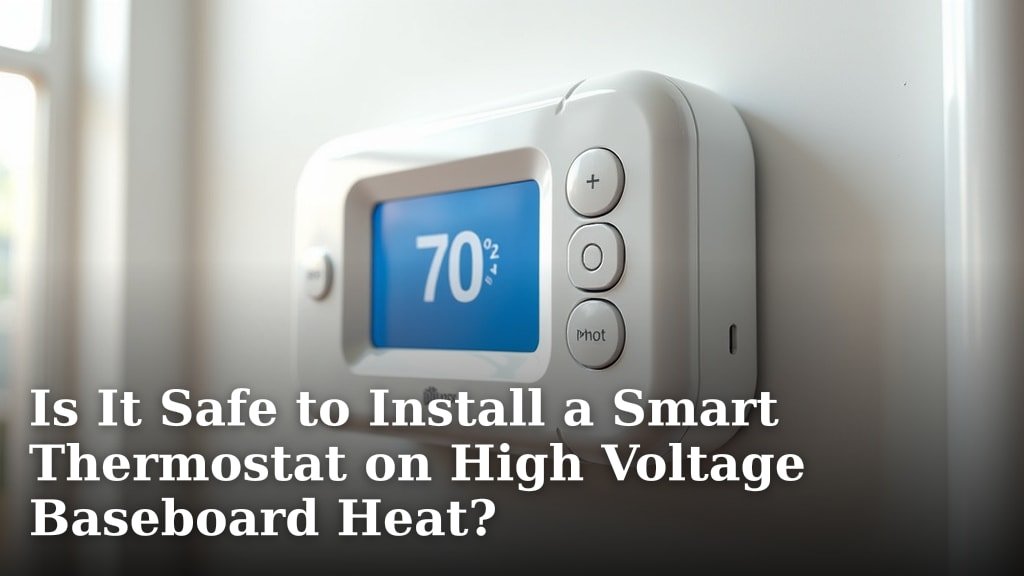
Yes, you can install a smart thermostat on high voltage baseboard heat, but it requires special wiring considerations and is not a simple DIY swap. Most smart thermostats are designed for low voltage systems. You’ll need to make sure your chosen smart thermostat is compatible with high voltage or use a line voltage adapter.
Many homeowners want to upgrade their old thermostats for energy savings and convenience. Understanding the voltage requirements is key to a successful installation. Improper wiring can damage your thermostat or, worse, create a safety hazard in your home.
- Smart thermostats can control high voltage baseboard heat.
- You need a line voltage compatible smart thermostat or adapter.
- Always check your thermostat’s voltage rating before buying.
- Professional installation is often recommended for safety.
Below, we’ll break down exactly what you need to know to safely connect a smart thermostat to your high voltage baseboard heating system.
Connecting Smart Thermostats to High Voltage Baseboard Heat
Yes, it is generally safe to install a smart thermostat on high voltage baseboard heat, but it’s not as straightforward as replacing a standard thermostat. You need to be very careful with the wiring. Most smart thermostats are built for the low voltage (24V) systems common in central heating and cooling. High voltage baseboard heaters typically run on 120V or 240V. This difference means you can’t just swap them out without checking compatibility. Getting this wrong can damage your new thermostat or even create a fire hazard.
Understanding Voltage: The Key Difference
The main hurdle you’ll face is the voltage difference between your baseboard heaters and many smart thermostats. Let’s break down what that means for your home.
What is High Voltage Baseboard Heat?
High voltage baseboard heaters use the same kind of electricity that powers your lights and outlets. This is usually 120V or 240V. They draw a lot more power than low voltage systems. Because of this higher power, they use thicker wires and require specific safety precautions. The thermostat controlling these heaters must be able to handle this higher voltage. Traditional mechanical thermostats are designed for this. They act as a simple on/off switch for the high voltage current.
What is Low Voltage?
Most modern HVAC systems, especially those with central air conditioning, use a low voltage (24V) system. The thermostat in these systems is just a signal device. It tells a central control unit (like a furnace or air handler) when to turn on or off. These low voltage thermostats are not designed to carry the heavy electrical load of high voltage baseboard heaters. Trying to connect them directly would likely result in immediate failure or worse, a dangerous electrical issue.
Smart Thermostat Compatibility: What to Look For
This is where you need to do your homework before buying a smart thermostat. Not all smart thermostats are created equal, and their compatibility with your heating system is paramount.
Line Voltage vs. Low Voltage Smart Thermostats
You’ll find smart thermostats fall into two main categories based on voltage:
- Low Voltage (24V) Thermostats: These are the most common. They work with central HVAC systems. They are NOT suitable for high voltage baseboard heaters.
- Line Voltage (120V/240V) Thermostats: These are specifically designed to control high voltage heating systems like baseboard heaters or electric furnaces. Some smart thermostats are built to handle this directly.
If your current thermostat wires are thick and connect directly to your baseboard heater, you likely have a line voltage system. You absolutely must buy a smart thermostat that is rated for line voltage.
Checking the Specifications: Don’t Guess!
Always, always, always check the product’s specifications. The manufacturer’s website or the product packaging will clearly state the voltage it is designed for. Look for terms like “Line Voltage,” “120V/240V compatible,” or “for use with electric heat.” If it only mentions “low voltage” or “24V systems,” it’s not the right choice for your high voltage baseboard heaters.
Using Adapters or Relays
What if you really want a specific smart thermostat that’s only designed for low voltage? In some cases, you can use an adapter or a relay. A relay is a switch controlled by a low voltage signal. The low voltage thermostat sends a signal to the relay. The relay then handles the high voltage current to turn your baseboard heater on or off. This is a common solution if your desired smart thermostat doesn’t directly support line voltage.
However, installing a relay adds another layer of complexity. It requires understanding both low voltage wiring for the thermostat and high voltage wiring for the relay and heater. This is often best left to a professional. It’s like needing two different types of keys to open one door; you need to manage both systems correctly.
Installation Safety: Your Top Priority
When dealing with high voltage, safety isn’t just a suggestion; it’s a necessity. Improper installation can lead to serious risks.
The Dangers of Incorrect Wiring
Working with electricity can be dangerous if you don’t know what you’re doing. Connecting a low voltage thermostat to a high voltage system can cause:
- Thermostat Damage: The thermostat will likely burn out quickly.
- Short Circuits: This can trip your circuit breaker or fuse.
- Fire Hazards: Overheated wires or faulty connections can start a fire.
- Electric Shock: Improperly handled high voltage can cause severe injury.
We found that many homeowners underestimate the power of their baseboard heating systems. They are essentially large electric heaters running on household current.
When to Call a Professional Electrician
If you’re not 100% confident in your ability to safely work with high voltage wiring, hire a qualified electrician. They have the knowledge and tools to:
- Identify your system’s voltage.
- Determine the correct type of smart thermostat or adapter needed.
- Wire everything safely and according to local electrical codes.
- Ensure your system is protected.
Think of it this way: would you perform surgery on yourself? Probably not. Electrical work on high voltage systems can be just as critical for your home’s safety. Many experts agree that for line voltage systems, professional installation is the safest route (Electrical Safety Foundation International).
DIY Installation: A Checklist for Success (If You’re Confident!)
If you’ve confirmed you have a line voltage compatible smart thermostat and feel comfortable with DIY electrical work, here’s a quick checklist. Remember to turn off the power at the breaker first!
- Verify System Voltage: Confirm your baseboard heaters are 120V or 240V.
- Choose the Right Thermostat: Ensure it’s explicitly rated for line voltage.
- Turn Off Power: Locate the circuit breaker for your baseboard heaters and switch it OFF. Double-check with a voltage tester.
- Follow Thermostat Instructions: Carefully read and follow the specific wiring diagrams for your model.
- Secure Connections: Ensure all wire nuts and connections are tight and secure.
- Test Carefully: Restore power and test the thermostat’s function.
Smart Features for Your High Voltage Heat
Once you have the right, compatible smart thermostat installed, you can enjoy the benefits. You can control your baseboard heating from your phone. Many offer scheduling, away modes, and energy usage reports. This can lead to significant savings on your heating bills. You’ll also gain more comfort by being able to fine-tune the temperature throughout the day.
Can Smart Thermostats Truly Save Money on Electric Heat?
Yes, they can. Electric baseboard heat can be expensive. Traditional thermostats often lead to overheating rooms or forgetting to turn them down when you’re away. Smart thermostats allow for precise scheduling. You can program lower temperatures when you’re asleep or out of the house. Many studies show that using programmable or smart thermostats can reduce heating costs by 10-20% (U.S. Department of Energy). This is especially true for homes that previously relied on manual thermostats that were never adjusted.
Learning Your Habits for Efficiency
Some advanced smart thermostats even learn your habits over time. They adjust the heating schedule automatically to match your lifestyle. This “learning” feature can optimize comfort and energy savings without constant manual programming. You set it up, and it gets smarter as you use it. This is a big step up from simple on/off mechanical controls.
Remote Control and Monitoring
The convenience of remote control is a major draw. Did you forget to turn down the heat before leaving for vacation? No problem. You can adjust it from your smartphone anywhere in the world. You can also monitor your energy usage. This helps you understand where your heating costs are going and identify areas for further savings.
Conclusion
You absolutely can upgrade your high voltage baseboard heat with a smart thermostat, but your safety and system compatibility are top priorities. Remember, most smart thermostats are low voltage. You’ll need to ensure your chosen model is line voltage rated or use a suitable adapter. If you’re unsure about the wiring or voltage differences, don’t hesitate to call a qualified electrician. Getting this right means you can enjoy energy savings and convenience without risking damage or a safety hazard. Your next step should be to carefully identify your system’s voltage and research compatible smart thermostats.
Frequently Asked Questions
Can I use a smart thermostat designed for central air with my baseboard heaters?
No, you generally cannot. Most smart thermostats are designed for low voltage (24V) systems common in central HVAC. Your high voltage baseboard heaters require a thermostat specifically rated for 120V or 240V line voltage. Using a low voltage thermostat will likely damage it and could be a fire hazard.
How do I know if my baseboard heaters are high voltage?
Look at your existing thermostat’s wiring. If the wires are thick and connect directly to the heater or the wall behind it, it’s likely a high voltage (line voltage) system. Traditional mechanical thermostats are also a good indicator. If you’re unsure, it’s best to consult an electrician to confirm.
What are the risks of installing the wrong smart thermostat?
The risks are significant. Installing a low voltage thermostat on a high voltage system can lead to immediate thermostat burnout, short circuits that trip breakers, overheating wires that pose a fire risk, and potentially dangerous electric shock.
Can a smart thermostat actually save me money on electric baseboard heat?
Yes, they can! Electric baseboard heat can be expensive if not managed efficiently. Smart thermostats allow for precise scheduling, setting lower temperatures when you’re away or asleep, and offer energy usage reports, which can lead to savings of 10-20% on heating costs.
What is a relay, and when would I need one?
A relay acts as an intermediary switch. If you want to use a specific smart thermostat that only supports low voltage signals, a relay allows that low voltage signal to control the high voltage current for your baseboard heaters. It adds complexity and is often best handled by a professional.
