
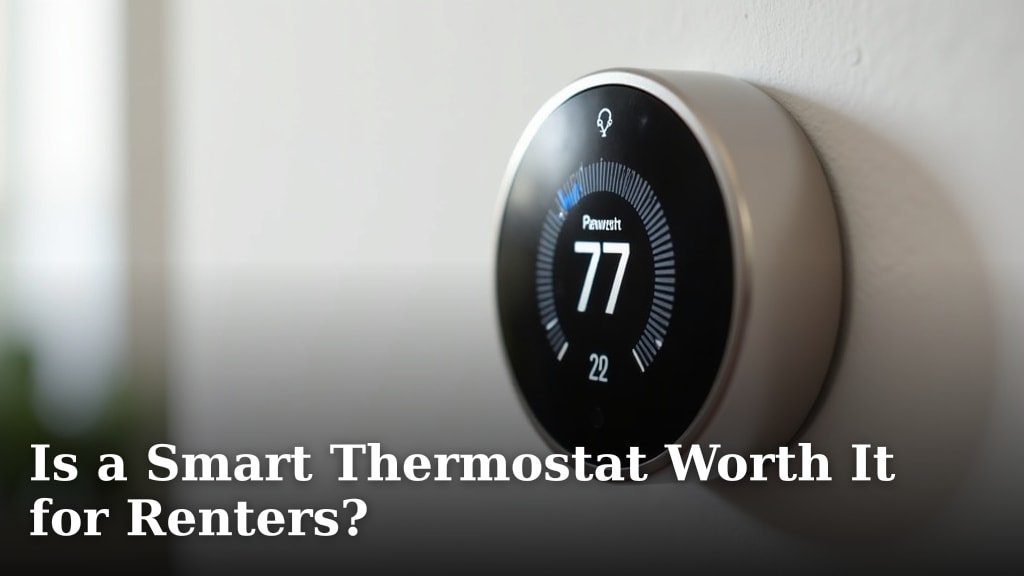
Yes, a smart thermostat can be worth it for renters, especially if you want to save money on energy bills and enjoy more comfort. You just need to pick the right kind and understand a few key things about your lease.
Many renters find these devices offer big benefits, like better control over your home’s temperature and potential monthly savings. We found that even temporary installations can make a real difference in your living situation and wallet. Are you looking to upgrade your rental with smart home tech?
- Save money on utility bills.
- Increase comfort in your rental.
- Understand landlord rules first.
- Choose renter-friendly models.
- Consider the long-term benefits.
Let’s walk through everything you need to know about deciding if a smart thermostat is worth it for you as a renter, and how to pick the best option.
Are Smart Thermostats a Good Idea for Renters?
Yes, for many renters, a smart thermostat is a smart move. You get more comfort and can save money on your utility bills. It’s all about picking the right type for your living situation.
Even if you only stay in your rental for a year or two, the savings can add up. Plus, you get a much better handle on your home’s temperature. Who doesn’t want to feel more comfortable?
The Big Benefits: Why Renters Love Smart Thermostats
You’re probably wondering what’s in it for you. Smart thermostats offer some really compelling advantages. These aren’t just fancy gadgets; they’re tools that can genuinely improve your daily life.
Save Money on Energy Bills
This is often the number one reason renters consider a smart thermostat. Traditional thermostats waste a lot of energy. Think about it: are you really adjusting it several times a day?
Smart thermostats learn your habits. They can turn down the heat or AC when you’re at work. They can also adjust based on whether a room is occupied. We found that energy savings can range from 10-15% (Energy Star).
Imagine saving $20-$50 a month. That adds up over a year, giving you extra cash for other things. Isn’t that a nice thought?
Boost Your Comfort
Tired of coming home to a stuffy apartment or a freezing house? Smart thermostats solve this. You can adjust the temperature from your phone before you even walk in the door.
Many models also have features like geofencing. This means they know when you’re leaving or coming home based on your phone’s location. Your home will always be at your preferred temperature, which feels pretty luxurious.
Some even track humidity. This helps keep your air feeling just right. It’s about more than just temperature; it’s about total comfort control.
Remote Control and Scheduling
Life gets busy. It’s easy to forget to turn down the AC when you rush out the door. With a smart thermostat, that’s not a problem. You can control it from anywhere with an app.
Need to warm up the place for guests arriving later? No need to race home. Just open the app and make the change. It’s all about convenience.
You can also set up detailed schedules. This means different temperatures for different times of the day or week. Your thermostat will automatically follow your plan, taking one more thing off your mind.
Potential Hurdles: What to Consider as a Renter
While smart thermostats are great, there are a few things you need to think about as a renter. These aren’t deal-breakers, but they do require a little planning.
Landlord Approval and Lease Agreements
This is probably the most important step. Before you do anything, you must check your lease agreement. Does it mention anything about modifying appliances or fixtures?
Even if it doesn’t, it’s always best to ask your landlord for permission. A simple email or phone call can save you a lot of hassle. Explain the benefits, like potential energy savings, which could even appeal to them.
Many landlords are open to these upgrades, especially if you promise to reinstall the old thermostat when you move out. Don’t assume; always ask.
Installation Complexity
How easy is it to install a smart thermostat? It depends on the model and your existing wiring. Most modern homes have common C-wire setups, which makes installation fairly simple.
However, older homes might have different wiring. Some smart thermostats require a “C-wire” to provide continuous power. If you don’t have one, you might need an adapter kit or a professional installation.
For renters, a non-C-wire compatible model or a “no-installation” option is often best. We’ll talk more about those types soon.
Taking it With You When You Move
As a renter, you’ll eventually move. You want to make sure your smart thermostat can come with you. This means choosing a model that’s easy to remove and reinstall the old one.
Most smart thermostats are designed for easy removal. You’ll just need to keep your old thermostat safe. When you move, you swap them back. It’s like changing a light fixture, but with a few more wires.
Make sure you label the wires carefully during installation. This will make reinstalling the old thermostat much easier when it’s time to move.
Renter-Friendly Smart Thermostat Options
Not all smart thermostats are created equal, especially for renters. Some are much better suited for temporary installations. Here are the types you should consider.
Battery-Powered or No C-Wire Required Models
These are often your best bet as a renter. They don’t need a C-wire for power, making installation much simpler. This means less hassle with wiring and less chance of needing landlord approval for complex electrical work.
They typically run on regular AA or AAA batteries. You’ll just need to replace them every year or so. This is a small trade-off for the convenience of easy installation and removal.
Look for brands that explicitly state “no C-wire required” or “battery-powered.” This simplifies your choice significantly.
Plug-In or Portable Units for Window ACs/Heaters
Do you rely on window air conditioning units or portable electric heaters? Then a traditional smart thermostat won’t work for you. But don’t worry, there are smart solutions!
Some smart plugs and specialized devices can turn your existing appliances into “smart” ones. You plug your window AC into the smart plug, and then you can control it with an app.
These are super renter-friendly. There’s no installation on your wall, and you just unplug them when you move. It’s a great way to get smart comfort without touching any wiring.
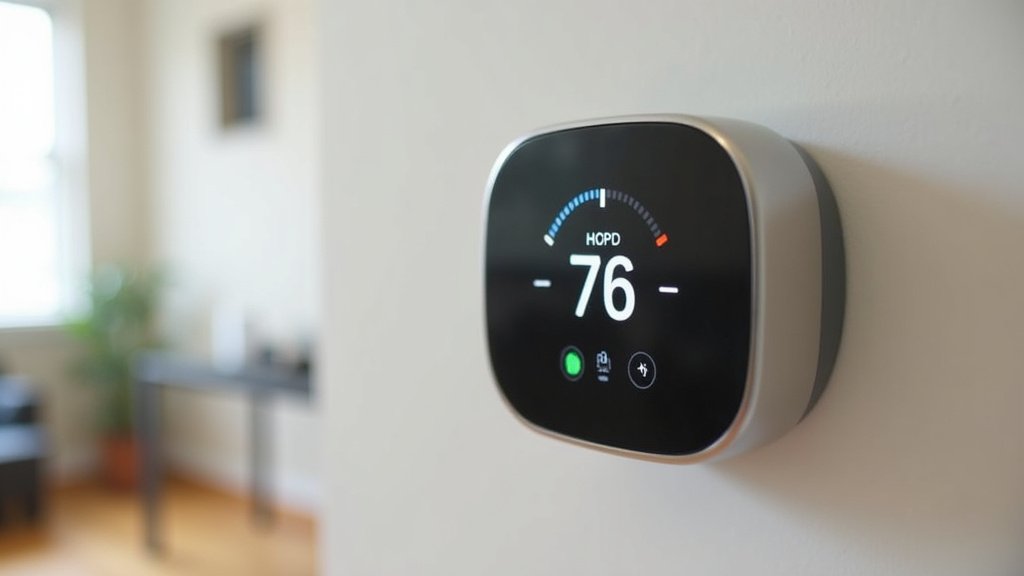
Checklist for Renters: Before You Buy
To make sure you’re making the best decision, go through this quick checklist. It will help you cover all your bases before you invest in a smart thermostat.
-
Review your lease agreement for modification clauses.
-
Talk to your landlord and get their permission in writing.
-
Check your current thermostat’s wiring (snap a photo of the wires!).
-
Look for “no C-wire” or battery-powered models if you’re not comfortable with wiring.
-
Keep your old thermostat in a safe place for when you move.
-
Compare energy-saving features to maximize your savings.
Comparing Renter-Friendly Smart Thermostat Types
Let’s look at the different types side-by-side. This should help you decide which one fits your rental situation best.
| Feature | Traditional Smart Thermostat (No C-wire) | Plug-In Smart Controller (for Window AC/Heater) |
|---|---|---|
| Installation | Easy DIY, no C-wire adapter needed. | Super easy, just plug it in. |
| Landlord Approval | Recommended due to wall removal/rewiring. | Usually not needed, no permanent changes. |
| Portability | Very portable; swap back old unit upon move. | Extremely portable; just unplug and go. |
| Compatibility | Central HVAC systems (furnace/AC). | Window AC units, portable heaters. |
| Power Source | Batteries (need periodic replacement). | Plugs into wall outlet, powers device. |
| Control | App, voice, on-device controls. | App, some with voice. |
As you can see, each type has its own strengths. Your choice will largely depend on your existing heating and cooling system. A central system needs a wall-mounted thermostat, while a window unit benefits from a plug-in solution.
Conclusion
Deciding if a smart thermostat is worth it as a renter really comes down to your personal situation. You can definitely save money and boost your comfort, but always start by checking your lease and talking to your landlord. Choose a model that’s renter-friendly, whether it’s a battery-powered unit or a plug-in controller for your window AC.
You have options that fit almost any rental scenario. By doing your homework, you can enjoy the benefits of smart home tech without any landlord headaches. Make that smart choice today and start enjoying a more comfortable home and lower energy bills!
Frequently Asked Questions
Will a smart thermostat really save me money as a renter?
Yes, many renters find significant savings. Smart thermostats learn your habits and can reduce energy use when you’re away or asleep. You could see 10-15% off your heating and cooling costs, which adds up even in a short-term rental.
Do I need special wiring to install a smart thermostat?
It depends on the model. Some smart thermostats require a “C-wire” for continuous power. However, many renter-friendly options are battery-powered or designed to work without a C-wire, making installation much simpler.
What if my landlord says no to installing a smart thermostat?
If your landlord declines a wall-mounted smart thermostat, don’t worry. You can still use plug-in smart controllers for window ACs or portable heaters. These require no installation and are fully portable, so you don’t need landlord approval.
Can I take my smart thermostat with me when I move out?
Absolutely! Most smart thermostats are designed for easy removal. You just swap it back with the original thermostat and take your device with you. Just be sure to keep your old thermostat safe and label the wires during installation for an easy swap.
Are smart thermostats hard to use?
Not at all! Smart thermostats are known for their user-friendly interfaces and intuitive apps. You can easily program schedules, adjust temperatures remotely, and even control them with voice commands, making them very convenient for daily use.
