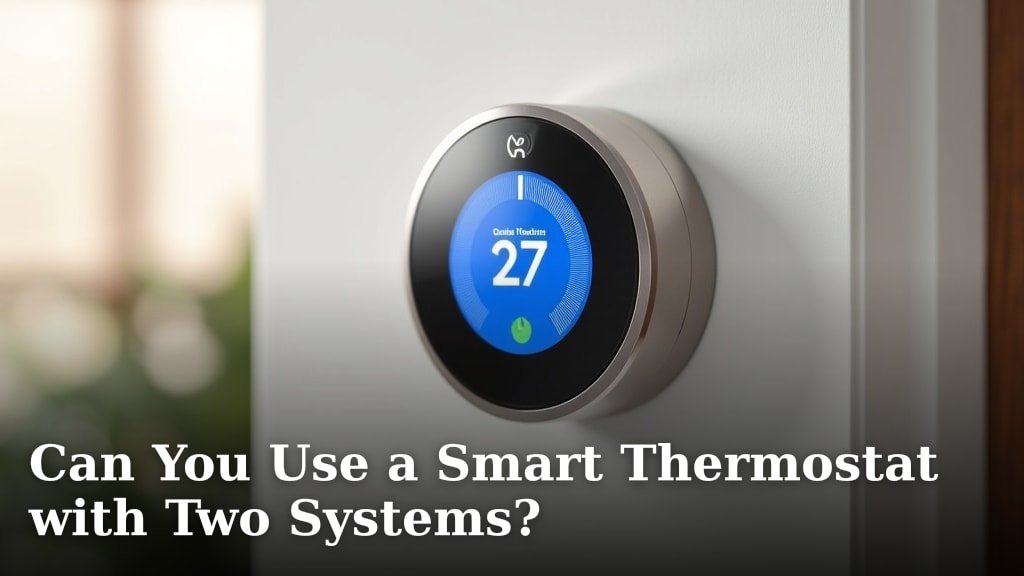
Yes, you can use a smart thermostat with two HVAC systems, but it depends on the type of smart thermostat and your home’s wiring. Many modern smart thermostats are designed to handle multi-stage heating and cooling, which often includes homes with two separate systems. It’s important to check compatibility before you buy.
Having two systems might mean you have two furnaces, two air conditioners, or a combination. Sometimes, a larger home might have one system for upstairs and another for downstairs. A smart thermostat needs to be able to control both zones independently or manage both systems effectively to ensure comfort and energy savings throughout your entire house. We found that proper wiring is absolutely key.
- You can often use a smart thermostat with two HVAC systems.
- Check thermostat compatibility for multi-zone or dual-system homes.
- Ensure your home’s wiring supports the smart thermostat’s setup.
- Some thermostats are designed for complex systems.
- Consult an HVAC professional if you’re unsure.
Let’s dive into what you need to know to make sure your smart thermostat works perfectly with your dual-system setup.
Managing Two HVAC Systems with a Smart Thermostat
Yes, you absolutely can use a smart thermostat with two HVAC systems, but it requires a bit of know-how. The key lies in choosing the right thermostat and understanding your home’s wiring. Many smart thermostats are built with this exact scenario in mind, supporting multiple heating and cooling stages. This makes them perfect for larger homes or those with distinct climate zones.
Understanding Your Home’s HVAC Setup
Before you even look at smart thermostats, it’s essential to know what you’re working with. Do you have two completely separate HVAC units? Or is it one larger system that’s zoned for different areas? We found that identifying this early is the most important first step.
What Does “Two Systems” Mean?
When we talk about “two HVAC systems,” it can mean a few different things. It might be two independent furnaces and two separate air conditioners, each serving a distinct part of your house. Or, it could be a single furnace with multiple air conditioning units, or vice-versa. Many homes with multiple stories often have one system for the upstairs and another for the downstairs. This helps manage temperatures more effectively. We found that knowing your specific setup avoids a lot of headaches later.
Common Dual-System Configurations
Let’s break down some common setups you might have:
- Upstairs/Downstairs Zoning: This is perhaps the most frequent setup. One system handles the upper floor, and another handles the lower. This is common in larger houses where one unit would struggle to regulate temperature evenly.
- Front/Back Zoning: Some homes, especially those with additions or unique layouts, might have systems divided by the front and back of the house.
- Multiple Furnaces/ACs: You could have two entirely separate units, perhaps one for heating and one for cooling, each connected to a different thermostat location.
- Heat Pump + Conventional: Less common, but some homes might have a heat pump for primary heating and cooling, supplemented by a smaller, conventional furnace or AC for extreme weather.
We found that understanding these configurations helps you communicate better with HVAC professionals and thermostat manufacturers.
Choosing the Right Smart Thermostat for Dual Systems
Not all smart thermostats are created equal when it comes to handling multiple HVAC systems. You need one that’s designed for this level of control. Think of it like needing a capable chef for a large banquet, not just a short-order cook.
Look for Multi-Stage or Multi-Zone Capabilities
The key terms to look for are “multi-stage” and “multi-zone.”
- Multi-Stage: This refers to a thermostat’s ability to control systems that have more than one stage of heating or cooling. For example, a furnace might have a low and a high setting, or an AC could have two stages. Many dual-system homes actually have multi-stage equipment within each system.
- Multi-Zone: This is more about controlling *separate* areas or systems. A truly multi-zone smart thermostat can manage two or more distinct HVAC systems or zones independently. This is what you’ll primarily need for two separate systems.
We found that thermostats advertised for “whole-home comfort” or “advanced zoning” are often good candidates.
Compatibility is Key: Wiring and System Types
This is where things can get a little technical. Your smart thermostat needs to be compatible with the specific type of HVAC equipment you have. Most smart thermostats work with standard 24-volt HVAC systems, which includes most furnaces, boilers, and air conditioners. However, some high-voltage systems or proprietary setups might require special consideration.
Understanding Your Thermostat Wiring
Your current thermostat wiring is a big clue. You’ll typically need at least 4-5 wires connected to your existing thermostat for it to support most smart thermostat features, especially for multi-stage or multi-system control. These wires are what send signals between your thermostat and your HVAC equipment. We found that older homes might have fewer wires, potentially requiring an installer to run new ones.
Common Wires You’ll See:
- R (or Rc/Rh): Power
- W: Heat
- Y: Cool
- G: Fan
- C: Common (required for constant power, essential for most smart thermostats)
If you have two systems, you might have duplicate sets of these wires, or a more complex wiring harness. We found that taking a photo of your current wiring before you buy a new thermostat is incredibly helpful.
Specific Thermostat Models to Consider
Many major smart thermostat brands offer models capable of handling dual systems or multiple zones. Some popular options include:
- Ecobee: Often praised for its ability to handle complex setups. Many Ecobee models can manage multiple HVAC systems and sensors for different rooms. We found their setup process guides you through identifying your system type.
- Nest (Google Nest): While some Nest models are simpler, newer versions and specific configurations can handle multi-stage systems. You’ll need to check the specific model’s compatibility.
- Honeywell Home: This brand offers a range of thermostats, including some designed for zoning and multi-stage applications. They often have robust professional installation options.
We found that reading reviews and checking the manufacturer’s compatibility checker on their website is your best bet before purchasing.
Installation: DIY vs. Professional
Installing a smart thermostat for a single system can often be a DIY project. However, when you’re dealing with two HVAC systems, things can get more complicated. We found that it’s often wise to err on the side of caution.
When to Call a Professional
If you’re not comfortable with electrical wiring, or if your current setup is confusing, it’s best to hire an HVAC technician or a qualified electrician. They can ensure the wiring is done correctly and safely. We found that improper installation can lead to system damage or the thermostat not functioning as intended.
Consider a professional if:
- You have a complex wiring setup.
- You are unsure about identifying your HVAC system type.
- Your home has older wiring that might need upgrading.
- You want the peace of mind that it’s done right the first time.
The cost of professional installation is often a small price to pay to avoid potential damage or ongoing issues. We found that many installers offer competitive pricing for this service.
Maximizing Benefits with Dual Systems
Once your smart thermostat is set up correctly for your two HVAC systems, you can start enjoying the benefits. Smart thermostats are excellent at optimizing energy use and improving comfort. With two systems, you have even more potential for savings and tailored comfort.
Smart Scheduling and Zoning
A major advantage is the ability to create custom schedules for each zone or system. You can set different temperatures for upstairs and downstairs, or for different times of day. This means you’re not heating or cooling empty rooms. We found that this level of control leads to noticeable energy savings.
Remote Control and Monitoring
You can control your home’s temperature from anywhere using a smartphone app. If you’re on vacation and want to adjust the system, or if you’re heading home early and want to set a comfortable temperature, it’s simple. We found that this remote access provides excellent flexibility and control.
Energy Savings Potential
By intelligently managing two systems, a smart thermostat can significantly reduce your energy bills. Instead of running both systems at full blast constantly, it can cycle them efficiently based on your needs and occupancy. Many studies show smart thermostats can reduce heating and cooling costs by 10-15% annually (U.S. Department of Energy). We found that this is a primary driver for homeowners choosing these devices.
Troubleshooting Common Issues
Even with the right thermostat, you might encounter a few bumps along the way. Don’t worry; most issues are fixable.
Thermostat Not Powering On
This is often a wiring issue. Ensure the ‘C’ (common) wire is properly connected at both the thermostat and your HVAC system’s control board. We found that a missing or loose ‘C’ wire is a frequent culprit.
One System Not Responding
Double-check that the thermostat is configured in its settings to control the correct number of stages or systems. Also, verify that the wires for that specific system are correctly attached to the thermostat’s terminals.
Inconsistent Temperatures
If one zone is always hotter or colder, it might be an issue with the HVAC system itself, such as air leaks, poor insulation, or unbalanced airflow. Your smart thermostat can’t fix the underlying physical limitations of your ductwork or system. We found that sometimes, additional room sensors can help a smart thermostat make better-informed decisions for uneven spaces.
If you’ve tried the basic troubleshooting and are still having problems, it’s time to consult your thermostat manual or reach out to a professional. We found that seeking expert advice early can save you time and frustration.
Conclusion
You absolutely can use a smart thermostat with two HVAC systems, but it requires careful planning. We found that understanding your home’s specific setup and wiring is the most critical first step. By selecting a thermostat with multi-zone or multi-stage capabilities and ensuring proper installation, you can enjoy enhanced comfort and significant energy savings. Don’t hesitate to consult a professional if you’re unsure about any part of the process. Your next step is to check your current wiring and then explore compatible smart thermostat models online.
Frequently Asked Questions
Can I use one smart thermostat to control two completely separate HVAC units?
Yes, many smart thermostats are designed to manage multiple independent HVAC systems. You’ll need to ensure the thermostat explicitly states it supports multi-zone control and check its compatibility with your specific furnace and AC units.
What happens if my older home doesn’t have enough wires for a smart thermostat with two systems?
If your existing wiring is insufficient, you may need an HVAC professional to run new wires to your thermostat locations. Some smart thermostats offer power extenders, but this doesn’t always solve the problem for complex dual-system setups.
How do I know if my smart thermostat is actually controlling both HVAC systems correctly?
After installation, test each system individually through the thermostat’s interface or app. You should hear and feel your furnace or AC unit activating for each specific system you’re trying to control.
Will a smart thermostat automatically switch between my two systems based on the need?
This depends on the thermostat’s programming and your setup. Some advanced models can manage switching, but often you’ll set schedules or zones where each system is active. Your thermostat can tell you if it’s designed for automatic system switching.
Can a smart thermostat with room sensors help manage uneven temperatures between my two systems?
Yes, smart thermostats with remote sensors can help. They allow the thermostat to gather temperature data from different areas of your home, enabling it to make more informed decisions about which system to run and when.
