
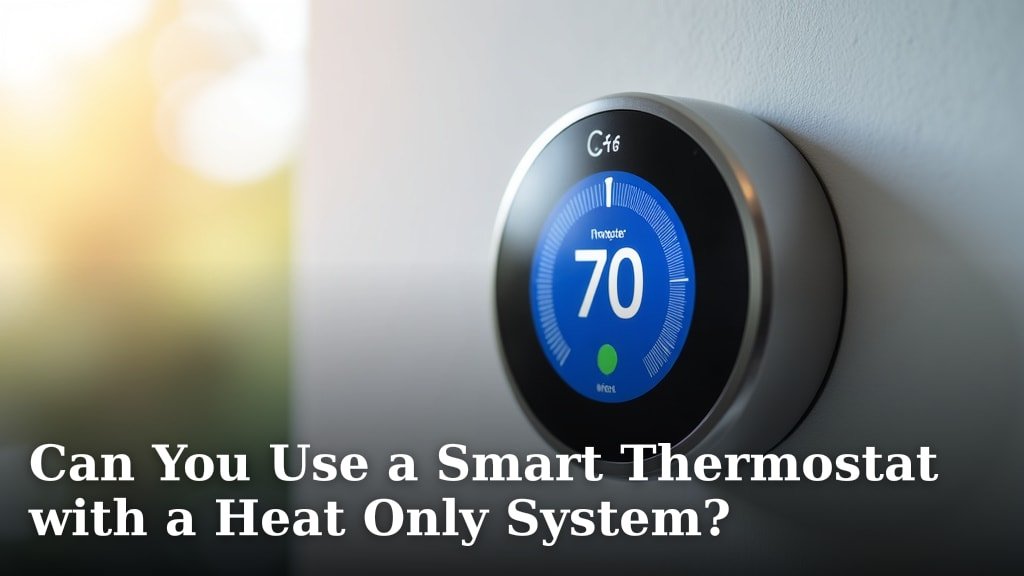
Yes, you can absolutely use a smart thermostat with a heat-only system. Many smart thermostats are designed to work with various heating setups, including those that only provide heat. You’ll just need to ensure your system has a C-wire for consistent power, or explore a power adapter if it doesn’t. This upgrade offers convenience and potential energy savings.
Upgrading to a smart thermostat on your heat-only setup can bring modern features to your home. You’ll gain remote control, scheduling capabilities, and often energy usage insights. This allows for more precise temperature management compared to traditional thermostats, potentially leading to a more comfortable home and lower bills.
- Smart thermostats work with heat-only systems.
- A C-wire is usually needed for power.
- You get remote control and scheduling.
- Enjoy potential energy savings.
- Installation is often straightforward.
Let’s dive into the details of how to get your heat-only system hooked up with a smart thermostat and what to expect.
Smart Thermostat Compatibility with Heat-Only Systems
You’re in luck! Many smart thermostats are perfectly designed to work with heat-only heating systems. This means you don’t need to replace your entire heating setup to enjoy modern convenience. You can get the benefits of smart control without the hassle of a complex upgrade.
Think of it like upgrading your old rotary phone to a smartphone. You still get the core function – making calls – but now you have so much more. Your smart thermostat will manage your heat, but with added brains for better control.
How Smart Thermostats Work with Heat-Only Setups
Your heat-only system likely has two main wires: one for power and one that signals the heater to turn on. Smart thermostats typically need a bit more power than older models. They use this extra power to run their screens, Wi-Fi, and other smart features.
This is where the C-wire comes into play. It’s essentially a common wire that provides continuous 24-volt power to the thermostat. If your system doesn’t have one, don’t worry; we’ll cover that later.
When the thermostat calls for heat, it sends a signal through these wires to your furnace or boiler. The smart thermostat uses its programming, app control, or voice commands to decide when that signal should be sent. It’s a simple but effective connection.
Understanding Your Current Wiring
Before buying a smart thermostat, it’s wise to peek at your current wiring. Most thermostats have a cover that easily pops off or is held by a few screws. You’ll usually see terminals labeled with letters like R, W, G, Y, and C. For a heat-only system, you’ll almost always see an ‘R’ wire (for power) and a ‘W’ wire (for heat).
If you see a ‘C’ wire connected, you’re ahead of the game! If not, it’s something you might need to address, but it’s usually manageable. Many online guides and even the smart thermostat manufacturers offer excellent visuals to help you identify these wires.
The Crucial Role of the C-Wire
As we touched on, the C-wire is often the key to a successful smart thermostat installation on older systems, including heat-only setups. Older thermostats often draw power intermittently from the heating wires, which is fine for their basic needs.
Smart thermostats, however, need a constant power supply to keep their Wi-Fi connected and their fancy displays lit up. Without a C-wire, the thermostat might try to draw power, but it can’t sustain it. This can lead to issues like the thermostat losing power or not being able to connect to your Wi-Fi network reliably. It’s like trying to run a computer on a battery that can’t hold a charge.
Research from energy efficiency organizations often highlights consistent power as a foundation for smart home device reliability. Without it, you’re just adding a complicated gadget that doesn’t work as intended.
What If You Don’t Have a C-Wire?
This is a common concern, but there are practical solutions. Many smart thermostat manufacturers offer C-wire adapters or alternative power options. These adapters usually work by using an existing wire (like the G wire, often unused in heat-only systems) to create a virtual C-wire connection. Our guide on how to wire a smart thermostat without a C-wire details creating a virtual C-wire connection.
You can also explore thermostats that come with a power extender kit. These kits essentially add a small power module near your furnace or boiler. It’s designed to provide the necessary continuous power to your smart thermostat without needing to run a new wire through your walls. Many DIYers find these solutions quite manageable.
In some cases, if you’re uncomfortable with wiring, you can have an HVAC professional or an electrician install the C-wire for you. This ensures it’s done safely and correctly, giving you peace of mind.
Benefits of Upgrading Your Heat-Only System
So, why go through the process? The advantages are significant. You get modern control and convenience that traditional thermostats just can’t offer. Imagine adjusting your home’s temperature from your smartphone while you’re at work or on vacation.
Scheduling is another huge plus. You can set different temperatures for different times of the day – warmer when you’re home and cooler when you’re away or asleep. This maximizes comfort and minimizes wasted energy.
Many smart thermostats also provide energy usage reports. You can see how much your heating system is running and identify opportunities to save money. It’s like having a little energy auditor built into your wall!
Remote Control and Scheduling
The ability to control your thermostat from anywhere is a real game-changer. Did you forget to turn down the heat before leaving for a weekend trip? No problem. Just pull out your phone and make the adjustment. This remote access is a major convenience.
Scheduling capabilities allow you to create a heating routine that fits your lifestyle. You can set it to warm up the house just before you wake up and then lower the temperature overnight. This ensures your home is always comfortable without running the heater unnecessarily. It’s about smart, automated comfort.
Energy Savings Potential
While a smart thermostat won’t magically reduce your energy bill on its own, it provides the tools to use less energy. By optimizing your heating schedule and avoiding heating an empty house, you can see a noticeable difference. The U.S. Department of Energy suggests that programmable thermostats can save you about 10% a year on heating and cooling costs.
Smart thermostats take this a step further. Their intelligent learning features can sometimes adapt to your habits. They also offer easy access to usage data, helping you pinpoint where energy is being wasted. This data-driven approach is key to smart energy management.
Installation: What to Expect
For many homeowners, installing a smart thermostat on a heat-only system is a DIY-friendly project. The process usually involves turning off the power to your HVAC system, removing your old thermostat, connecting the wires to the new thermostat base, and then attaching the thermostat faceplate.
Most smart thermostat brands provide very clear, step-by-step instructions. They often include helpful videos and online support to guide you. You’ll need basic tools like a screwdriver and maybe some wire strippers.
If you encounter any confusion with the wiring, or if you don’t have a C-wire and aren’t comfortable installing an adapter, it’s always best to call a qualified professional. Safety first, always!
Choosing the Right Smart Thermostat
When selecting a smart thermostat, look for models that explicitly state compatibility with heat-only systems. This information is usually prominent on the product packaging or in the online description.
Consider features like:
- Wi-Fi connectivity (essential for remote control)
- App compatibility (iOS and Android)
- Compatibility with voice assistants like Alexa or Google Assistant
- Learning capabilities or advanced scheduling options
- Energy usage tracking
Brands like Nest, Ecobee, and Honeywell all offer models that work well with heat-only setups. Read reviews and compare features to find the one that best fits your needs and budget.
Your Smart Thermostat Checklist
Ready to take the plunge? Here’s a quick checklist to ensure you’re prepared:
- Confirm your system is heat-only: Ensure you don’t have separate AC or other complex zones.
- Check for a C-wire: Open your current thermostat to see if one is present.
- Identify your wires: Note the labels (R, W, etc.) of the wires connected.
- Choose a compatible smart thermostat: Look for “heat-only” compatibility.
- Gather your tools: Screwdriver, possibly wire strippers.
- Plan for installation: Decide if you’ll DIY or hire a professional.
Taking these steps will help make your smart thermostat upgrade smooth and successful. You’ll be enjoying a smarter, more comfortable home in no time!
Conclusion
You can confidently upgrade your heat-only system to a smart thermostat. We’ve seen that compatibility is high, and the benefits like remote control and scheduling are well within reach. While the C-wire is often necessary for reliable power, solutions like adapters make it manageable even without one. Take the small step of checking your current wiring. Then, choose a smart thermostat built for your setup and get ready for a more comfortable and efficient home environment. Your future self will thank you for the smart upgrade!
Frequently Asked Questions
Will a smart thermostat still save energy if I only have heat?
Yes, absolutely. Smart thermostats help you save energy by allowing you to precisely control when your heating system runs. You can program it to lower the temperature when you’re asleep or away, preventing unnecessary energy use and lowering your bills.
What if my heat-only system doesn’t have a C-wire?
Don’t worry if you lack a C-wire. Many smart thermostats come with a power adapter kit that can be installed. This adapter uses an existing wire, often one not used in heat-only systems, to provide the continuous power your smart thermostat needs to function correctly.
Can I install a smart thermostat on a boiler-only system?
Yes, smart thermostats are generally compatible with boiler-only heating systems, provided they are heat-only. You’ll still need to check for a C-wire or consider a power adapter for consistent power to the smart thermostat.
How do I know if my system is truly heat-only?
A heat-only system will typically only have wires connected to the ‘R’ (power) and ‘W’ (heat) terminals on your current thermostat. If you see wires connected to ‘Y’ (cooling) or other letters, your system likely has more functions than just heat.
Is it safe to install a smart thermostat myself with a heat-only system?
For many DIYers, installing a smart thermostat on a heat-only system is straightforward. However, always turn off power to your HVAC system first. If you’re unsure about the wiring or uncomfortable with the process, hiring an HVAC professional is a safe bet.
