
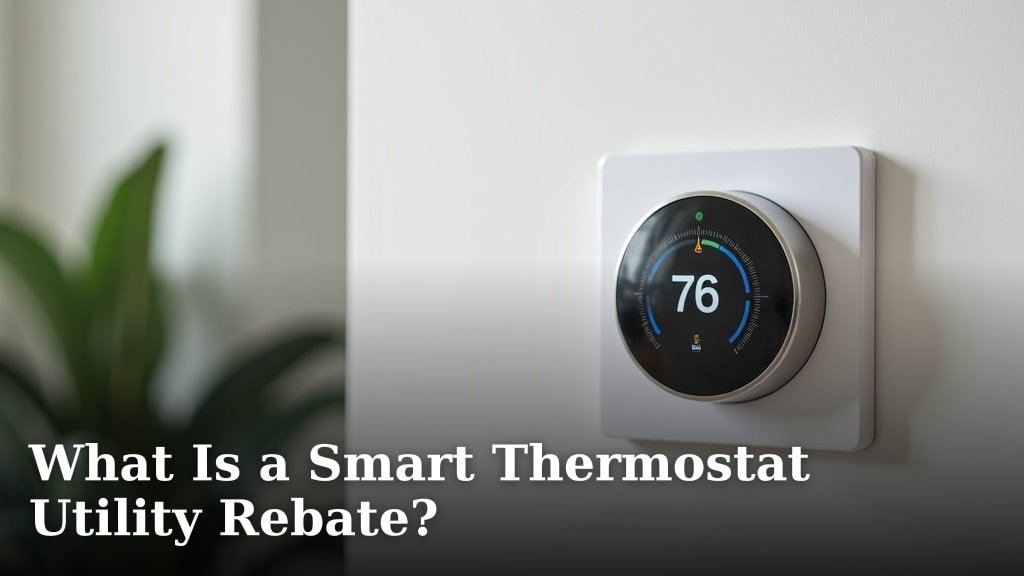
A smart thermostat utility rebate is a program offered by energy companies to encourage customers to install energy-efficient smart thermostats. These rebates provide a financial incentive, often in the form of a discount or credit, directly to you. It helps offset the cost of buying and installing one of these clever devices.
Many local utilities and even some states want you to save energy. Why? Because it helps them manage demand and reduces the strain on the power grid. They understand that installing a smart thermostat can lead to significant energy savings over time, both for you and for them. Think of it as a win-win situation for your wallet and the environment.
- Utility companies offer money back for smart thermostats.
- It helps you save on initial purchase costs.
- These programs encourage energy efficiency.
- You can save money on your monthly energy bills.
Ready to discover if you qualify for one of these rebates? Let’s walk through exactly how this works and what you need to know.
Understanding Smart Thermostat Rebate Programs
So, what exactly is a smart thermostat utility rebate? Simply put, it’s a financial incentive from your local energy provider. They offer you money back or a discount when you purchase and install a qualifying smart thermostat.
Utility companies do this for a clear reason: to encourage you to save energy. When you use less electricity or natural gas, it benefits everyone. It reduces the load on their systems and helps them avoid building expensive new power plants. It’s a win-win.
Who Offers These Rebates?
You might be surprised by how many different organizations offer these programs. It’s not just the big national players. Many local groups get involved too.
Local Utility Companies
Your local electricity or gas company is usually the primary source for these rebates. They’re motivated to manage demand in your area. Many large utilities, such as Pacific Gas and Electric, Con Edison, and Duke Energy, consistently run these programs. You’ll often find specific program details directly on their websites.
State and Local Government Programs
Sometimes, state energy offices or even city governments offer additional incentives. These are often designed to meet broader energy conservation goals. These programs might stack on top of your utility’s offer, giving you even more savings. It’s worth a quick search on your state’s energy department website to see if anything is available.
Energy Efficiency Organizations
Occasionally, non-profit energy efficiency groups might partner with utilities or governments. They aim to promote sustainable practices. While less common for direct rebates, they can be a great resource for information and might point you to hidden savings opportunities.
Why Do Utilities Offer Rebates?
It might seem counterintuitive for an energy company to pay you to use less energy. But there’s a strong business case behind it. They’re not just being generous; they’re investing in grid stability and cost savings.
Think about it like this: if everyone blasts their AC on a hot summer day, the power grid gets stressed. This can lead to brownouts or even blackouts. Utilities want to avoid that. Smart thermostats help smooth out these peaks in demand.
Demand-Side Management
This is the technical term for what utilities are doing. They want to manage when and how much energy you use. A smart thermostat, especially one with “demand response” features, helps them do this. It can slightly adjust your temperature during peak hours, reducing strain on the grid without you really noticing the change.
Cost Avoidance
Building new power plants or upgrading transmission lines is incredibly expensive. If utilities can reduce overall energy demand through efficiency programs, they can delay or even avoid these massive capital expenditures. A rebate program is often far cheaper than building new infrastructure (U.S. Department of Energy).
Customer Satisfaction and Compliance
Happy customers who save money are more loyal. Plus, many utility companies have mandates from state regulators to meet certain energy efficiency targets. Offering rebates helps them comply with these regulations. It’s a way for them to meet their goals while helping you save.
What Kind of Rebates Can You Expect?
Rebates come in different forms, and the amount can vary a lot. It depends on your location, your utility, and sometimes the specific thermostat you choose. It’s not uncommon to see rebates ranging from $50 to $100, but some can be higher. Understanding how much a smart thermostat costs can help you evaluate the overall value of a rebate.
Instant Rebates vs. Mail-in Rebates
This is a key difference to understand when you’re looking for a deal. We’ve found that people prefer instant savings.
Instant Rebates (Point-of-Sale)
These are fantastic because you get the discount immediately. When you buy a qualifying smart thermostat, either online or in a participating store, the rebate amount is taken directly off the price. You pay less upfront. Many utilities partner with retailers like Amazon or Best Buy for this exact purpose. It’s very convenient.
Mail-in Rebates (Post-Purchase)
With a mail-in rebate, you pay the full price for the thermostat first. Then, you submit an application, usually online or by mail, along with proof of purchase. The utility then sends you a check or a credit on your bill. This takes more effort on your part and requires patience. Sometimes it can take weeks for the rebate to process.
Rebate Amounts and Eligibility
The actual dollar amount you receive will vary. It might be a flat rate, or it could be tied to the specific model of smart thermostat you buy. Higher-end, more feature-rich models sometimes qualify for larger rebates, but not always.
Here’s a simple comparison of what you might encounter:
| Rebate Type | How It Works | Pros | Cons |
|---|---|---|---|
| Instant Rebate | Discount applied at purchase point. | Immediate savings, less hassle. | Limited to participating retailers. |
| Mail-in Rebate | Purchase full price, apply later for reimbursement. | Broader retail options. | Requires extra steps, delayed payment. |
| Bill Credit | Rebate applied directly to your energy bill. | Reduces future bills automatically. | Not cash in hand, still post-purchase. |
How to Find and Claim Your Rebate
Finding these rebates might seem tricky, but it’s usually quite straightforward once you know where to look. It’s a bit like a treasure hunt for savings!
Start with Your Utility Company’s Website
This is your first and best resource. Go directly to your electric or natural gas provider’s website. Look for sections labeled “Energy Efficiency,” “Rebates,” “Save Energy & Money,” or “Smart Home.” Most large utilities have dedicated pages explaining their programs.
Check Retailer Websites
Many online and brick-and-mortar retailers that sell smart thermostats will highlight available rebates. They want to make it easy for you to buy. Sometimes, they even have tools where you can enter your zip code to see qualifying offers.
Verify Eligibility Requirements
Before you buy, make sure you meet all the criteria. This is super important to avoid disappointment. You don’t want to buy a thermostat only to find out you don’t qualify for the rebate.
Common Eligibility Criteria
- Service Area: You must be a customer of the specific utility offering the rebate.
- Thermostat Model: Only certain smart thermostat brands and models qualify. Check the approved list carefully.
- Installation Date: Sometimes there are deadlines for when the thermostat must be purchased and installed.
- Existing Equipment: Some rebates require that you’re replacing an older, less efficient thermostat.
- Property Type: Rebates are often for residential properties, but some commercial programs exist.
- Account Status: Your utility account might need to be in good standing.
Steps to Claim Your Rebate (Mail-in Example)
Let’s say you’re going for a mail-in rebate. What should you do? We’ve outlined a typical process:
- Purchase a Qualifying Thermostat: Make sure it’s on your utility’s approved list. Save your receipt!
- Install the Thermostat: Follow the manufacturer’s instructions carefully.
- Locate the Rebate Application: This is usually on your utility’s website.
- Gather Required Documentation: You’ll likely need:
- Proof of purchase (receipt or invoice).
- Proof of installation (sometimes a photo or installer invoice).
- Your utility account number.
- The thermostat’s serial number.
- Submit the Application: Complete the form accurately and submit it online or by mail.
- Track Your Rebate: Many utilities offer a way to check the status of your submission.
It sounds like a lot, but each step is usually quite simple. Just be organized.
Maximizing Your Savings
Getting a rebate is just the first step. The real savings come from using your smart thermostat effectively. It’s about combining the initial discount with ongoing energy efficiency.
How Smart Thermostats Save Energy
These devices are clever because they learn your habits. They can optimize your home’s heating and cooling. Things like programming, remote control, and occupancy sensing all contribute to less wasted energy.
- Programmable Schedules: Set different temperatures for when you’re home, away, or asleep.
- Remote Access: Adjust your temperature from anywhere using your smartphone.
- Geofencing: Some thermostats can tell when you leave or approach home, adjusting accordingly.
- Learning Capabilities: They learn your preferences and can create schedules automatically.
- Energy Reports: See how much energy you’re using and find areas to improve.
- Demand Response Participation: Opt-in to programs that slightly adjust your temp during peak grid demand.
Many experts say that using a smart thermostat can save you 10-15% on your heating and cooling costs (ENERGY STAR). That’s a nice chunk of change over a year!
Checklist for Finding Your Rebate
Ready to go find your rebate? Here’s a quick checklist to guide you:
- Identify your electricity and natural gas providers.
- Visit their official websites.
- Search for “rebates,” “smart thermostat,” or “energy efficiency.”
- Review the specific eligibility requirements for your area.
- Note approved thermostat models and any deadlines.
- Choose between instant or mail-in rebate options.
- Gather all necessary documents before purchasing.
By following these steps, you’ll be well on your way to enjoying both the upfront savings and the long-term benefits of a smart thermostat.
Conclusion
You now understand what smart thermostat utility rebates are all about. These programs are a fantastic way to make energy efficiency more affordable for your home. By taking advantage of these incentives, you save money upfront and reduce your monthly energy bills.
Remember, it’s a win-win situation for you, your wallet, and the environment. Don’t leave money on the table. Start by checking your local utility company’s website today to find out which rebates are available in your area!
Frequently Asked Questions
Do smart thermostat rebates expire?
Yes, many smart thermostat rebate programs have specific expiration dates or limited funding. It’s important to check the terms and conditions on your utility’s website. They often renew annually, but terms can change.
Can I get a rebate for a smart thermostat I already own?
Generally, no. Rebates are typically offered for new purchases and installations to incentivize new energy-saving behaviors. Most programs require proof of a recent purchase and installation date.
What if my specific smart thermostat model isn’t on the approved list?
If your desired model isn’t listed, it likely won’t qualify for the rebate. Utilities approve specific models based on their energy-saving capabilities. You’ll need to choose a different, approved thermostat to receive the incentive.
Are there income requirements to qualify for a smart thermostat rebate?
For most standard utility rebates, there are no income requirements. These programs are usually open to all residential customers in good standing. Some special low-income assistance programs might exist separately, so check your local listings.
How long does it typically take to receive a mail-in rebate check?
The processing time for mail-in rebates can vary significantly. From what we’ve found, it can take anywhere from 4 to 8 weeks, and sometimes longer, to receive your check or bill credit after your application is approved.
