
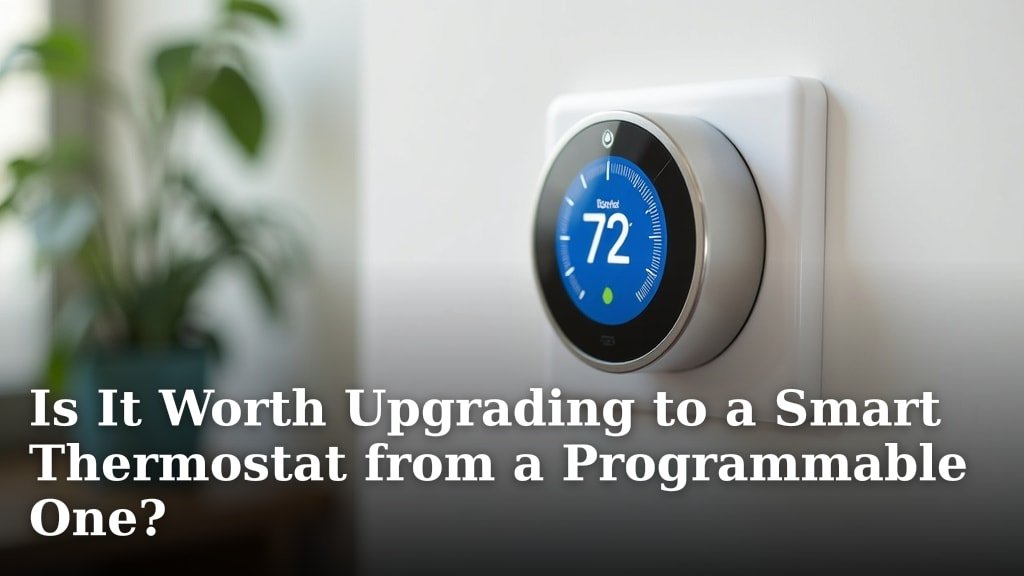
Yes, upgrading to a smart thermostat from a programmable one is often worth it, especially if you want to save money on energy bills and enjoy more convenience. Many homeowners find that the added features make a real difference.
While programmable thermostats offer basic scheduling, smart models bring things like remote control, learning capabilities, and energy reports. They help you fine-tune your home’s comfort and reduce wasted energy without much effort.
- Smart thermostats often save you money on energy.
- They offer more convenience than programmable models.
- You can control them from anywhere with your phone.
- Many learn your habits and adjust automatically.
- They provide helpful energy usage reports.
Let’s dive into the details and see if a smart thermostat is the right move for your home.
The Value Proposition: Smart vs. Programmable Thermostats
So, you’re wondering if upgrading really makes sense for your home, right? The short answer we found is often yes, particularly when you weigh the benefits against the costs. Think about what your current programmable thermostat offers. It lets you set a schedule, which is good. But a smart thermostat takes that basic function and adds a whole new layer of intelligence and convenience.
Imagine your thermostat adjusting itself based on whether you’re home or away, or even learning your preferred temperatures over time. That’s the core difference. It’s about moving from a set-it-and-forget-it schedule to a system that actively optimizes your home’s climate.
Understanding Programmable Thermostats
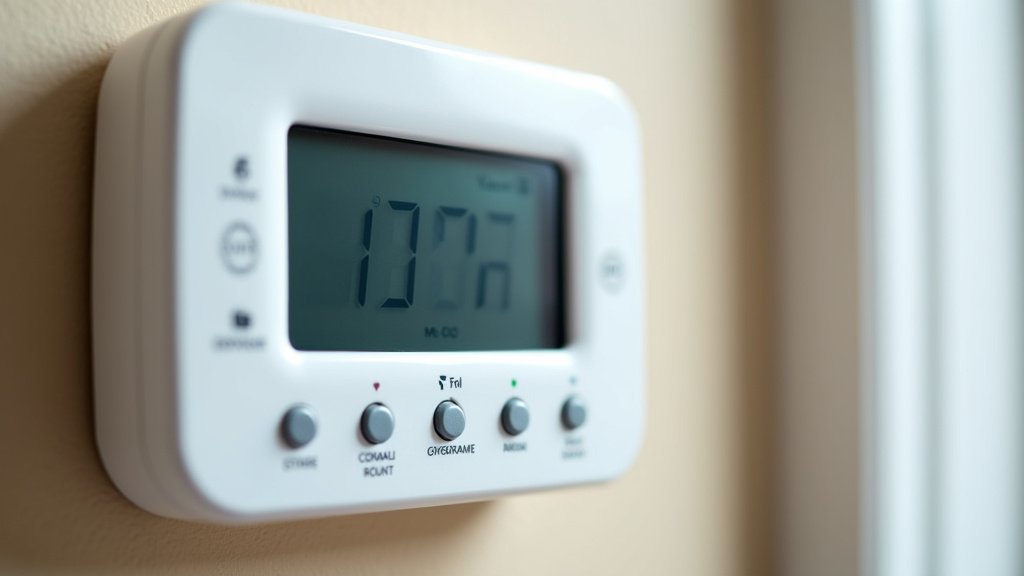
First, let’s appreciate what your current programmable thermostat does. These devices allow you to set different temperatures for various times of the day and days of the week. For example, you can program it to be warmer in the morning before you wake up, then cooler while you’re at work, and cozy again in the evening. This helps save energy by not heating or cooling an empty house.
They are a definite improvement over manual thermostats. Many homeowners have used them for years to gain some control over their energy use. However, their main limitation is their lack of flexibility and intelligence. If your schedule changes unexpectedly, you have to manually adjust it, which can defeat the purpose of energy savings.
What Makes a Smart Thermostat “Smart”?
Now, let’s explore what makes a smart thermostat so different. These devices connect to your home’s Wi-Fi. This connection is key to all their advanced features. You can control them remotely using an app on your smartphone, tablet, or even computer. This means you can adjust your home’s temperature from anywhere, whether you’re at the office, on vacation, or just in another room.
Many smart thermostats also boast “learning capabilities.” This means they observe your habits and preferences. Over time, they start to anticipate when you like your home warmer or cooler and adjust automatically. They can also use geofencing, which detects when you leave or approach your home using your phone’s location. This allows them to automatically turn down the heat or AC when you leave and start warming or cooling before you arrive back home. It’s about effortless comfort and savings.
Key Benefits of Upgrading to a Smart Thermostat
So, beyond just being “smart,” what tangible advantages do these thermostats offer? We found that the benefits largely fall into two main categories: energy savings and enhanced convenience. These aren’t just minor perks; they can genuinely impact your daily life and your wallet.
Energy Efficiency and Cost Savings
One of the biggest draws of smart thermostats is their potential to lower your energy bills. By optimizing your heating and cooling, they can significantly reduce wasted energy. The U.S. Environmental Protection Agency (EPA) notes that smart thermostats can save homeowners, on average, 10-12% on heating and 15% on cooling costs (Energy Star). These numbers can add up over a year!
How do they achieve this? Beyond learning your schedule and using geofencing, many models offer energy usage reports. You can see exactly how much energy your HVAC system is consuming, helping you identify patterns and make more informed decisions. Some even suggest adjustments for maximum efficiency.
Unparalleled Convenience and Control
Imagine being stuck in traffic, remembering you forgot to turn down the AC. With a smart thermostat, a few taps on your phone solve the problem. That’s the power of remote control. It’s about having your home’s climate literally at your fingertips, anytime, anywhere.
Many smart thermostats also integrate with other smart home systems, like Amazon Alexa or Google Assistant. You can simply use voice commands to adjust the temperature. No more getting up from the couch! This level of integration creates a truly connected and responsive home environment.
- Adjust temperature from your phone, even when you’re away.
- Integrate with voice assistants for hands-free control.
- Receive alerts about potential system issues.
- Monitor your home’s temperature and humidity levels remotely.
- Enjoy automatic adjustments based on your presence.
Enhanced Features and Insights
Smart thermostats aren’t just about temperature control; they often provide a wealth of additional features. Some can monitor your home’s humidity levels, suggesting adjustments for better air quality. Others can even alert you if there’s a sudden drop in temperature, potentially indicating a problem with your furnace or a frozen pipe risk (Consumer Reports).
Many models also offer maintenance reminders, such as when to change your air filter. This seemingly small feature can prolong the life of your HVAC system and keep it running efficiently. They bring a level of insight and preventative care that traditional programmable thermostats simply cannot match.
Potential Downsides and Considerations
While the benefits are clear, it’s also important to look at the other side of the coin. No product is perfect for everyone, and smart thermostats do come with a few considerations you should be aware of before making a purchase. Being informed helps you make the best decision for your unique situation.
Initial Cost and Installation
The first thing many people notice is the initial purchase price. Smart thermostats are generally more expensive than their programmable counterparts. While a basic programmable thermostat might cost $20-$50, a good smart thermostat can range from $150 to $300 or more. This upfront investment is something to consider.
Installation can also be a factor. While some smart thermostats are fairly easy to install for the average DIYer, others might require a professional, especially if your home’s wiring isn’t standard. This could add to the overall cost. However, many manufacturers provide excellent step-by-step guides and customer support to help you through the process.
Learning Curve and Connectivity
While designed to be user-friendly, there can be a slight learning curve with a new smart thermostat. Getting familiar with the app, setting up advanced schedules, or understanding the energy reports might take a little time. If you’re someone who prefers very simple, no-frills technology, this might be a small hurdle.
Reliable Wi-Fi is also a must. Since these devices depend on an internet connection for their “smart” features, a weak or intermittent Wi-Fi signal could impact performance. If your home has Wi-Fi dead zones, that’s something to think about before you buy.
Is an Upgrade Right for You? A Quick Checklist
Still on the fence? Let’s quickly go through a few points to help you decide. Consider these questions to see if a smart thermostat aligns with your lifestyle and goals.
- Do you want to save money on your heating and cooling bills?
- Are you looking for more convenience in managing your home’s temperature?
- Do you travel frequently or have an unpredictable schedule?
- Are you comfortable using smartphone apps for home control?
- Do you already have other smart home devices or plan to get them?
- Is the idea of an automatically adjusting, energy-efficient home appealing?
If you answered “yes” to most of these questions, then upgrading to a smart thermostat is likely a very worthwhile investment for your home. It offers a blend of savings, comfort, and modern convenience that programmable thermostats just can’t match.
Conclusion
So, is upgrading to a smart thermostat worth it for you? We found the answer is often a resounding yes. If you value energy savings, remote control, and automated comfort, a smart thermostat offers significant advantages over a programmable model. It actively learns and adapts, putting you in control of your home’s climate from anywhere. While there’s an initial cost and a slight learning curve, the long-term benefits in convenience and reduced utility bills typically make it a smart investment. Consider your lifestyle and energy goals, then take the next step to explore the smart thermostat options available today.
Frequently Asked Questions
How much money can I really save with a smart thermostat?
Many homeowners report significant savings, often between 10-15% on heating and cooling costs annually. Your exact savings depend on your home’s insulation, climate, and how efficiently you use your current thermostat. Smart features like geofencing and learning capabilities help maximize these savings by preventing wasted energy.
Do I need a C-wire to install a smart thermostat?
Most smart thermostats require a C-wire (common wire) for continuous power. If your current thermostat doesn’t have one, you might need to install an adapter or have an electrician run a new wire. Some models can operate without a C-wire, but they often use batteries or alternative power methods that might have limitations.
Are smart thermostats compatible with all HVAC systems?
Most smart thermostats are compatible with standard 24V heating and cooling systems, including single-stage, multi-stage, and heat pumps. However, they might not work with older millivolt systems or some proprietary HVAC setups. Always check the specific compatibility requirements of the smart thermostat with your existing system before purchasing.
Can a smart thermostat work without Wi-Fi?
While a smart thermostat can still function as a basic programmable thermostat without Wi-Fi, you will lose all of its “smart” features. Remote control, learning algorithms, energy reports, and smart home integrations all rely on a stable internet connection. A reliable Wi-Fi signal is essential to fully utilize its capabilities.
How long does it take for a smart thermostat to “learn” my habits?
Most smart thermostats start learning your preferences within a few days to a week of initial use. The more consistently you use and adjust it during this period, the faster it will adapt to your schedule and desired temperatures. Some advanced features, like energy optimization, can continue to refine over several weeks.
