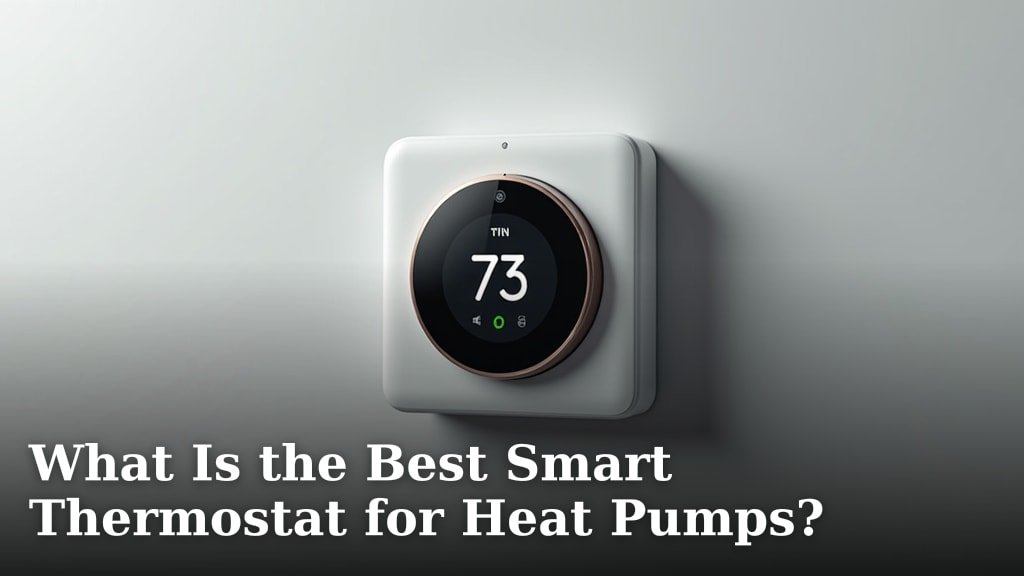
For your heat pump, the best smart thermostat is often the Ecobee SmartThermostat with Voice Control or the Google Nest Learning Thermostat. These models offer advanced features that truly optimize heat pump performance. They both help you save energy and stay comfortable.
Choosing the right smart thermostat for a heat pump is key to maximizing efficiency. You want a thermostat that understands the unique needs of heat pumps. This includes features like multi-stage control and auxiliary heat lockout. Not all smart thermostats are created equal when it comes to heat pumps.
- The Ecobee SmartThermostat with Voice Control is a top choice.
- Google Nest Learning Thermostat also performs very well.
- Look for thermostats with multi-stage control.
- Auxiliary heat lockout is an important feature.
- Proper thermostat choice saves energy and money.
Let’s dive into the details. We’ll help you pick the perfect smart thermostat for your heat pump system. You’ll understand exactly what features to look for.
Optimizing Your Heat Pump with the Right Smart Thermostat
You’ve got a heat pump, which is great for energy efficiency. Now, let’s make it even better. Choosing the right smart thermostat is like finding the perfect conductor for your heating and cooling orchestra.
Understanding Heat Pump Specifics
Heat pumps are a bit different from traditional furnaces or AC units. They move heat rather than creating it (Department of Energy). This unique operation needs a thermostat that understands its language.
How Heat Pumps Work Their Magic
During colder months, your heat pump pulls heat from the outside air, even when it feels chilly, and moves it inside. In warmer months, it reverses the process, pushing indoor heat outdoors. It’s a two-way street for comfort. Because of this, they’re incredibly efficient.
The Role of Auxiliary Heat
When temperatures drop really low, your heat pump might struggle to pull enough heat from outside. That’s where auxiliary heat kicks in. This is usually an electric resistance heater, and it’s less efficient than the heat pump itself. Your smart thermostat needs to manage this carefully.
Key Features Your Smart Thermostat Must Have
Not just any smart thermostat will do for a heat pump. You need specific features that cater to its unique operation. Think of these as non-negotiables for maximum efficiency.
- Multi-stage compressor control: Your heat pump can often run at different speeds. A good thermostat will manage these stages.
- Auxiliary heat lockout or optimization: This prevents the expensive auxiliary heat from kicking in too soon.
- Smart recovery: The thermostat learns how long it takes to reach your desired temperature. It starts early without over-relying on auxiliary heat.
- Humidity control: Some heat pumps can also dehumidify. A smart thermostat can help manage this for greater comfort.
- Remote access and scheduling: Control your comfort from anywhere and set energy-saving schedules.
Top Picks for Heat Pump Smart Thermostats
After researching various models, we found that two thermostats consistently stand out for heat pump compatibility. They offer the best balance of features, ease of use, and energy savings.
Ecobee SmartThermostat with Voice Control
Many experts agree that the Ecobee SmartThermostat is a fantastic choice for heat pump owners. It’s packed with features designed specifically for these systems.
- Remote sensors: These sensors detect temperature in different rooms, helping to balance comfort throughout your home. This is great if you have a chilly bedroom.
- Heat pump specific algorithms: The Ecobee uses advanced software to optimize when your heat pump runs and when auxiliary heat is needed. It learns your home’s unique heating and cooling patterns.
- Intelligent auxiliary heat management: You can set a “minimum outdoor temperature” threshold. Below this, auxiliary heat can kick in, but above it, your heat pump does all the work. This feature alone can save you a lot of money.
- Voice control: Change the temperature with simple voice commands. It’s like having a personal assistant for your home’s climate.
Google Nest Learning Thermostat
The Nest Learning Thermostat is another powerful option, especially if you love automation. It’s known for its ability to learn your habits and adapt.
- Learning capabilities: The Nest learns your preferred temperatures and automatically creates a schedule. It can even tell when you’re away and save energy.
- “Heat Pump Balance” feature: This feature lets you choose between more comfort or more savings. It fine-tunes how often your auxiliary heat comes on.
- OpenTherm compatibility: For some heat pump systems, OpenTherm allows for even more precise control and efficiency.
- Sleek design: Its iconic design looks great in any home. It’s often praised for its user-friendly interface too.
Comparing the Best: Ecobee vs. Nest
Choosing between Ecobee and Nest can feel tricky. Both are excellent, but they have different strengths. Let’s look at a quick comparison to help you decide.
| Feature | Ecobee SmartThermostat | Google Nest Learning Thermostat |
|---|---|---|
| Remote Sensors | Yes (included) | No (separate purchase, if compatible) |
| Auxiliary Heat Control | Advanced thresholds, optimization | “Heat Pump Balance” setting |
| Learning Schedule | Manual or guided setup | Automatic learning |
| Voice Assistant Built-in | Yes (Alexa) | No (integrates with Google Assistant) |
| System Reports | Detailed energy reports | Energy history summaries |
| Price Point | Often slightly higher | Competitive |
As you can see, if room-by-room comfort is a priority, Ecobee’s sensors are a big plus. If you prefer a thermostat that largely sets itself, Nest’s learning capabilities shine. Both will significantly improve your heat pump’s operation.
Installation Considerations for Heat Pumps
Installing a smart thermostat for a heat pump can be a little more involved than for a simple furnace. Don’t worry, it’s usually straightforward, but there are a few things to keep in mind.
“C” Wire Requirement
Most smart thermostats, including Ecobee and Nest, require a “C” wire (common wire) for continuous power. Your heat pump system usually has one. If not, some thermostats include an adapter, or you might need a professional installer.
Wire Labels and Diagram
Before you remove your old thermostat, take a picture of the wiring. This is your most important reference! Heat pump wiring can look a bit different. You might see labels like “O/B” for the reversing valve or “Aux” for auxiliary heat.
Smart Thermostat Checklist for Heat Pumps
To make sure you’re getting the best device for your system, use this quick checklist. It covers the most important aspects for optimal heat pump performance.
- Does it support multi-stage heat pumps (e.g., 2-stage heat, 1-stage cool)?
- Does it have auxiliary heat lockout or intelligent management?
- Does it offer remote access and scheduling via an app?
- Is it compatible with your existing wiring (especially the C-wire)?
- Does it offer energy usage reports to track savings?
By keeping these points in mind, you’re well on your way to a more efficient and comfortable home. Your heat pump and your wallet will thank you!
Conclusion
Choosing the best smart thermostat for your heat pump truly makes a difference. You’ve seen how models like the Ecobee SmartThermostat and Google Nest Learning Thermostat excel with features like multi-stage control and auxiliary heat management. These specialized thermostats ensure your heat pump runs as efficiently as possible, saving you money and keeping your home comfortable. Take that next step today; your energy bills and comfort levels will thank you!
Frequently Asked Questions
Can any smart thermostat work with a heat pump?
Not all smart thermostats are designed for heat pumps. Heat pumps have unique wiring and operational needs, such as managing auxiliary heat and multi-stage compressors. For optimal performance and energy savings, you need a smart thermostat specifically built to handle these complexities.
What is a “C-wire” and why is it important for smart thermostats?
A “C-wire” (common wire) provides a continuous low-voltage power supply to your smart thermostat. This constant power is necessary for features like Wi-Fi connectivity, backlighting, and processing. Without a C-wire, most smart thermostats won’t function correctly or will quickly drain battery power.
How much energy can I save with a smart thermostat for my heat pump?
Energy savings can vary, but many homeowners report significant reductions, often between 10-15% on heating and cooling costs. Features like smart scheduling, remote access, and optimized auxiliary heat use contribute directly to these savings by preventing wasted energy.
Do smart thermostats improve the lifespan of my heat pump?
While a smart thermostat doesn’t directly extend the mechanical life of your heat pump, it can contribute to healthier operation. By optimizing cycles and reducing unnecessary auxiliary heat usage, it lessens wear and tear. This helps your system run more smoothly over time.
Is professional installation required for a heat pump smart thermostat?
Many smart thermostats are designed for DIY installation, especially if you have a C-wire and clear wiring labels. However, if your wiring is complex, you lack a C-wire, or you’re simply uncomfortable with electrical work, professional installation is always a safe and recommended option.
