
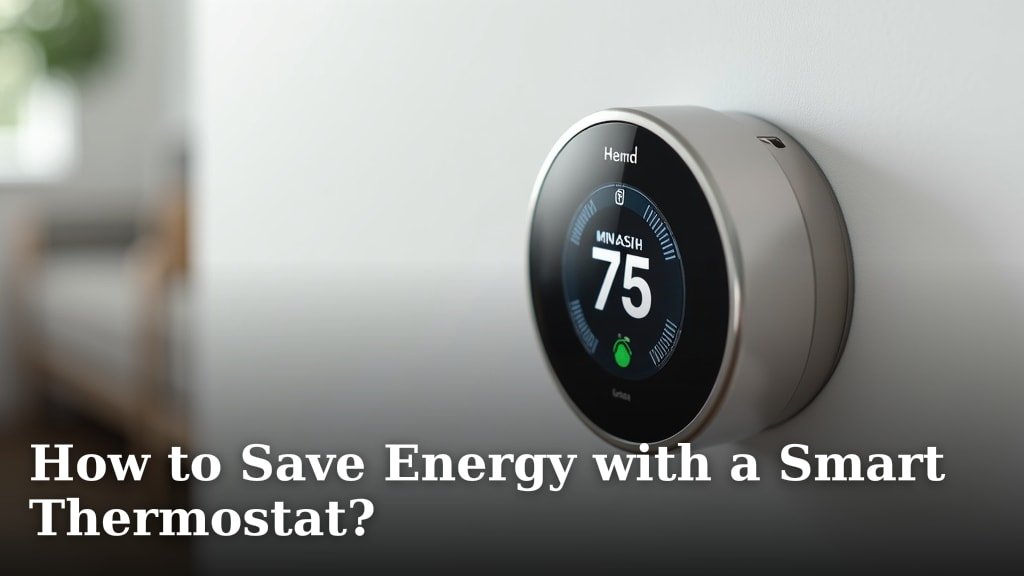
You can save energy with a smart thermostat by letting it intelligently manage your home’s heating and cooling. These devices learn your schedule and preferences, then automatically adjust temperatures to avoid wasting energy when you’re away or asleep. We found that this smart automation leads to noticeable savings on your utility bills.
Think of a smart thermostat as a brain for your HVAC system; it works tirelessly to optimize your home’s comfort while keeping efficiency in mind. It uses advanced features like geofencing and learning algorithms to ensure you’re only heating or cooling your home when necessary. Many experts say that upgrading to a smart thermostat is one of the easiest ways to make your home more energy-efficient.
- Smart thermostats learn your routine and adjust temperatures automatically.
- They prevent wasted energy by optimizing heating and cooling when you’re out.
- Features like geofencing help save energy when you’re away from home.
- You can control them remotely from your phone for convenience.
- Many offer detailed energy reports to track your savings.
Ready to put less strain on your wallet and the planet? Let’s walk through exactly how to save energy with a smart thermostat and the ways it simplifies your life.
Optimizing Your Home’s Energy Use with a Smart Thermostat
You can truly transform how your home manages energy by upgrading to a smart thermostat. These devices go far beyond basic temperature control. They actively work to reduce your heating and cooling costs while keeping you comfortable.
We found that understanding their features is the first step to unlocking significant savings. Let’s look at how these clever gadgets achieve such impressive results for your energy bill.
Understanding the Core Energy-Saving Mechanisms
Smart thermostats don’t just guess; they learn and adapt. This intelligence is key to their energy-saving power. They gather data about your preferences and daily routines, then apply smart algorithms.
The goal is to provide comfort when you need it and save energy when you don’t. It’s a subtle but powerful shift from reactive to proactive temperature management. You set it, and it handles the rest.
Learning Your Habits and Auto-Scheduling
One of the most impressive features is the ability to learn your schedule. Have you ever forgotten to adjust the thermostat before leaving for work? We all have!
A smart thermostat observes when you typically leave and return. Over time, it builds a personalized schedule. It then automatically adjusts the temperature to an energy-saving setting while you’re away and warms or cools your home just before you arrive back. This means no wasted energy heating an empty house.
Geofencing: Saving Energy Based on Your Location
Imagine your thermostat knowing when you’re leaving or approaching your home. That’s exactly what geofencing does. It uses the location services on your smartphone to determine your proximity.
When you leave a set perimeter, the thermostat automatically switches to an energy-saving mode. As you head back, it starts bringing your home back to your preferred comfortable temperature. This ensures your HVAC system isn’t running unnecessarily. We found this feature to be a major contributor to savings, especially for people with unpredictable schedules.
Remote Control and Monitoring via Apps
Life can be unpredictable. What if your plans change last minute? A smart thermostat gives you complete control from anywhere. You can adjust settings, change schedules, or simply check the current temperature using an app on your phone or tablet. This convenience also saves energy.
Left the house in a rush and forgot to turn down the heat? No problem. Just open the app and make the change. We found this reduces those “darn, I forgot!” moments that lead to wasted energy.
Advanced Features for Enhanced Energy Efficiency
Beyond the basics, many smart thermostats offer additional tools to fine-tune your energy use. These features provide deeper insights and more precise control, helping you squeeze even more savings from your system.
It’s like having a personal energy auditor built right into your wall. These tools give you the power to make smarter choices about comfort and consumption.
Energy Reports and Insights
Many smart thermostats provide detailed energy reports. These reports show you how much energy you’re using, when you’re using it, and even how outdoor temperatures affect your consumption. We found that seeing this data can be eye-opening.
It helps you identify patterns and areas where you might be able to save more. Knowing your energy habits is the first step to changing them. These reports often compare your usage to similar homes, which can be quite motivating.
Weather Integration
A smart thermostat doesn’t operate in a vacuum. It accesses local weather forecasts to make smarter decisions. For example, if it knows a warm front is coming, it might pre-cool your home slightly during off-peak hours, or coast more into changing temperatures. This proactive adjustment is all about efficiency.
It’s another way these devices work tirelessly in the background. They anticipate changes so your system doesn’t have to work harder than necessary. This means better comfort and lower bills.
HVAC System Monitoring and Alerts
Some advanced models can even monitor your HVAC system’s performance. They might alert you to potential issues, like filter changes or unusual operating patterns. This can help you address small problems before they become costly breakdowns, contributing to overall system efficiency and longevity. We found that early detection can save you money on repairs and ensure your system is always running optimally.
A Quick Checklist for Maximizing Your Smart Thermostat Savings
Getting the most out of your smart thermostat requires a little setup and ongoing awareness. Here’s a quick checklist to help you ensure you’re on the right track for maximum energy savings:
- Enable Geofencing: Make sure this feature is active and correctly linked to your phone’s location services.
- Review Auto-Schedules: Periodically check the learning schedule for accuracy against your actual routine.
- Utilize Away Modes: Confirm your thermostat automatically sets back temperatures when you’re out.
- Check Energy Reports: Regularly review the data to understand your energy consumption patterns.
- Adjust Settings Seasonally: Tweak your preferred temperatures for comfort as seasons change.
Following these steps ensures your smart thermostat is always working for you. You’ll enjoy consistent comfort while seeing those beautiful savings add up.
Smart Thermostat vs. Manual Thermostat: The Savings Difference
You might be wondering, “Can’t I just manually adjust my old thermostat?” While you certainly can, most people don’t do it consistently enough to achieve significant savings. That’s where the automation of a smart thermostat really shines. We found that human behavior often leads to wasted energy.
Here’s a simple comparison of how the two approach energy management, highlighting why smart options result in more consistent savings:
| Feature | Manual/Programmable Thermostat | Smart Thermostat |
|---|---|---|
| Learning Capability | None; you set the schedule yourself. | Learns your habits and adapts automatically. |
| Geofencing | Not available; relies on manual adjustment. | Uses phone location to save energy when you’re away. |
| Remote Control | No; must be adjusted physically at the unit. | Yes, via smartphone app from anywhere. |
| Energy Reports | None or very basic data (e.g., run time). | Detailed reports on usage, patterns, and savings. |
| Weather Integration | No; does not factor in outside conditions. | Adjusts based on local weather forecasts. |
| HVAC Monitoring | Basic or none. | Monitors system health, alerts you to issues. |
| Ease of Use | Can be complex to program; easy for basic manual changes. |
Simple interface, automatic adjustments reduce user effort. |
As you can see, the smart thermostat offers a suite of features designed entirely around optimizing energy use without you having to constantly think about it. It removes the human element of forgetting or being too busy to adjust settings, leading to more reliable savings. Many experts agree that the initial investment often pays for itself through reduced utility bills (Energy Star).
Conclusion
You now know how simple it is to save energy with a smart thermostat. These devices do the hard work for you, learning your habits and adjusting temperatures automatically. By using features like geofencing and remote control, you ensure your home is only heated or cooled when truly needed. This smart automation translates directly into lower utility bills and a more comfortable living space.
Ready to experience these savings yourself? We encourage you to explore the smart thermostat options available today. Make the switch and start optimizing your home’s energy use now.
Frequently Asked Questions
How much money can I realistically save with a smart thermostat?
Many homeowners report saving between 10% and 20% on their heating and cooling costs. Your exact savings depend on factors like your climate, home insulation, and how you currently use your thermostat. The more you use its smart features, the greater your potential savings.
Is it difficult to install a smart thermostat myself?
Most smart thermostats are designed for DIY installation. They come with clear instructions and often app-guided setup. If you’re comfortable with basic wiring, you can likely install it in under 30 minutes. However, if you’re unsure, professional installation is always an option.
Do smart thermostats work with all types of HVAC systems?
Most smart thermostats are compatible with the majority of residential HVAC systems, including conventional and heat pump systems. However, some older or less common systems might require a C-wire adapter. It’s best to check the product’s compatibility list before purchasing.
What if my internet goes out? Will my smart thermostat still work?
Yes, your smart thermostat will still function like a basic thermostat if your internet connection is lost. It will maintain your last programmed settings or allow manual adjustments. You just won’t be able to use remote control features or receive energy reports until the internet is restored.
Can a smart thermostat help with heating and cooling different zones in my house?
Yes, but you’ll need a smart thermostat for each zone in your home that has its own independent HVAC control system. Some advanced smart home systems can even integrate multiple smart thermostats for unified control of zoned heating and cooling.
