
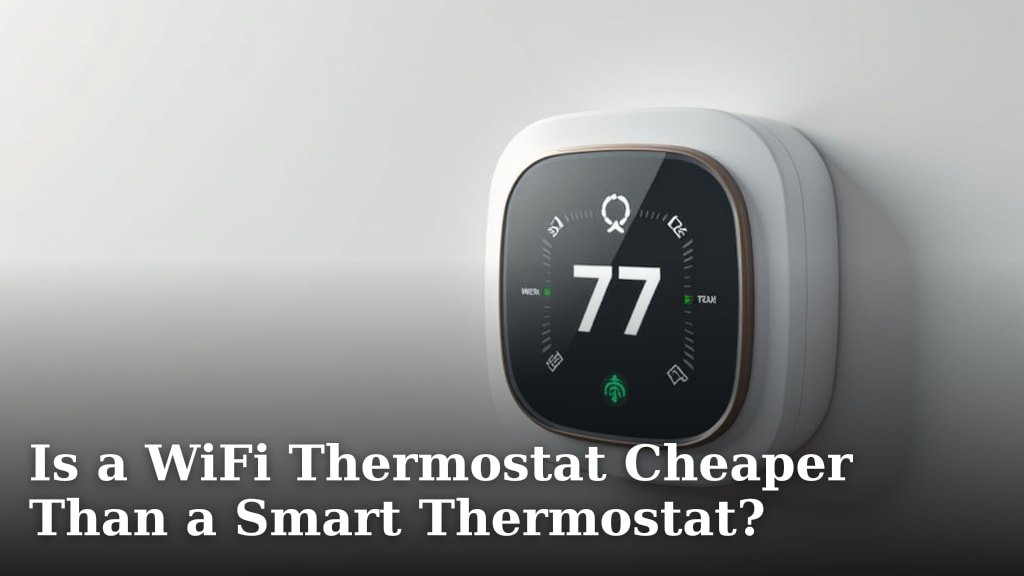
Yes, a WiFi thermostat can be cheaper than a smart thermostat, especially if you’re looking at the initial purchase price. While both connect to your home network, smart thermostats often come with more advanced features that drive up their cost. Think of it like this: a WiFi thermostat is a sturdy, reliable tool, while a smart thermostat is that tool with a built-in laser level and Bluetooth speaker.
The core difference often lies in the “smarts.” WiFi thermostats primarily allow for remote control via your phone. Smart thermostats go further, learning your habits, adjusting automatically, and integrating with other smart home devices. This added intelligence and convenience is what usually commands a higher price tag. Many energy savings are possible with both, but the learning capabilities of smart models can offer more.
- WiFi thermostats are generally less expensive upfront.
- Smart thermostats offer more advanced learning and automation features.
- Both can help you save money on energy bills.
- The “smartness” is the main factor in price differences.
- Consider what features you truly need to find the best value.
Let’s break down what makes these terms different and help you figure out which one is the right fit for your home and your wallet.
Understanding the Cost Difference: WiFi vs. Smart Thermostats
You might be wondering if a WiFi thermostat is genuinely cheaper than a smart thermostat. The short answer is often yes, especially when you look at the upfront price tag. Think of it like buying a basic car versus a car packed with all the latest tech. Both get you from point A to point B, but one comes with a few more bells and whistles.
We found that the primary driver of cost is the level of intelligence and automation built into the device. WiFi thermostats are like the dependable older siblings. They do a core job very well. Smart thermostats are the more advanced ones, offering a wider range of capabilities. Let’s break down what you get for your money.
The Basics: What is a WiFi Thermostat?
A WiFi thermostat connects to your home’s wireless internet network. This connection is the key feature. It allows you to control your home’s temperature remotely. You can use an app on your smartphone or tablet. This means you can adjust the thermostat from anywhere. You could be at work, on vacation, or even just in another room.
Essentially, a WiFi thermostat gives you convenience and basic control. You can set schedules and make changes on the fly. This ability to adjust remotely can lead to energy savings. For instance, you can turn down the heat when you leave and turn it back up before you get home. We found this basic remote access is a big step up from traditional thermostats.
The Advanced: What is a Smart Thermostat?
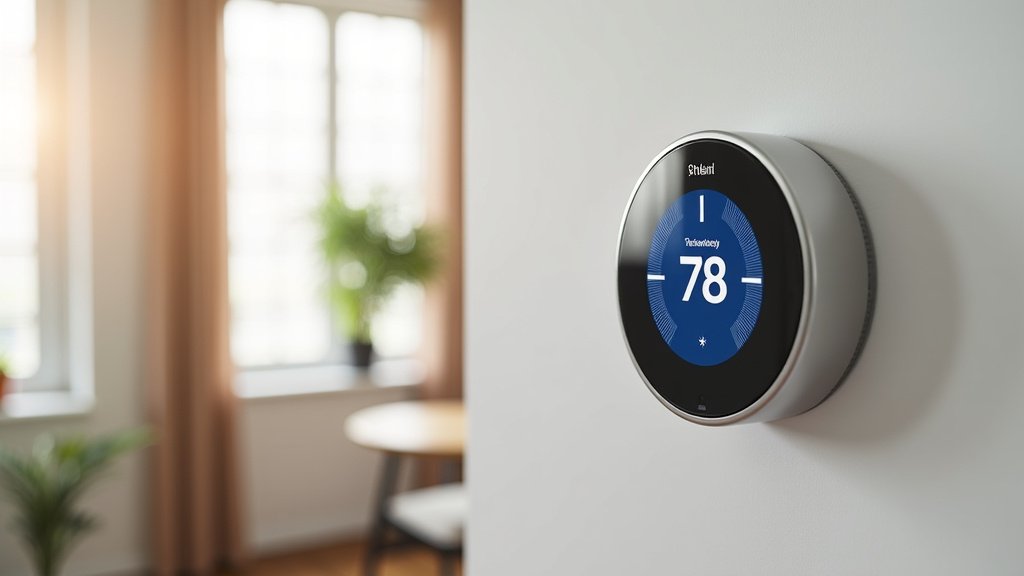
A smart thermostat also connects to your WiFi. But it does much more than just remote control. It uses advanced algorithms and sensors. It can learn your daily routines and preferences. Over time, it figures out when you’re home and when you’re away. It then adjusts the temperature automatically to save energy.
Many smart thermostats can also integrate with other smart home devices. Think voice assistants like Alexa or Google Assistant. You can ask them to change the temperature. Some can even use geofencing. This feature uses your phone’s location to know when you’re approaching home. They might also provide detailed energy usage reports. This deeper level of automation and integration is what sets them apart.
Breaking Down the Price Factors
When we look at the price tags, several factors come into play. It’s not just about the name “WiFi” or “Smart.” It’s about the features and the technology packed inside. We found that brands often price their products based on these advancements.
Upfront Purchase Cost Comparison
Generally, WiFi thermostats have a lower upfront cost. You can find basic models for around $50 to $100. These models offer the core WiFi connectivity. They allow for remote control and basic scheduling. They are a good choice if you want to upgrade from an old manual thermostat without breaking the bank.
Smart thermostats typically start higher, often in the $150 to $250 range. Some premium models can even go above $300. This higher price reflects the sophisticated sensors, learning capabilities, and advanced software. They also often have sleeker designs and better build quality. For example, some smart thermostats use proximity sensors. Others have color touchscreens. These features add to the manufacturing cost.
Installation Costs and DIY Potential
Installation costs can also impact the overall expense. Many WiFi and smart thermostats are designed for DIY installation. This is great because it can save you money. Most modern homes have the necessary wiring. You typically just need to shut off the power, remove your old thermostat, and connect the wires to the new one.
However, if you’re not comfortable with DIY, you’ll need to hire an electrician or HVAC technician. This professional installation can add $100 to $250 to the total cost. We found that some smart thermostats might have slightly more complex wiring requirements, but most still fall within the DIY-friendly category. Always check the specific model’s installation guide.
Long-Term Savings: Energy Efficiency
This is where the cost discussion gets more interesting. While smart thermostats cost more upfront, they often lead to greater long-term energy savings. This is due to their advanced features.
A WiFi thermostat allows for manual adjustments and scheduling. This can save you money compared to a basic thermostat. For instance, setting a schedule to lower the temperature at night can reduce heating bills. You could save up to 10% on heating and cooling costs by adjusting your thermostat by 7-10°F for 8 hours a day (Energy.gov).
Smart thermostats, with their learning capabilities, can often achieve even higher savings. They optimize heating and cooling based on your actual presence and learned patterns. Many studies and consumer reports suggest that smart thermostats can save an additional 5-15% on top of what basic programmable thermostats achieve. This is because they avoid heating or cooling an empty house more effectively. We found that the potential for increased savings makes the higher initial investment in a smart thermostat appealing for many.
| Feature | WiFi Thermostat | Smart Thermostat |
|---|---|---|
| Remote Control (App) | Yes | Yes |
| Basic Scheduling | Yes | Yes |
| Learning Capabilities | No | Yes |
| Smart Home Integration | Limited/No | Yes |
| Geofencing | No | Often |
| Energy Usage Reports | Basic/No | Detailed |
| Upfront Cost (Typical) | $50 – $100 | $150 – $300+ |
| Potential Long-Term Savings | Moderate | Higher |
Which Type is Right for Your Budget and Needs?
Deciding between a WiFi and a smart thermostat really comes down to what you need and what you’re willing to spend. It’s about finding that sweet spot between cost and convenience.
For the Budget-Conscious: The WiFi Thermostat
If your main goal is to get remote control and basic scheduling at the lowest possible price, a WiFi thermostat is likely your best bet. You get the convenience of adjusting your home’s temperature from your phone. This alone can lead to noticeable energy savings. If you’re good at remembering to adjust your settings manually or have a predictable schedule, a WiFi model might be all you need. We found many people are perfectly happy with the capabilities of a simple WiFi thermostat.
For Maximum Savings and Convenience: The Smart Thermostat
If you want the most advanced features and the potential for the highest energy savings, a smart thermostat is the way to go. The automatic learning and optimization can make a big difference over time. They also offer the most convenience, especially if you have a busy or unpredictable schedule. Plus, if you’re already invested in a smart home ecosystem, integration can be a major plus. Think about how much you value convenience and automated energy efficiency. That will help justify the higher cost.
Considering Your Home’s Habits
We also recommend thinking about your household’s actual habits. Do you have a very regular schedule? Are you home most of the day? Or is your schedule erratic? If you’re frequently away for long, unpredictable periods, a smart thermostat’s geofencing can be a real money-saver. If you’re always home or have a strict daily routine, you might be able to achieve similar savings with a well-programmed WiFi thermostat.
Key Takeaways for Your Decision
To help you make a choice, consider these points:
- Upfront Cost: WiFi models are cheaper to buy initially.
- Features: Smart models offer learning, automation, and integration.
- Energy Savings: Both save money, but smart thermostats often save more long-term.
- Installation: Most are DIY-friendly, saving on professional fees.
- Your Lifestyle: Match the thermostat’s features to how you live.
Conclusion
Ultimately, the decision between a WiFi and a smart thermostat hinges on your personal needs and budget. You’ve seen that WiFi thermostats offer a more affordable entry point for remote control and basic scheduling. They can certainly help you save energy with mindful usage. If your home has a predictable routine and you’re comfortable making manual adjustments, a WiFi model is a smart financial choice. However, if you crave maximum convenience and the potential for greater long-term energy savings through automation, a smart thermostat is likely your best investment. Consider your lifestyle and budget carefully to make the most informed decision for your home.
Frequently Asked Questions
Is a WiFi thermostat really just a basic smart thermostat?
Not quite. While both connect to WiFi for remote control, smart thermostats possess advanced features like learning your habits and integrating with other devices. WiFi thermostats focus primarily on giving you remote access and scheduling capabilities.
Can a WiFi thermostat actually save me money on my energy bills?
Yes, absolutely! By allowing you to set schedules and adjust temperatures remotely, a WiFi thermostat helps you avoid heating or cooling an empty house. This control can lead to noticeable savings compared to older, non-connected models.
How much more expensive is a smart thermostat compared to a WiFi thermostat?
Generally, smart thermostats have a higher upfront cost. You might find basic WiFi models for $50-$100, while smart thermostats typically start around $150-$250 and can go higher depending on features.
Will I need to pay for installation for either type of thermostat?
Many WiFi and smart thermostats are designed for DIY installation, saving you professional fees. However, if you’re not comfortable with the process, hiring an electrician or HVAC technician can add $100-$250 to the total cost for either type.
Are smart thermostats worth the extra cost in the long run?
For many, yes. The advanced learning and automation features of smart thermostats can often lead to greater energy savings over time than what a basic WiFi thermostat can achieve, potentially offsetting the higher initial price.
