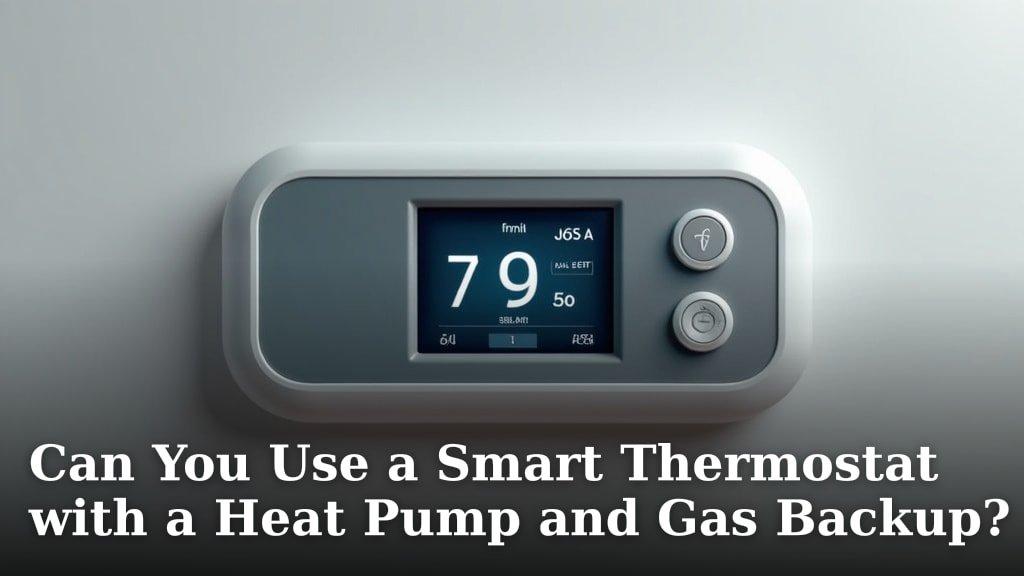
Yes, you can absolutely use a smart thermostat with a heat pump and gas backup system. In fact, smart thermostats are designed to handle these complex setups. They can intelligently switch between your heat pump and your gas furnace for the most efficient heating.
This hybrid approach is often called a dual-fuel system. Your smart thermostat is the brain that decides which fuel source to use. It learns your home’s habits and considers both energy costs and outdoor temperature. This helps you save money and stay comfortable year-round.
- Smart thermostats work with dual-fuel systems (heat pump + gas backup).
- They choose the most efficient heating source automatically.
- This can lead to lower energy bills.
- Look for thermostats labeled “dual-fuel” or “multi-stage.”
Below, we break down exactly how your smart thermostat manages this cool combo and what to look for when choosing one.
Smart Thermostat Compatibility with Heat Pump & Gas Systems
You’re wondering if your modern smart thermostat can play nice with your home’s heating setup. Specifically, can it handle a system that uses both a heat pump and a gas furnace? The straightforward answer is yes, absolutely. Smart thermostats are designed with these advanced setups in mind. They can manage the complexities of a dual-fuel system.
Think of it like this: your smart thermostat is the intelligent conductor of your home’s heating orchestra. It knows when to cue the heat pump and when to call in the powerful gas furnace. This ensures you get the best possible comfort while being as energy-efficient as possible.
Understanding Your Dual-Fuel System
A dual-fuel system, also known as a hybrid heat system, combines the strengths of two different heating technologies. It typically pairs an electric heat pump with a fossil fuel furnace, usually natural gas or propane. This combination is gaining popularity for good reason. It offers a flexible and efficient way to keep your home warm.
How a Heat Pump Works
Your heat pump works like a two-way air conditioner. In the summer, it moves heat from inside your home to the outside. In the winter, it reverses the process. It extracts heat from the outdoor air and transfers it inside. This is quite energy-efficient when outdoor temperatures are mild.
However, as the temperature drops significantly, the heat pump struggles. It becomes less efficient at extracting heat from cold air. This is where your gas furnace steps in. It’s built to provide robust heat even in the coldest weather. Many experts suggest that heat pumps are most effective when outdoor temperatures are above freezing (Mayo Clinic).
The Role of the Gas Backup Furnace
The gas furnace acts as your system’s dependable backup. When the heat pump can no longer keep up with your heating needs, the furnace takes over. It burns natural gas or propane to generate heat. This provides a powerful and reliable source of warmth when the heat pump is operating at its limits or is less efficient.
This switchover is critical for maintaining comfort during those bitterly cold days. Without it, you might find your home not getting warm enough when you need it most. The goal is to use the heat pump as much as possible because it’s often cheaper to run. The gas furnace is your go-to for extreme cold, where it often becomes more cost-effective than the heat pump.
How Smart Thermostats Manage Dual-Fuel Systems
Smart thermostats are the brains behind the operation. They’re programmed to understand the unique needs of a dual-fuel system. You’ll often see them labeled as compatible with “dual-fuel,” “hybrid heat,” or “multi-stage” systems. This means they have the built-in logic to manage both your heat pump and your gas furnace.
Automatic Switchover and Optimization
The magic happens through the thermostat’s programming. You tell it what type of system you have. Then, it uses its algorithms to make smart decisions. It monitors the outdoor temperature and your desired indoor temperature. Based on this data, it decides which heating source is the most economical and effective at that moment.
For example, on a chilly but not freezing day, your smart thermostat will likely engage the heat pump. As the temperature plummets, it will detect that the heat pump is working harder. It will then automatically switch to the gas furnace. This transition is designed to be smooth and unnoticeable to you and your family.
Learning Your Home’s Habits
Many smart thermostats go a step further. They learn your household’s patterns. They understand when you typically need more heat or when you tend to adjust the temperature. This learning capability allows them to optimize heating schedules even further. They can pre-heat your home using the most efficient method before you wake up.
This personalized approach means your smart thermostat isn’t just reacting. It’s proactively managing your comfort. It can even learn how quickly your home heats up or cools down. This helps it make even smarter decisions about when to switch fuels.
Setting Your Preferences and “Balance Point”
You have a say in how your system operates. Most smart thermostats allow you to set a “balance point.” This is the outdoor temperature at which your heat pump becomes less efficient than your gas furnace. You can typically adjust this point based on your local energy costs and personal comfort preferences.
We found that setting this balance point correctly can have a noticeable impact on energy bills. Many manuals provide guidance on finding an optimal balance point. It’s often a trade-off between using the generally cheaper electric heat pump and the more powerful gas furnace. Consulting with your HVAC professional can help you determine the best balance point for your specific system and climate (Energy Star).
| Outdoor Temperature | Smart Thermostat Action | Heating Source Used | Efficiency & Cost Consideration |
|---|---|---|---|
| Above Balance Point (e.g., 35°F+) | Initiates heating | Heat Pump | Most energy-efficient and often lowest cost. |
| Approaching Balance Point (e.g., 30-35°F) | Monitors heat pump performance | Heat Pump (may work harder) | Still generally cost-effective, but efficiency starts to decline. |
| At or Below Balance Point (e.g., below 30°F) | Switches to backup | Gas Furnace | Provides stronger heat; may become more cost-effective than struggling heat pump. |
Choosing the Right Smart Thermostat
Not all smart thermostats are created equal, especially when it comes to dual-fuel systems. You need one specifically designed to handle this type of setup. Look for clear labeling indicating compatibility.
Key Features to Look For
When you’re shopping, keep an eye out for these important features. They ensure your smart thermostat can properly manage your heat pump and gas furnace. You want a device that truly understands your system.
- Dual-Fuel or Hybrid Heat Compatibility: This is the most critical feature. Make sure the product description explicitly states it supports dual-fuel systems.
- Multi-Stage Heating and Cooling: Your heat pump and furnace might have multiple stages of operation. The thermostat needs to be able to control these stages effectively.
- Geofencing or Learning Capabilities: These features allow the thermostat to adjust settings based on whether you’re home or away, further saving energy.
- Remote Access and Control: Being able to adjust your thermostat from your smartphone is a standard smart feature, but essential for convenience.
- Energy Usage Reports: Understanding how your system is operating and where your energy is going can help you make more informed decisions.
Installation and Setup Considerations
Installing a smart thermostat for a dual-fuel system can be more complex than a single-stage system. It often involves connecting more wires to your indoor HVAC unit. Many smart thermostats come with detailed installation guides. However, we found that for dual-fuel systems, professional installation is often recommended.
An HVAC technician will ensure all wires are connected correctly. They can also help you set the initial parameters for your system. This includes setting the balance point and configuring the switchover points for optimal performance. Getting this right from the start can save you headaches and ensure your system runs efficiently (US Department of Energy).
Benefits of Using a Smart Thermostat with Your System
The advantages of pairing a smart thermostat with your dual-fuel system are significant. You’re not just upgrading your thermostat; you’re upgrading your entire home comfort experience. It’s about smarter living and real savings.
Energy Savings and Reduced Bills
The primary benefit is potential energy savings. By intelligently using the most efficient heating source, you can reduce your overall energy consumption. Heat pumps are generally more efficient than gas furnaces when temperatures are mild. Your smart thermostat prioritizes using the heat pump as much as possible. This can lead to lower electricity bills.
When the gas furnace is needed, the thermostat ensures it’s used efficiently. It won’t run longer than necessary. This careful management helps to lower your heating costs, especially during the shoulder seasons and milder winter days.
Enhanced Comfort and Convenience
Beyond savings, you’ll experience improved home comfort. Smart thermostats maintain more consistent temperatures. They avoid the drastic temperature swings that can sometimes happen with older, less sophisticated systems. The automatic switchover means you’re less likely to feel a chill on a cold day.
The convenience factor is also huge. You can control your home’s temperature from anywhere using your smartphone. You can set schedules, create custom heating modes, and even receive alerts if there’s an issue with your system. It puts you in control like never before.
Environmental Impact
Using your heat pump more often also has a positive environmental impact. Heat pumps run on electricity and do not burn fossil fuels directly at your home. While electricity generation has its own environmental considerations, using a heat pump can be a cleaner way to heat your home compared to relying solely on a gas furnace, especially if your electricity comes from renewable sources (EPA).
Key Takeaways for Your System
To make sure you’re getting the most out of your setup, remember these points.
- Confirm your smart thermostat is designed for dual-fuel systems.
- Understand your system’s “balance point” and set it appropriately.
- Consider professional installation for optimal setup and performance.
- Utilize learning and scheduling features to maximize savings and comfort.
- Monitor energy reports to track your system’s efficiency over time.
- Don’t hesitate to consult your HVAC professional for fine-tuning.
Conclusion
You’ve learned that your heat pump and gas backup system can absolutely work with a smart thermostat. This dual-fuel setup lets your smart thermostat intelligently manage heating. It switches between your heat pump and gas furnace for maximum efficiency and comfort. You can save money on energy bills and enjoy a more consistent home temperature. Your next step is to confirm your smart thermostat is compatible with dual-fuel systems. Then, consider professional installation to ensure optimal performance and savings. This upgrade truly enhances your home’s comfort and efficiency.
Frequently Asked Questions
Will a smart thermostat automatically know when to switch from my heat pump to my gas furnace?
Yes, your smart thermostat is designed to do just that. You’ll program it with your system type. It then uses outdoor temperature and your settings to decide when to switch to the more efficient or powerful heating source. This automatic transition ensures you stay comfortable without manual intervention.
What is the “balance point” and why is it important for my dual-fuel system?
The balance point is the outdoor temperature at which your heat pump becomes less efficient than your gas furnace. Setting this correctly in your smart thermostat is key to maximizing savings. It tells the thermostat the ideal temperature threshold for switching to gas for optimal cost and comfort.
Can I install a smart thermostat on a dual-fuel system myself, or should I hire a professional?
While some smart thermostats are DIY-friendly, dual-fuel systems can be more complex. We found that professional installation is often recommended for dual-fuel setups. An HVAC technician ensures all wiring is correct and can properly configure your system’s balance point and switchover settings for peak efficiency.
What happens if my smart thermostat isn’t labeled as “dual-fuel compatible”?
If a smart thermostat doesn’t explicitly state “dual-fuel” or “hybrid heat” compatibility, it’s best to avoid it for your system. Using an incompatible thermostat could lead to your system not working correctly. It might also cause it to run inefficiently, potentially costing you more in energy bills.
How does using a smart thermostat with a heat pump and gas backup help the environment?
By prioritizing the heat pump during milder weather, you reduce your reliance on burning fossil fuels directly at home. Heat pumps use electricity, which can be generated from renewable sources. This often makes your heating process cleaner than using a gas furnace alone, contributing to a lower carbon footprint.
